



It’s not exactly the first time I’ve sounded the alarm about the failure of climate visuals. (See Summer ‘21 or Summer ‘24, for example). What makes the current disregard so striking, though, is that it’s the “same old, same old” relative to the severity of the emergency.
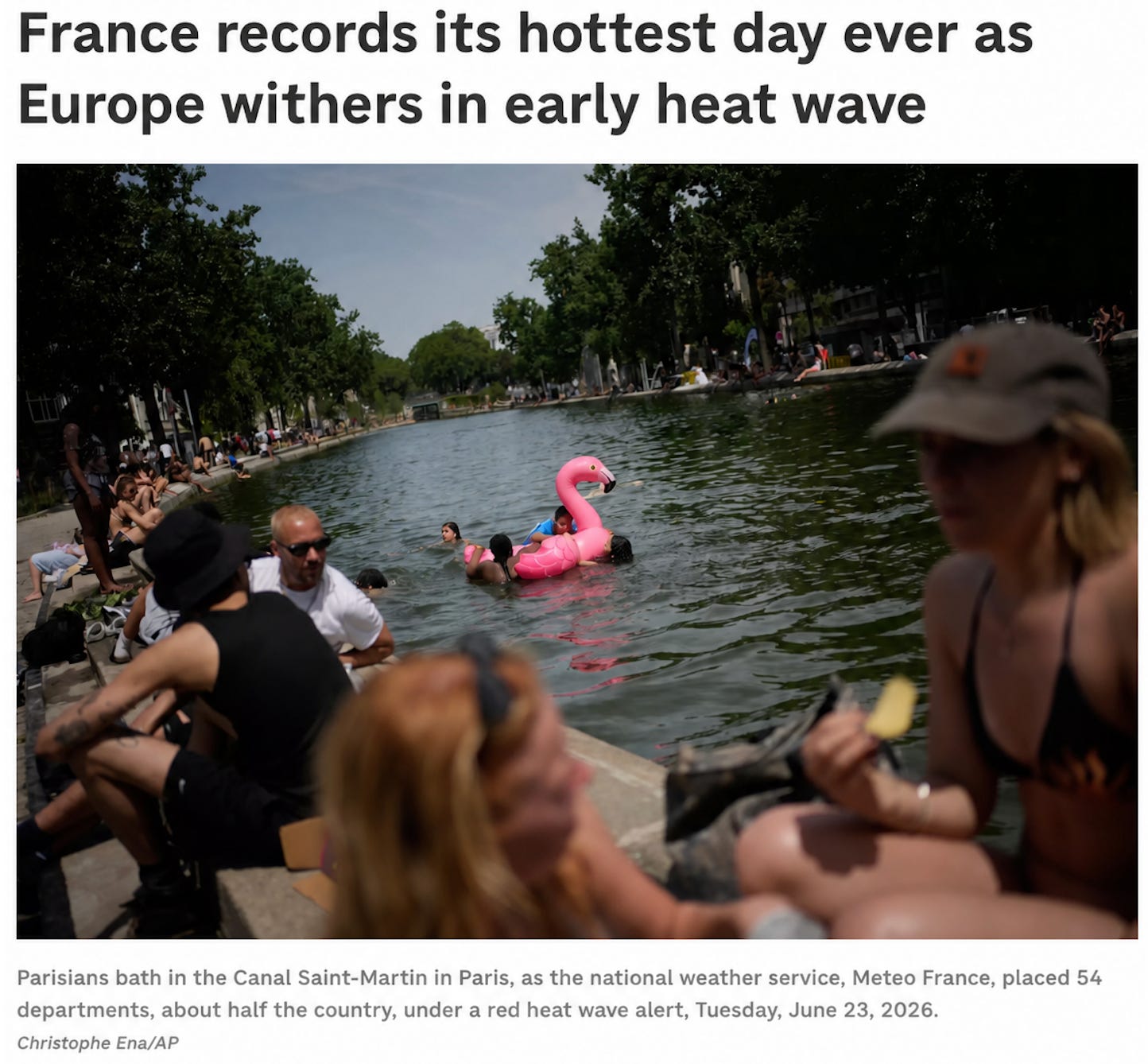
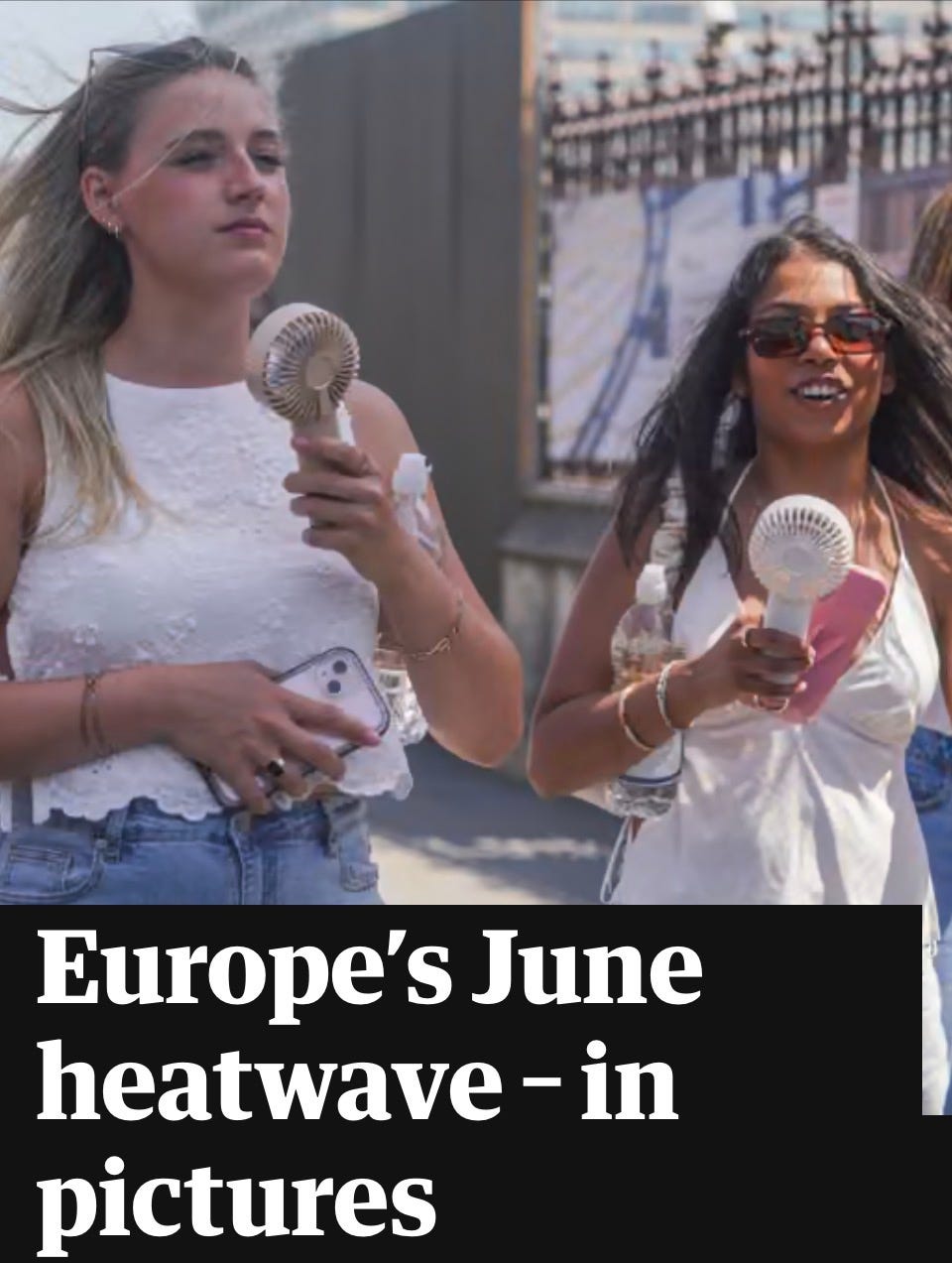
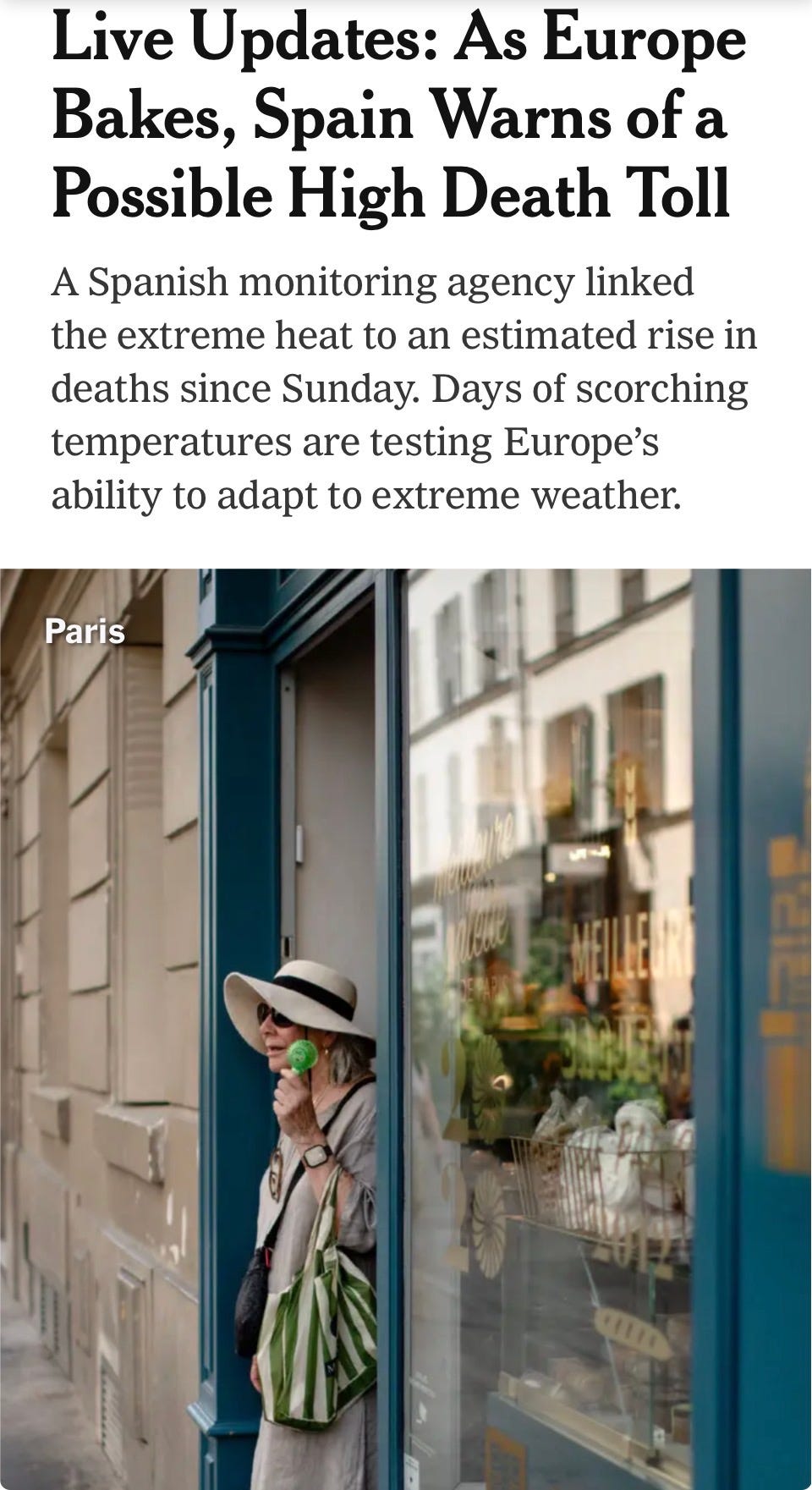
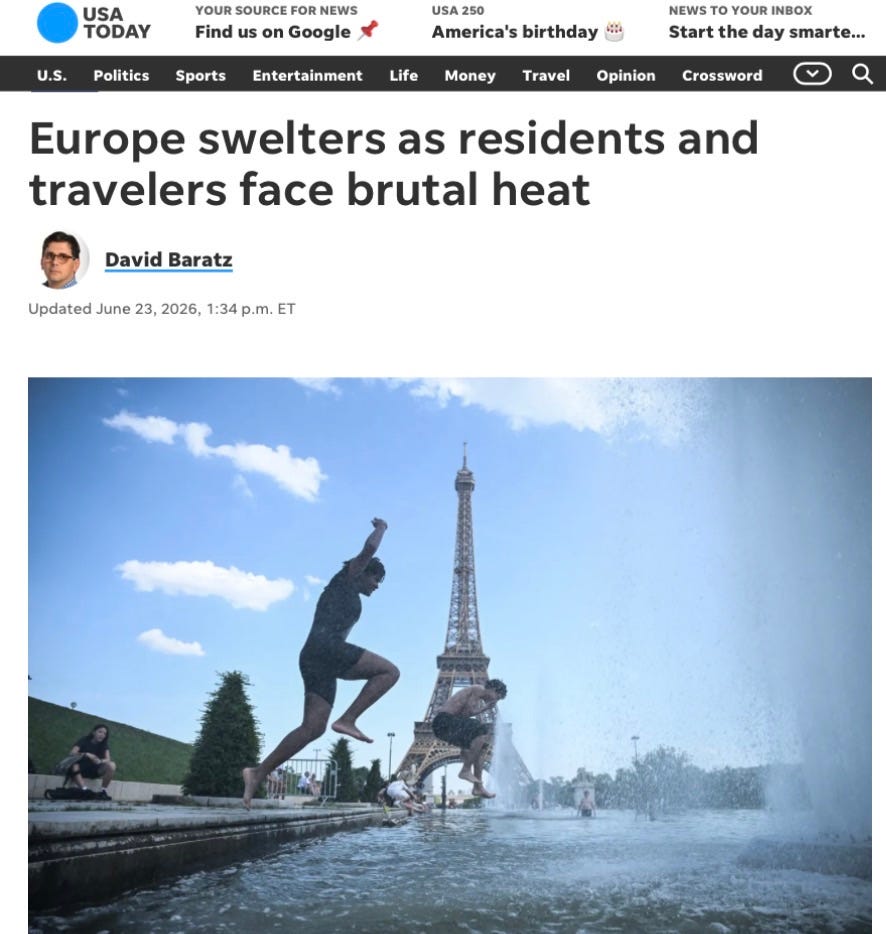
The same is true for the obvious disconnect between typical lead photos and shocking headlines. Even when scrolling through photo galleries (Guardian, AP), there is a failure to visually represent the deadly, life-changing heatwaves breaking records across Europe, which conveys no sense that what is happening now is any different from past heatwaves. Take the photo at the top of this post. What could be a simple private moment along the Canal Saint‑Martin becomes charged with the possibility of suffering, with the utopia tattoo adding irony as France opens parts of the canal for swimming during a red‑alert heatwave.
In just the past two years, the climate crisis has reached break‑the‑thermometer levels, with 2023–2025 forming an unprecedented trio of the hottest years on record and pushing global temperatures into territory humanity has never endured before. Last year in India and Pakistan, springtime highs surged to 46–49°C (115–120°F), up to 5–8°C (9–14°F) above normal and deadly for people working or studying outdoors, while this week’s European heat dome drives temperatures 10–15°C (18–27°F) above average, causing France’s hottest day in history.
This is not an oppressive‑summer story but a rolling public‑health emergency, measured by overwhelmed hospitals, excess deaths, and collapsing infrastructure—not by visual clichés like fountains, beaches, and ice cream scenes.
The photos that follow share a common focus: tourists and tourist attractions. The tendency to showcase people gathering at fountains, canals, and lakes carries an uncomfortable irony—a cruel compensation as drownings spiked under the heat dome. And the pink inflatable flamingo floating in the canal? It's a perfect visual metaphor for the absurdity of treating a mass-casualty event like a summer pool party.

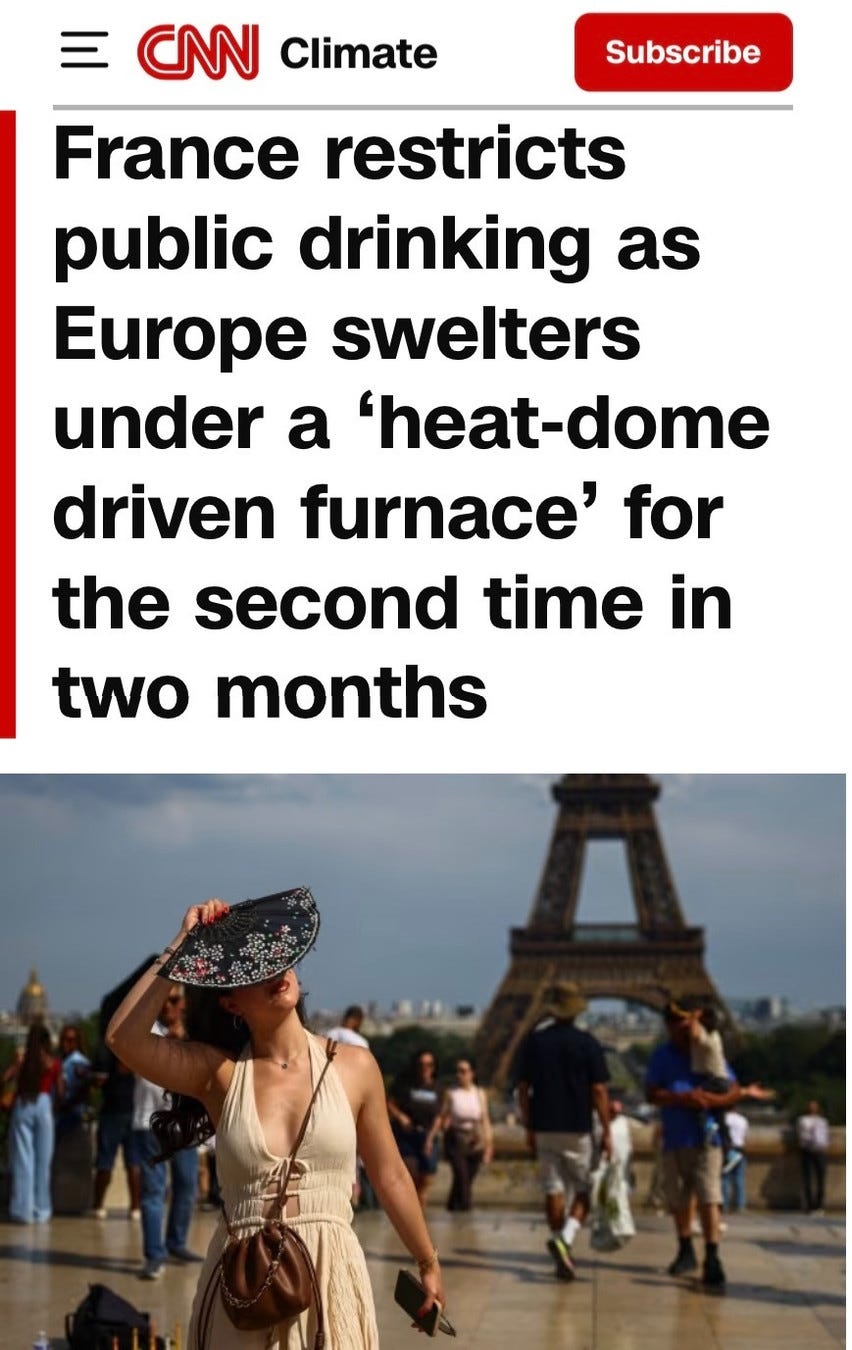



The Pictures that Match the Headlines
It’s not like there aren’t telling pictures out there. What’s striking is how rarely those crisis-level images make the front page or news stories—and how marginalized they are in photo galleries.
What one would expect, consistent with the visual coverage of other crisis events right now, is a collection of images that better match the threat. The way these images are fused with tension and ambiguity makes them hard to dismiss. Consider these images the next time you see danger and distress, especially in disastrous headlines, visually dismissed with fans and ice cream cones.
Tourism as Denial
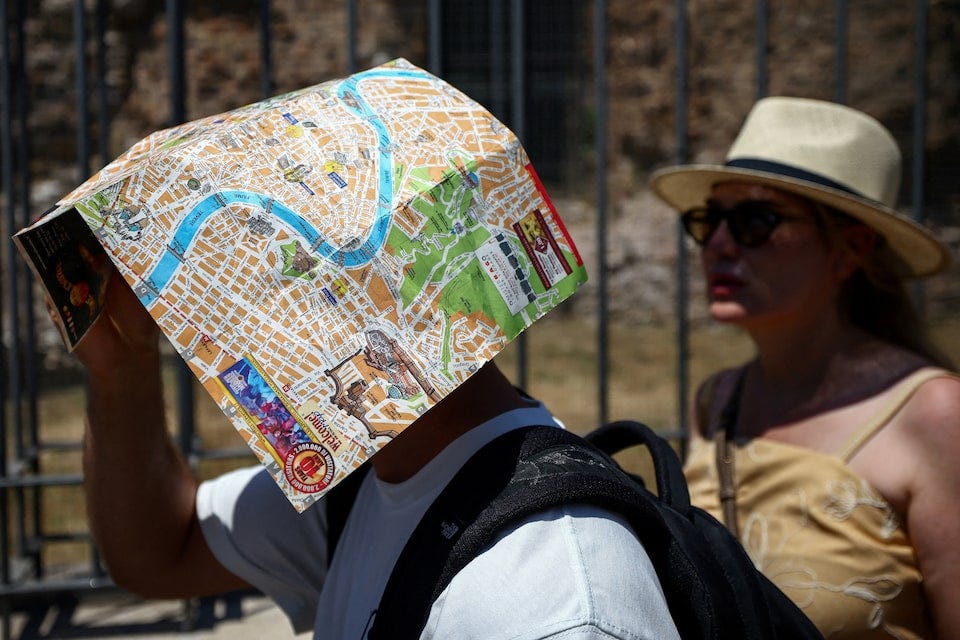
If coverage must default to tourists, it should at least carry some editorial bite. In this frame, the heat turns the itinerary on its head—the traveler isn't using the map to find their next destination, but to carve out a few inches of refuge.
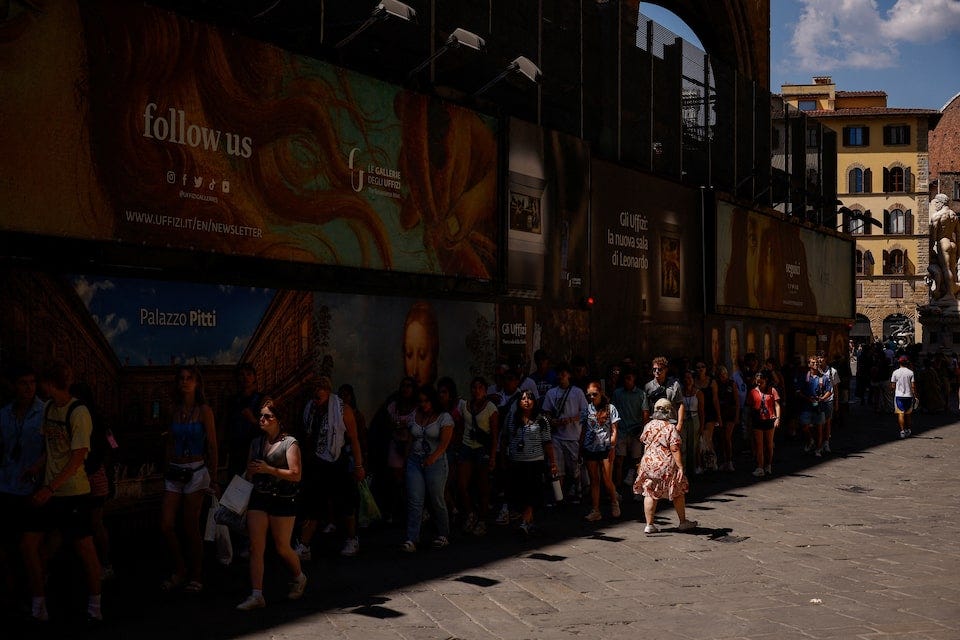
The shadow is a shorthand for communicating how untenable it has become to brave the sun. Shade is not just a respite, but a photographer’s metaphor for dark times.
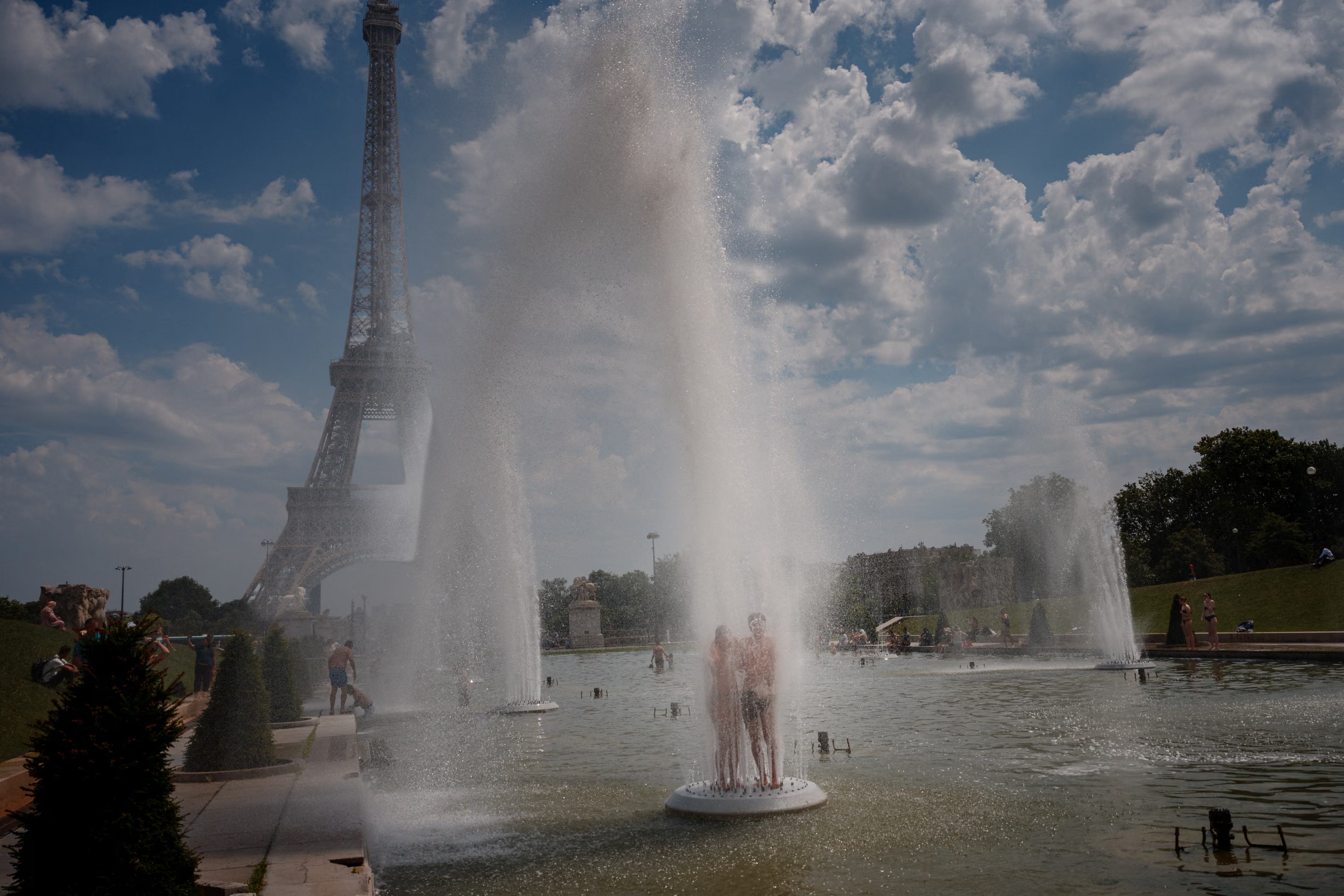
And if you have to show people flocking to fountains, you can capture a moment devoid of frolic. Instead, you can evoke the surreal nature of climate breakdown with a vibe that borders on the dystopian, one that instills uncertainty in the viewer, leaving you unsure whether people are being cooled off or disintegrated.
Daily Life Under Strain
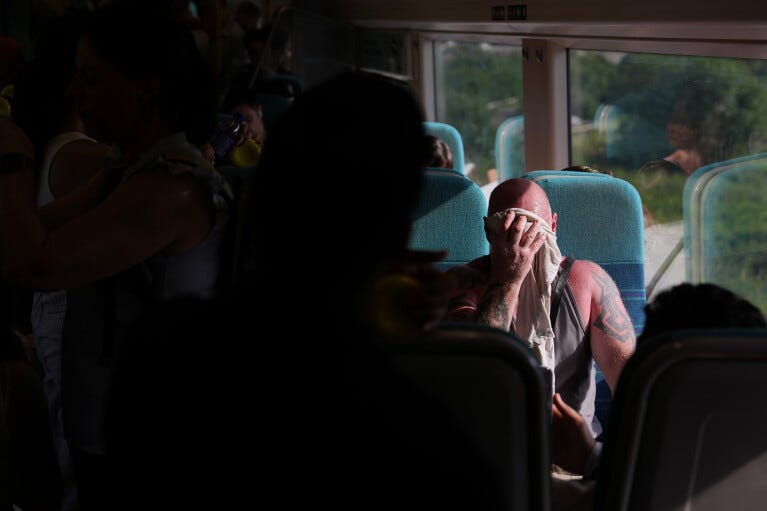
The red skin, the enveloping darkness, the grip of a hand on the fabric. The photo speaks to the suddenness with which people can be overcome.
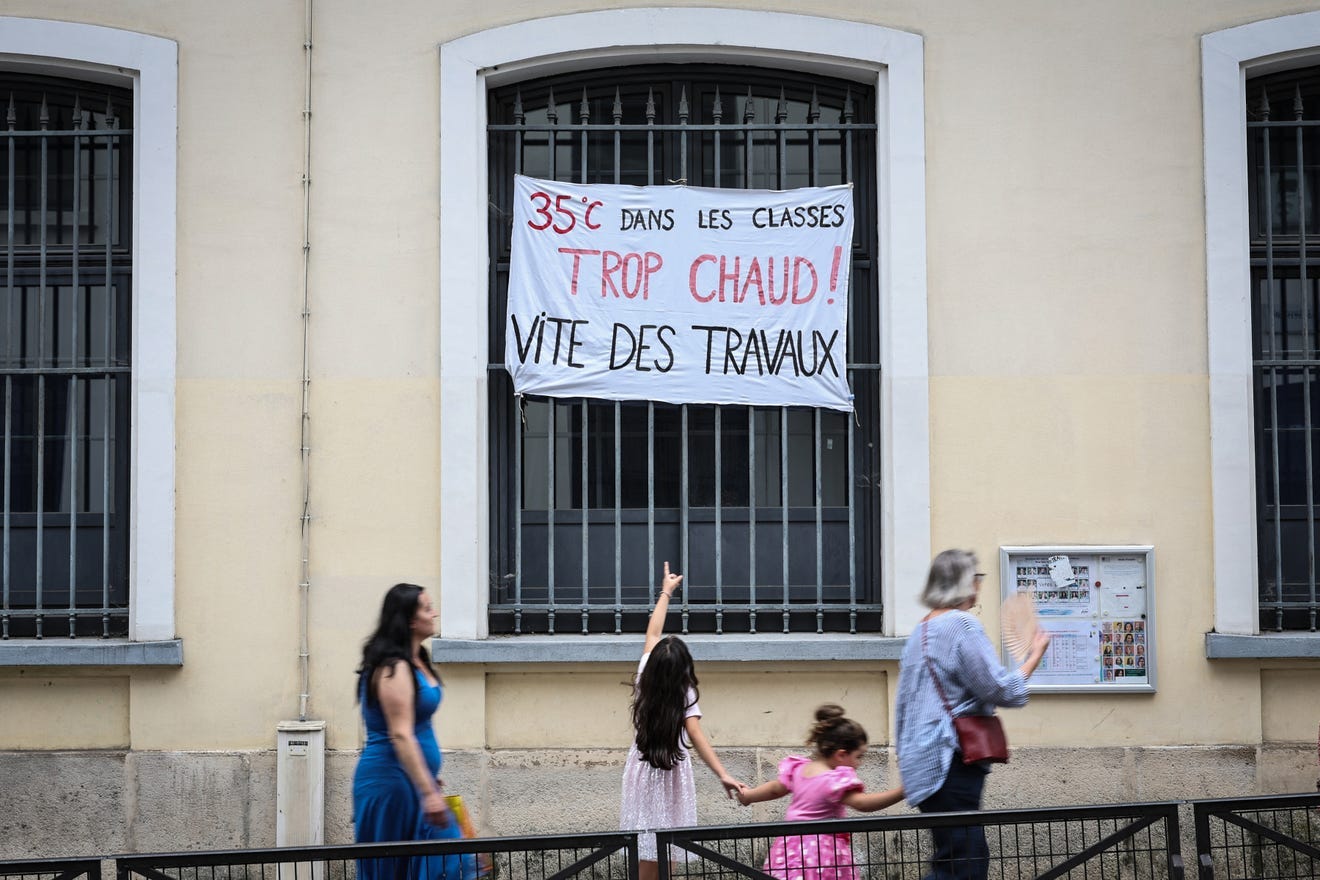
The sign reads: “35 degrees Celcius [95 F] in the classrooms, too hot. Work needs to be done quickly.” The media’s preferred heatwave aesthetic focuses on individual endurance or leisure, ignoring systemic collapse. A straightforward image of protest like this—one that demands a response to unlivable conditions—is precisely the kind of reality check the front pages are missing.
The Body at Risk
Finally, these are photos that speak directly to the kind of response and demand the heat is placing on bodies, physical and social.
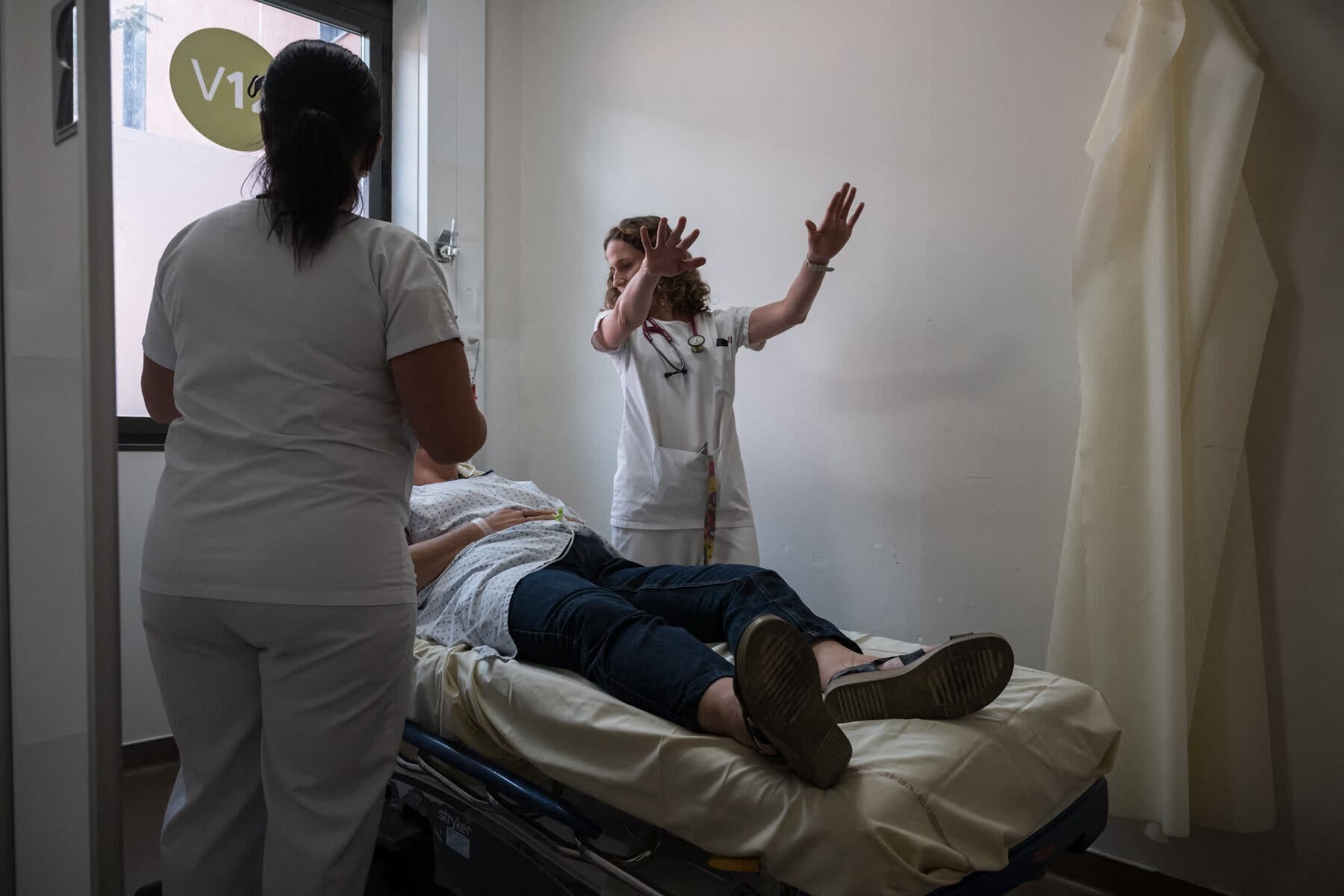
By June 28, France had recorded approximately 1,000 excess deaths in just four days, with emergency rooms seeing a fourfold increase in heat-related admissions. The photograph—a patient in Toulouse hospitalized for heat exposure—is the kind of scene that ought to anchor coverage of this emergency, but it rarely appears as a lead image.
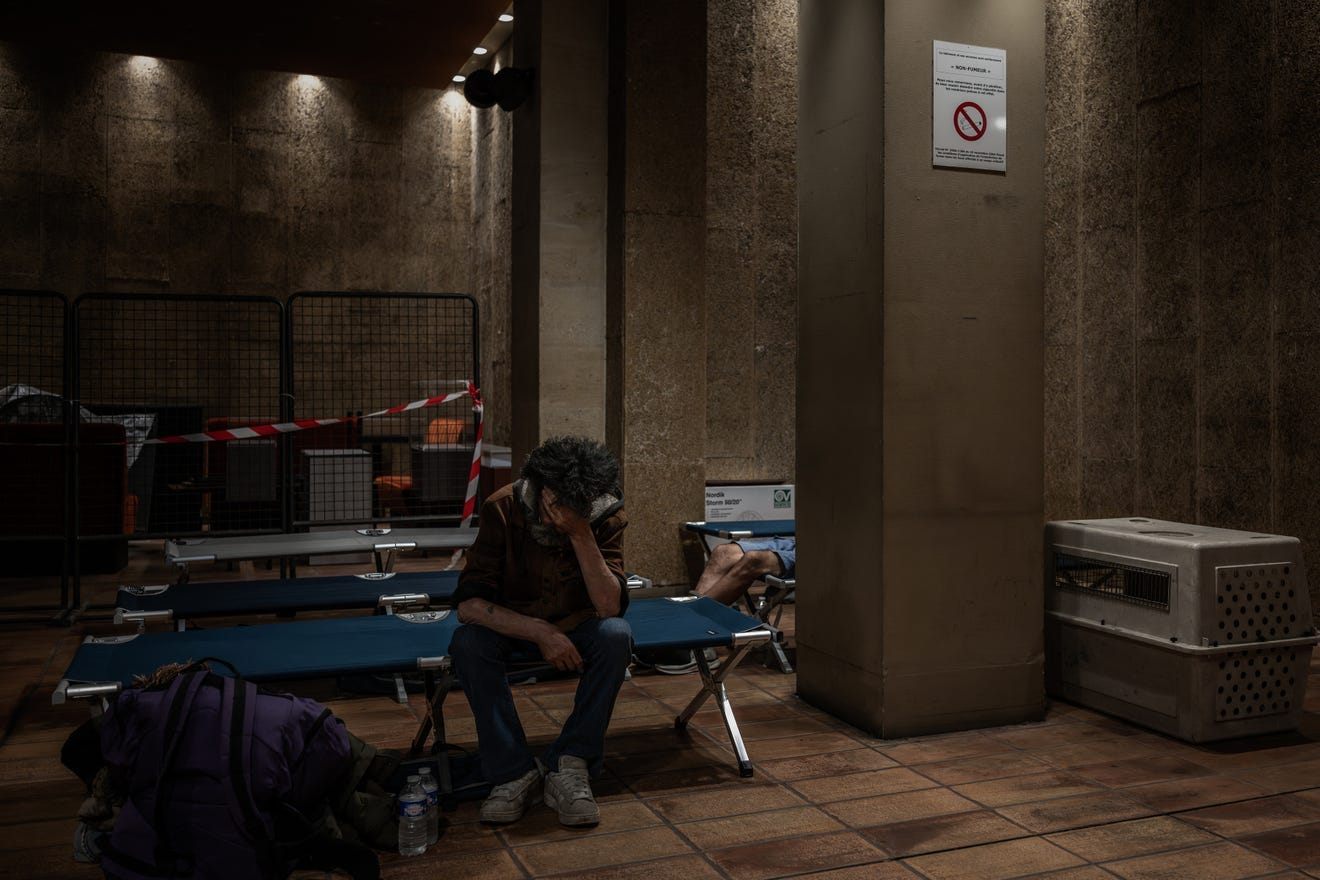
In cities prone to heat, I imagine relief centers will soon become as common as fire stations. But when those public defenses fail, the burden shifts entirely to the medical system.
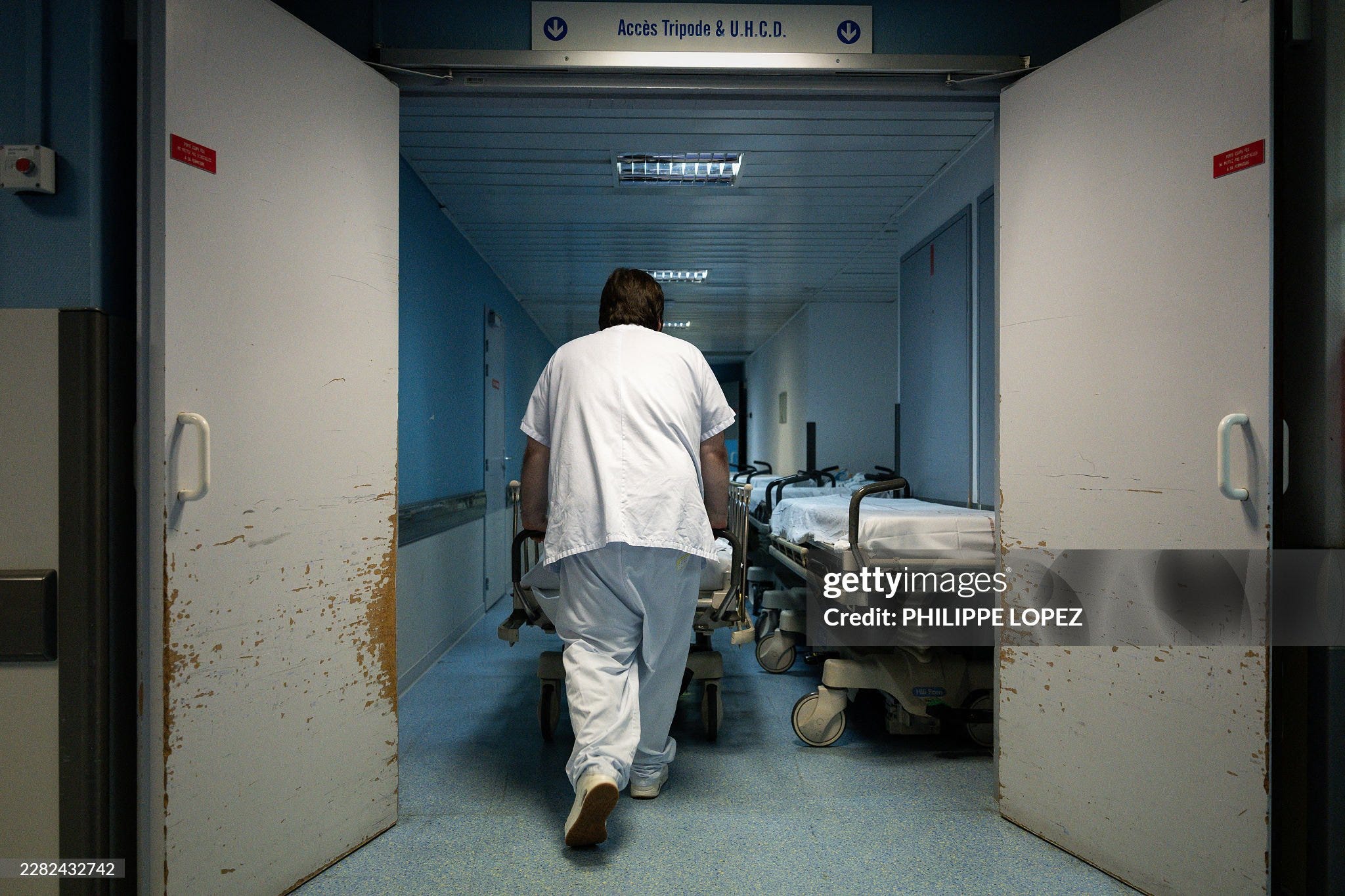
No, it’s not a still from the last season of The Pitt or a flashback to peak COVID days. It’s the grim reality of global heating.
Thank you for visiting Reading the Pictures. Despite our visually saturated culture, we remain one of the few sources for analyzing news photography and media images. This post is public, so feel free to share it.
To receive new posts and support our work, consider becoming a free or paid subscriber. As a non-profit organization, your subscription is tax-deductible.
Thank you so much for this— i was dismayed at much of the photo coverage for the heatwave looking like fun tourist/summer cliches, when in reality so many people are dying, unable to work, or otherwise suffering. I appreciate the curation of images that start to explore appropriate expression of climate crisis.
Thank you for this. People don't grasp the danger of heat, and the media is not helping. I see it every year here in Canada, with people basking under a 40C sun at noon at parks...