


Here at Reading the Pictures, we regularly chronicle how climate crises are visually communicated, from problematic “fun in the sun” heatwave imagery to powerful images of drought and fire in the West.
But nothing we’ve discussed looks quite like these photos from northern Minnesota.
These photos were taken at YMCA Camp Widjiwagan near Ely, Minnesota, on the edge of the Boundary Waters Canoe Area Wilderness. The BWCA, a federally protected landscape of over a million acres along the Canadian border, attracts more than 150,000 visitors each year. Over a dozen wildfires caused by lightning have been burning for nearly two weeks along the Canadian border, closing the BWCA to visitors at the height of tourist season and sending hazardous smoke as far south as St. Louis and as far east as New York.
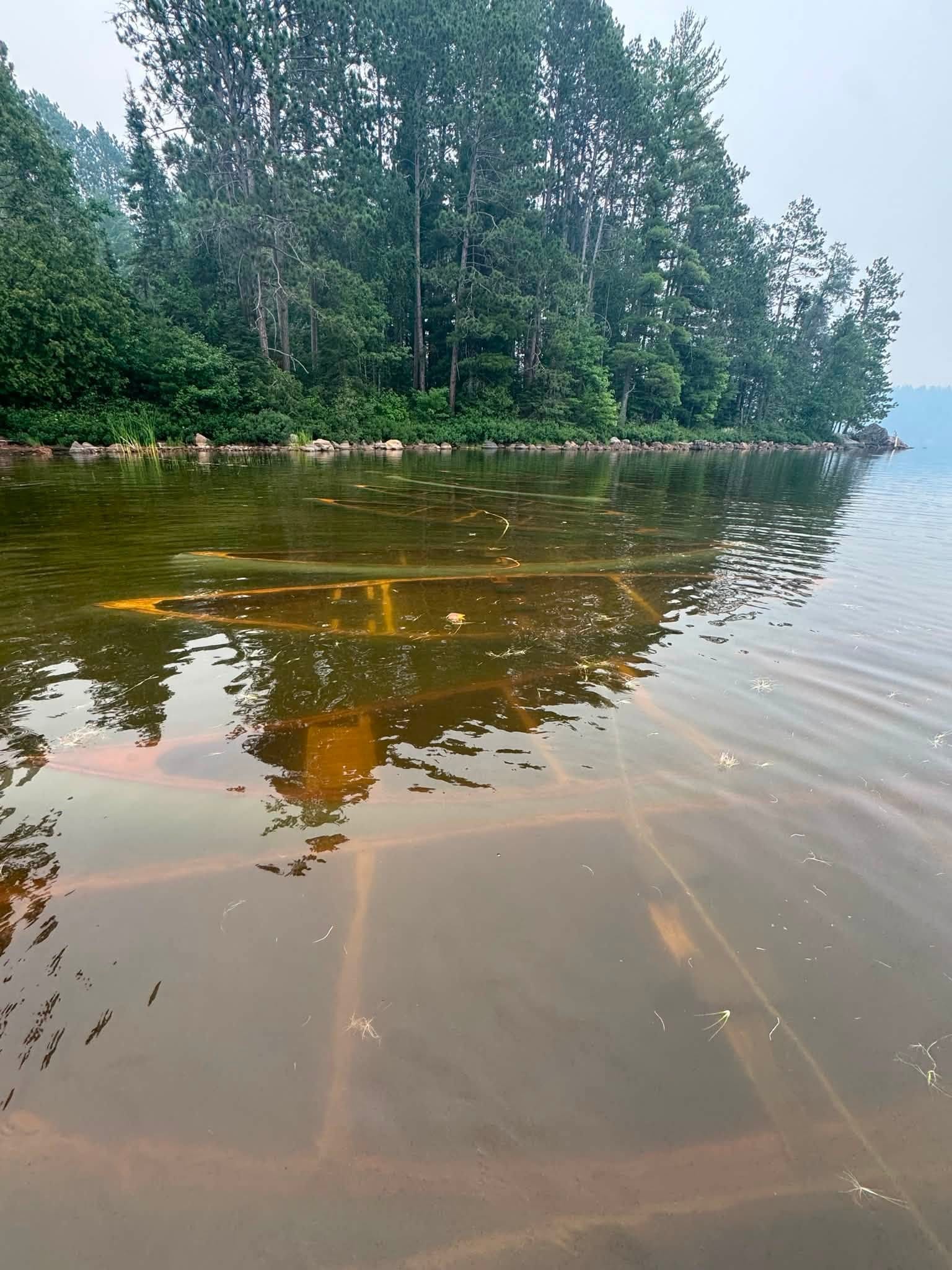
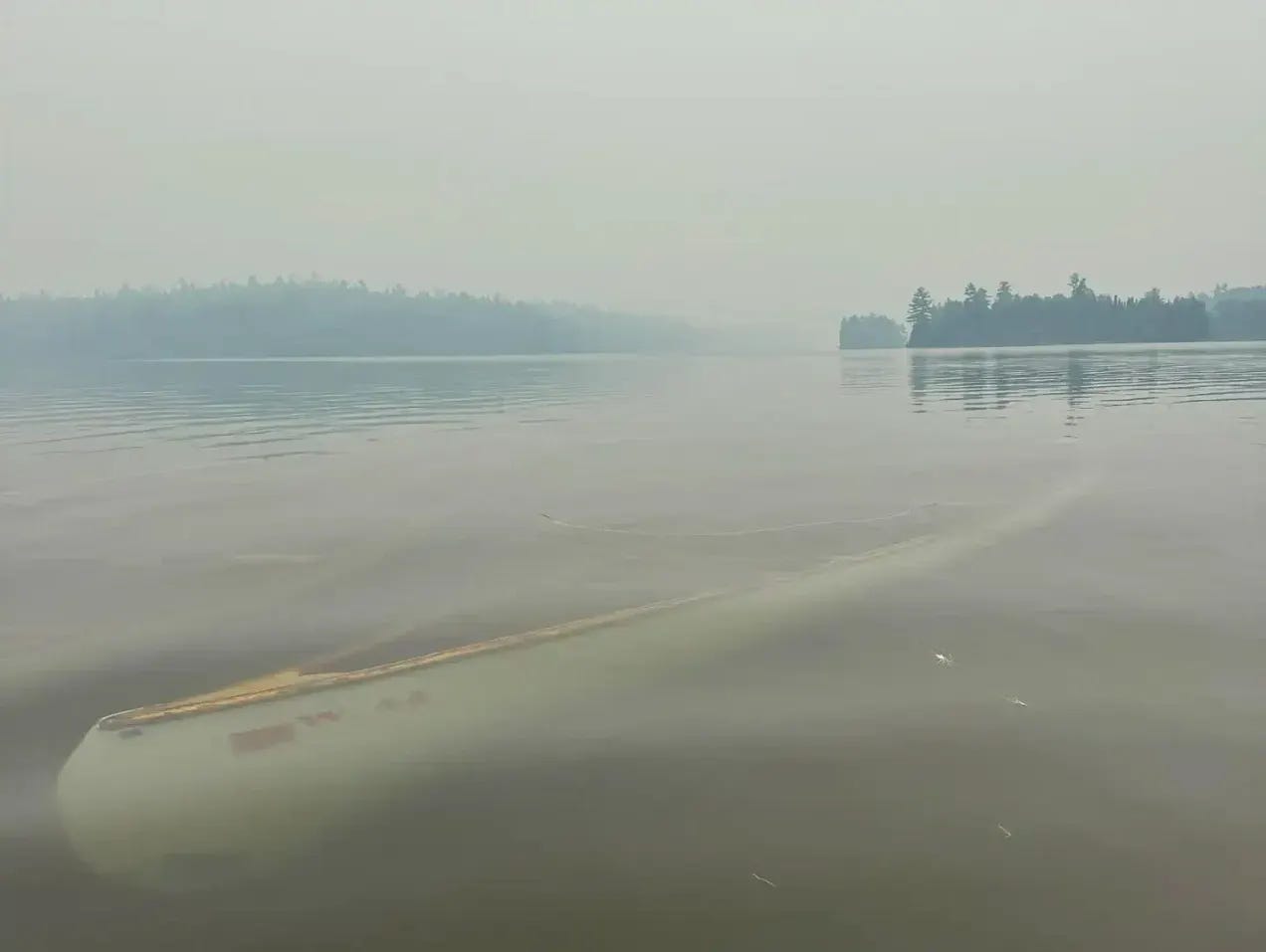
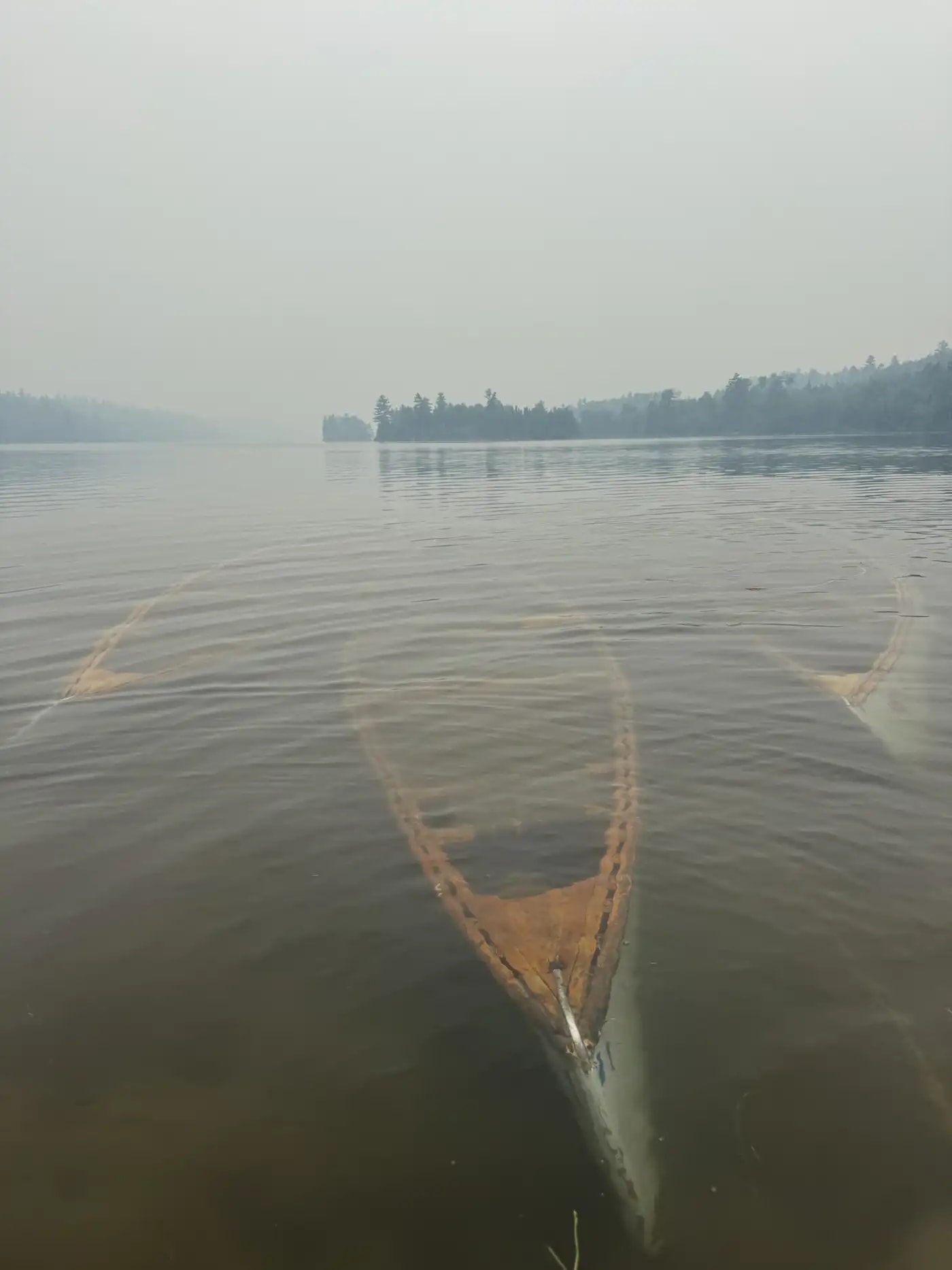
Staff at the nearly 100-year-old “Widji,” as it’s popularly known, loaded rocks into the camp’s fleet of historic wooden canoes and sank them into the lake to protect them in case wildfires overran the area. The resulting photographs show a haunting, otherworldly scene, with the usual rich greens and blues of northern forests and lakes replaced by a ghostly gray haze. The canoes hovering just beneath the placid water’s surface look more like mythical sea monsters than dependable vessels of travel.
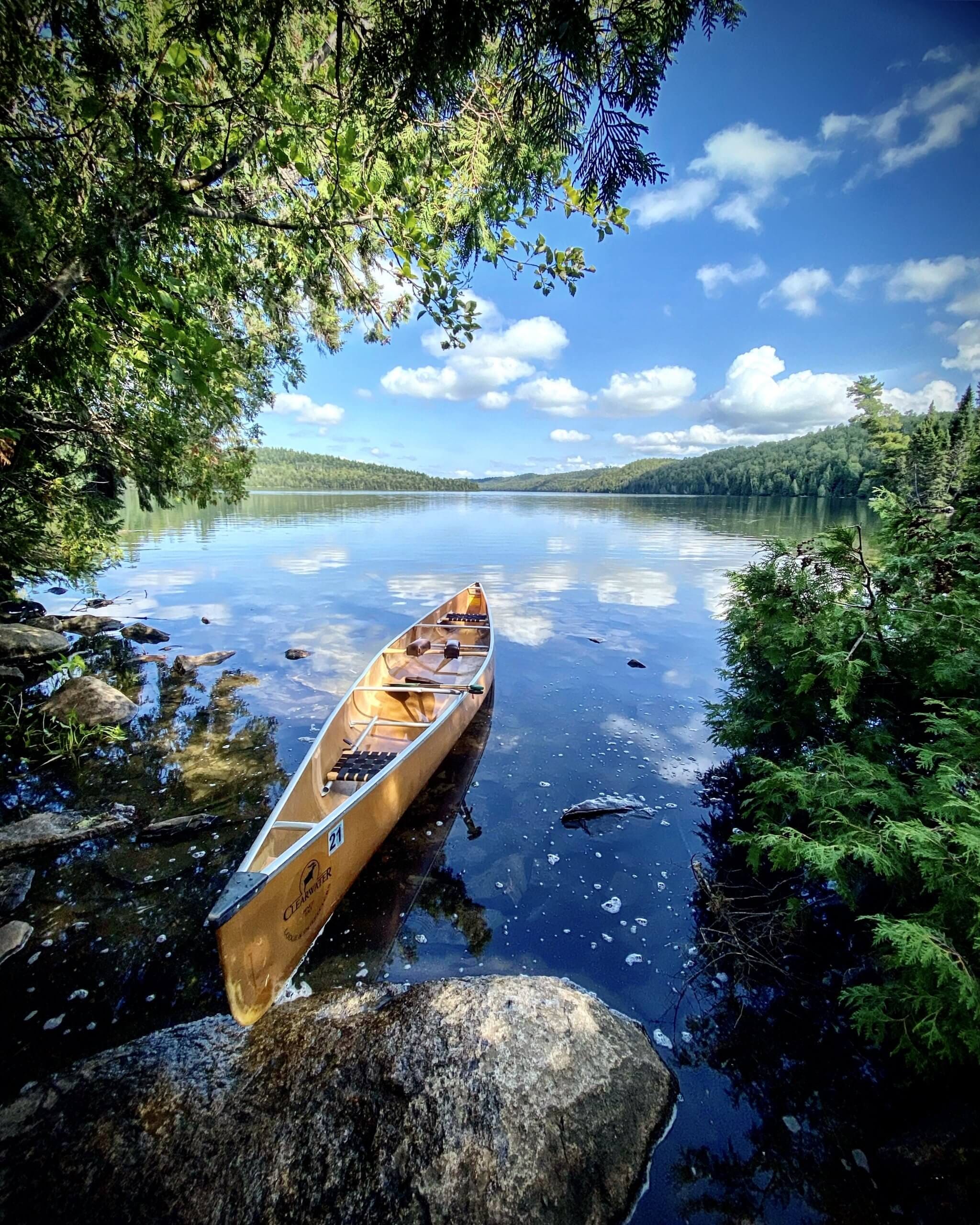
There’s a reason they call this part of the world “canoe country.” The canoe is the icon of the Boundary Waters, a common sight often featured in advertising and tourist photos. Such images often show an empty canoe in the foreground, inviting the viewer to step into the picture and paddle off to a wilderness adventure in the north.
The empty canoes in Schlehuber’s and Kraker’s photos, by contrast, invert that invitation. The images trigger our sense of the uncanny by simultaneously showing the familiar and emphasizing the strange. As a result, they deeply unsettle our senses, raising questions about how this area will survive and adjust to ongoing climate crises. The camp’s director was quoted in the Minnesota Star Tribune saying that if a fire occurs, the hope is that the water will hold and protect these historic, hand-built pieces of the camp’s history until they can once again be used to teach teenagers wilderness skills.
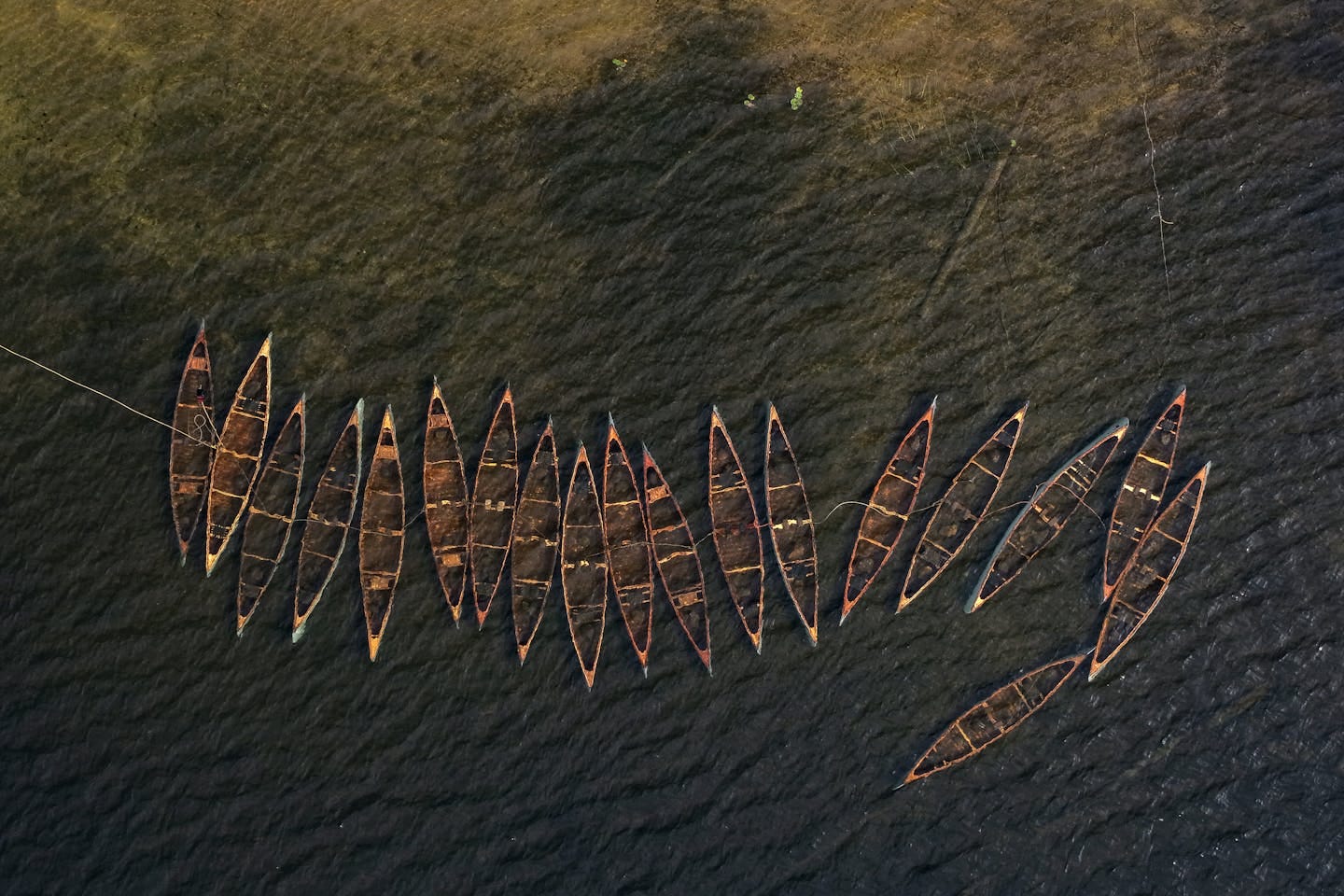
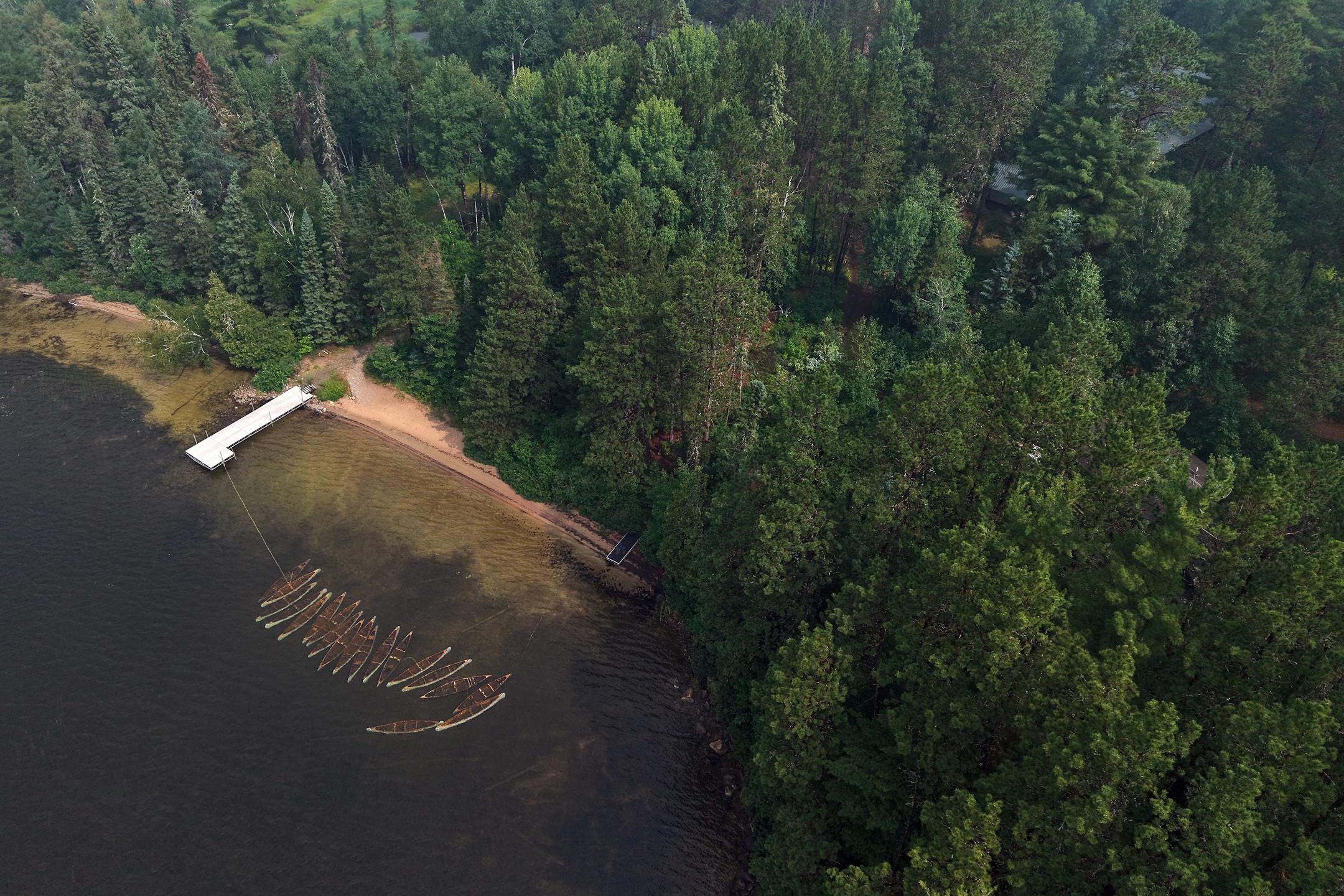
For now, though, they remain in an eerie state of suspended animation.
Cara Finnegan is a writer, photo historian, and professor of Communication at the University of Illinois. She has been affiliated with Reading The Pictures for over 15 years, most recently as co-host of Chatting The Pictures. She is also the author of the Substack writing newsletter, Finnegan’s Take.
Thank you for visiting Reading the Pictures. Despite our visually saturated culture, we remain one of the few sources for analyzing news photography and media images. This post is public, so feel free to share it.
To receive new posts and support our work, consider becoming a free or paid subscriber. As a non-profit organization, your subscription is tax-deductible.


Haunting & sad.
Wow. Super effective and unsettling (for all the reasons)… haunting and beautiful in its own right too.