


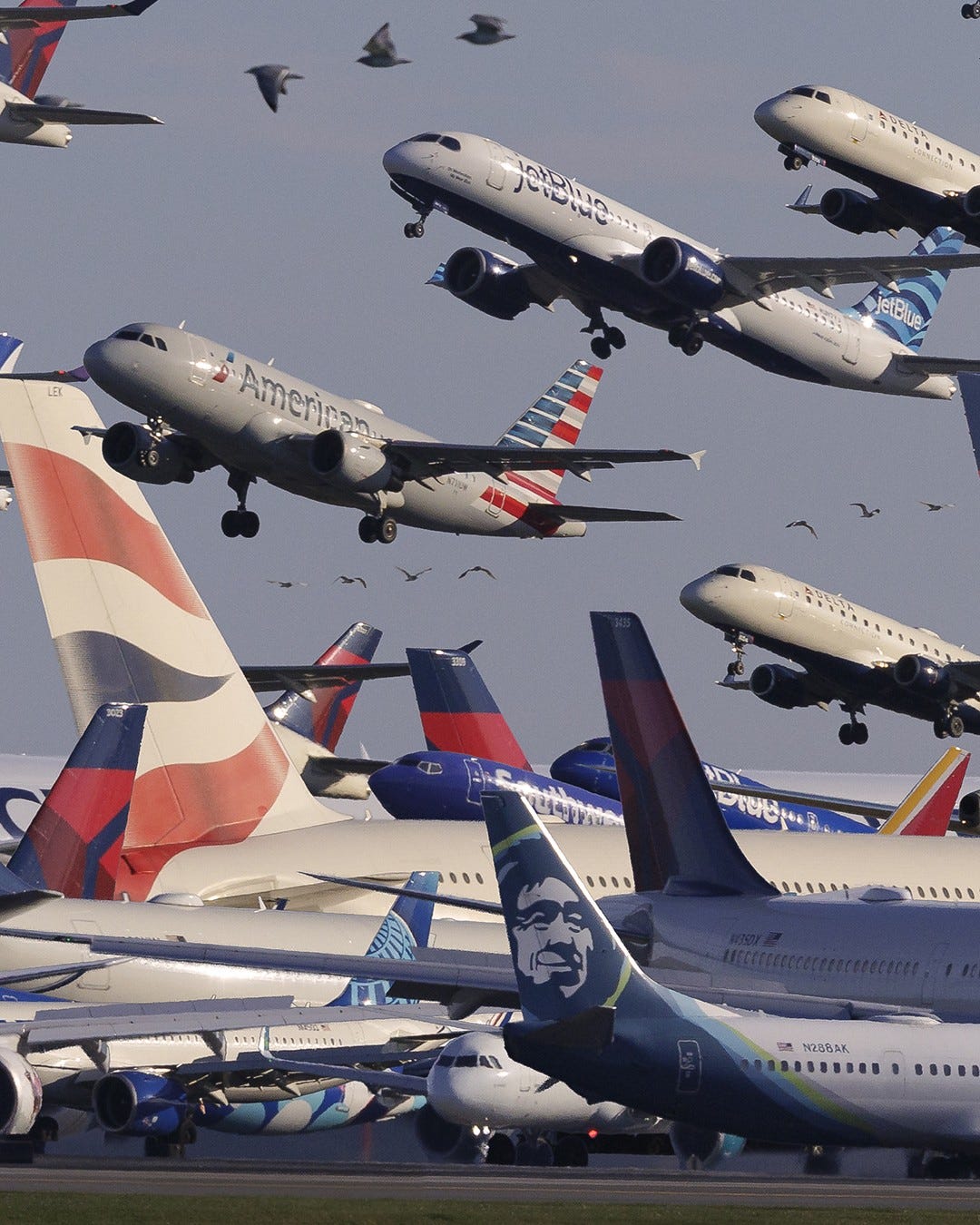
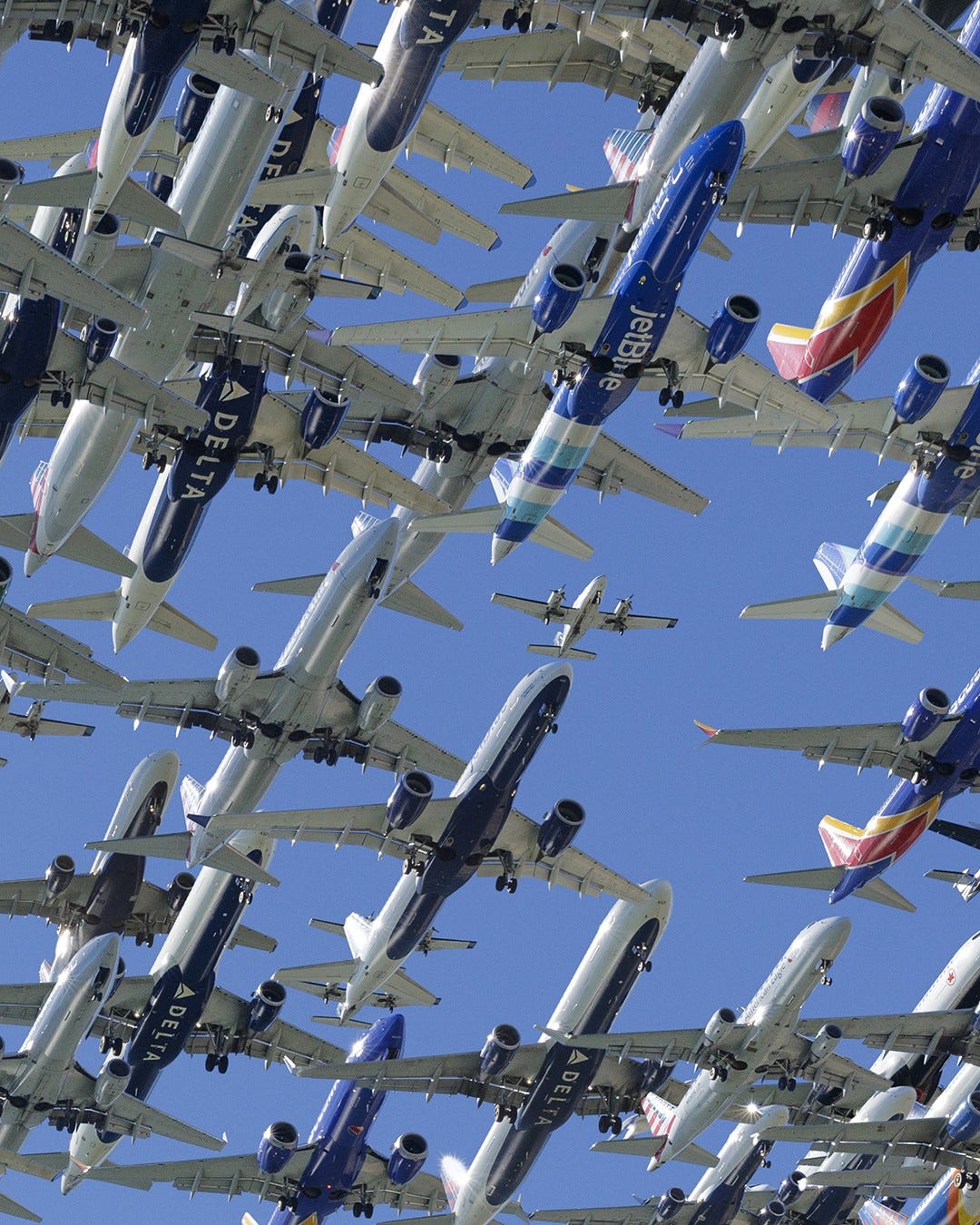
We're all used to seeing photographs of stranded passengers during typical events like severe weather, and last week's coverage was teeming with them. But nothing was typical about what went down. Study the photo stream, and you get a very different vibe. One shows a system on the edge of breakdown, stretched so thin that a single failure grounds the country. The other shows how differently these pictures seem to read after the midterm blue wave, with its massive repudiation of governmental failure and its demand for reality.
The timing couldn’t have been more uncanny.
On Thursday, November 12, The New York Times Magazine published “Is Air Travel Getting Less Safe?”, a deeply researched cover story about an overstretched, badly mismanaged air traffic control system. The very next day, the system went haywire.
Pelle Cass’s illustrations, featuring gates packed like expressways at rush hour and stacked takeoffs, with the satire thickened by flights of birds, were already on point. Pumped up by the real-life cluster, the imagery's dizzying chaos now served as a poignant metaphor for the ground stop and digital pileup. A system with no gaps has no margin for error.
Victims All
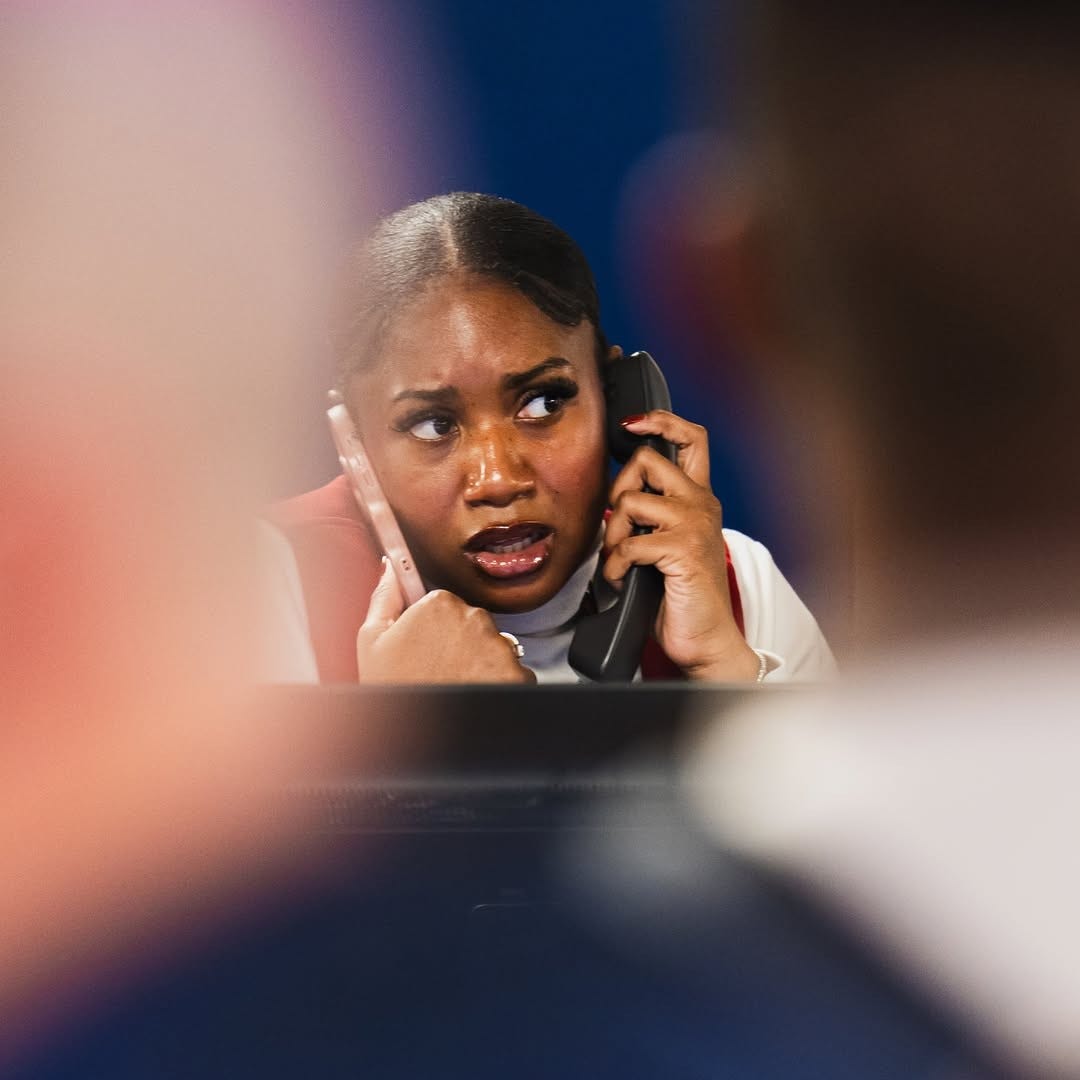
This image captures the duress at full tilt: the comic dual handsets, the sidelong look of someone receiving two versions of nothing, and the blur of two passengers in the foreground closing in like a vise. It's a portrait of who absorbs the blow when the system goes down, and it isn't the people who broke it.
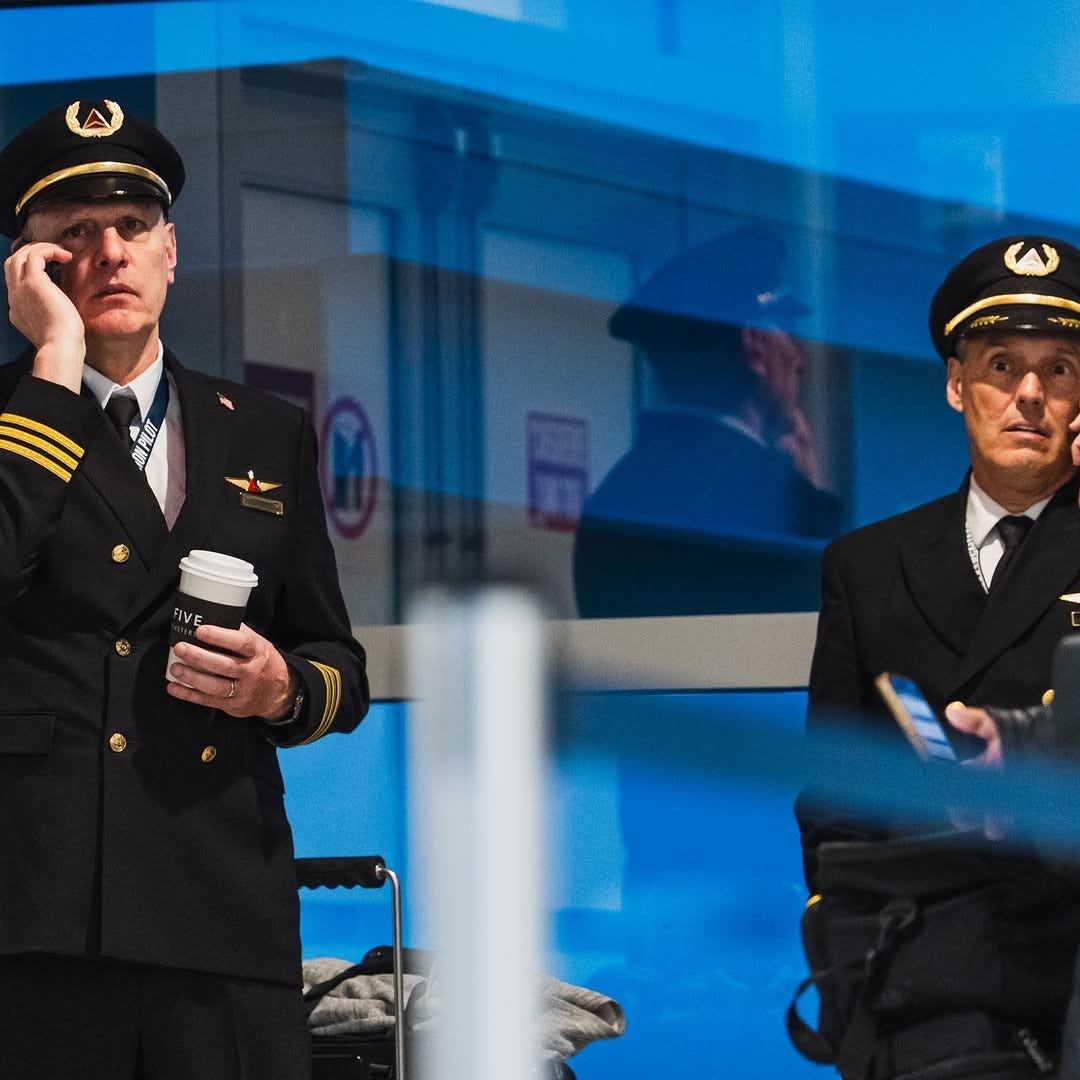
So much for uniforms of command. The men who fly the planes stand around like passengers, all that vigilance in their eyes wasted on waiting. And the reflection in the glass multiplies them, evoking every stymied pilot chafing at departure gates across the country.
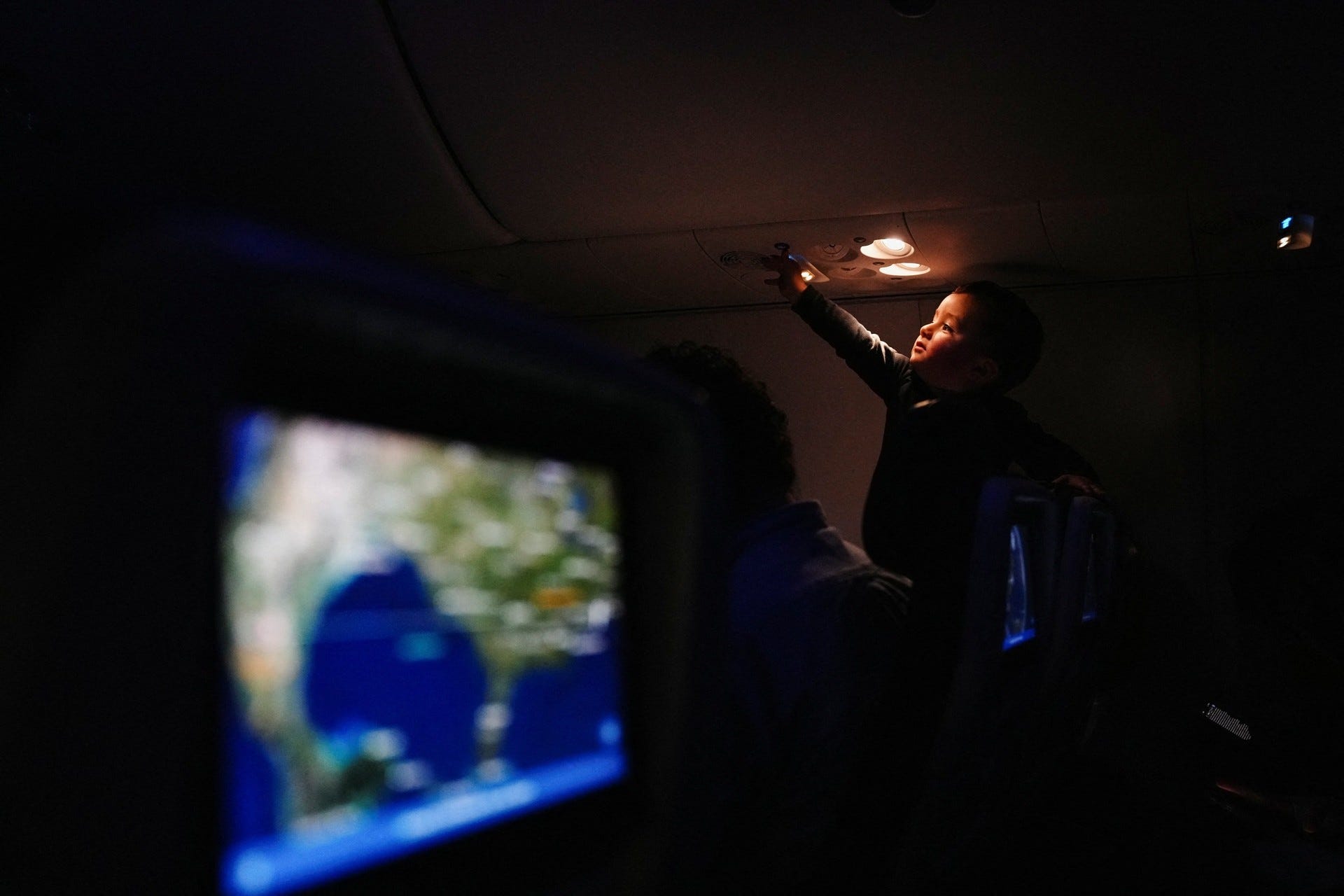
This photo of a child stuck on a plane at JFK is strangely moving, heightened by the darkness and the gap between the child and the screen. There’s his natural effort to work the controls by himself, while the country, Trump’s “Gulf of America,” hangs in a tilted blur.
The Irony
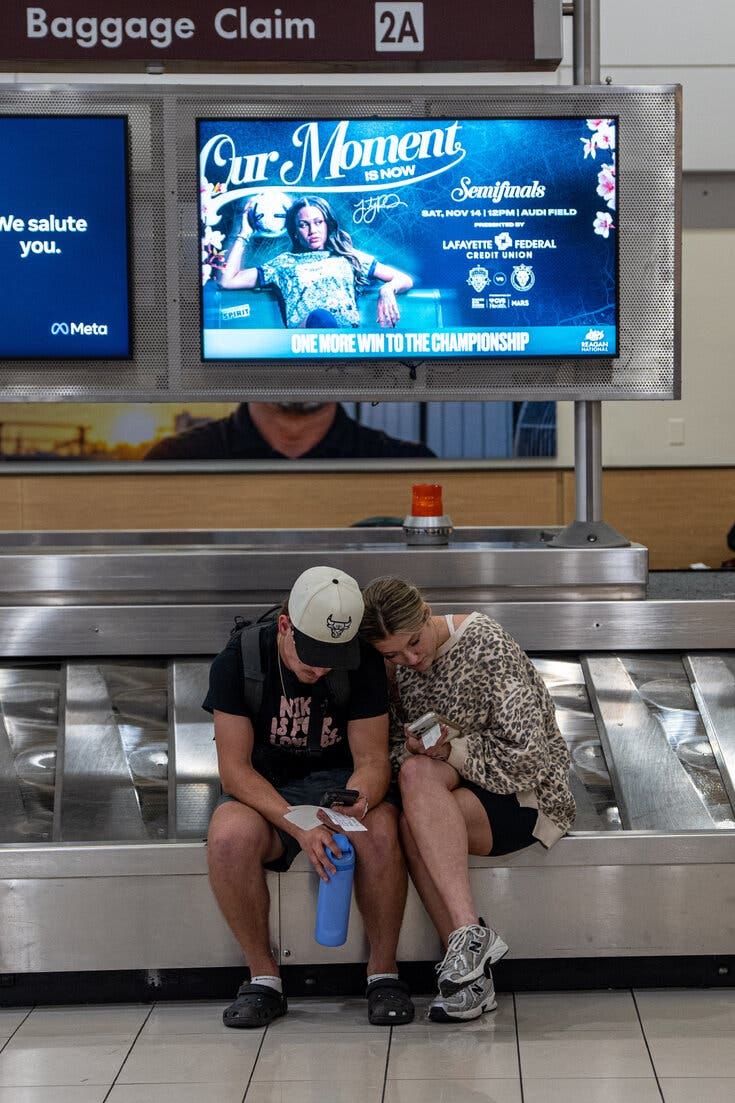
Our moment is not now.
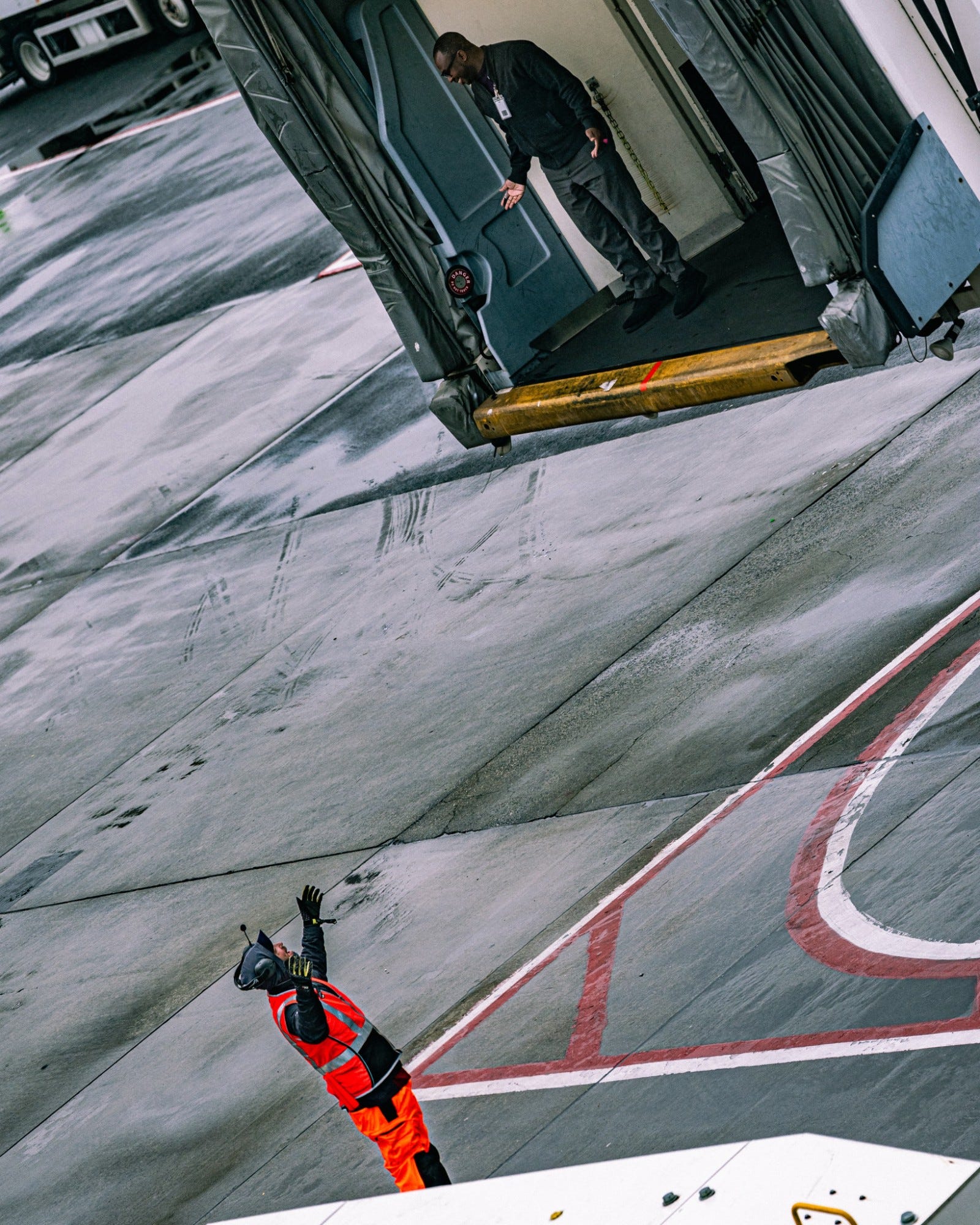
This disorienting tarmac photo from the day of the shutdown offers perfect commentary. Which way is up? And those raised arms: the universal shrug of "hell if I know."
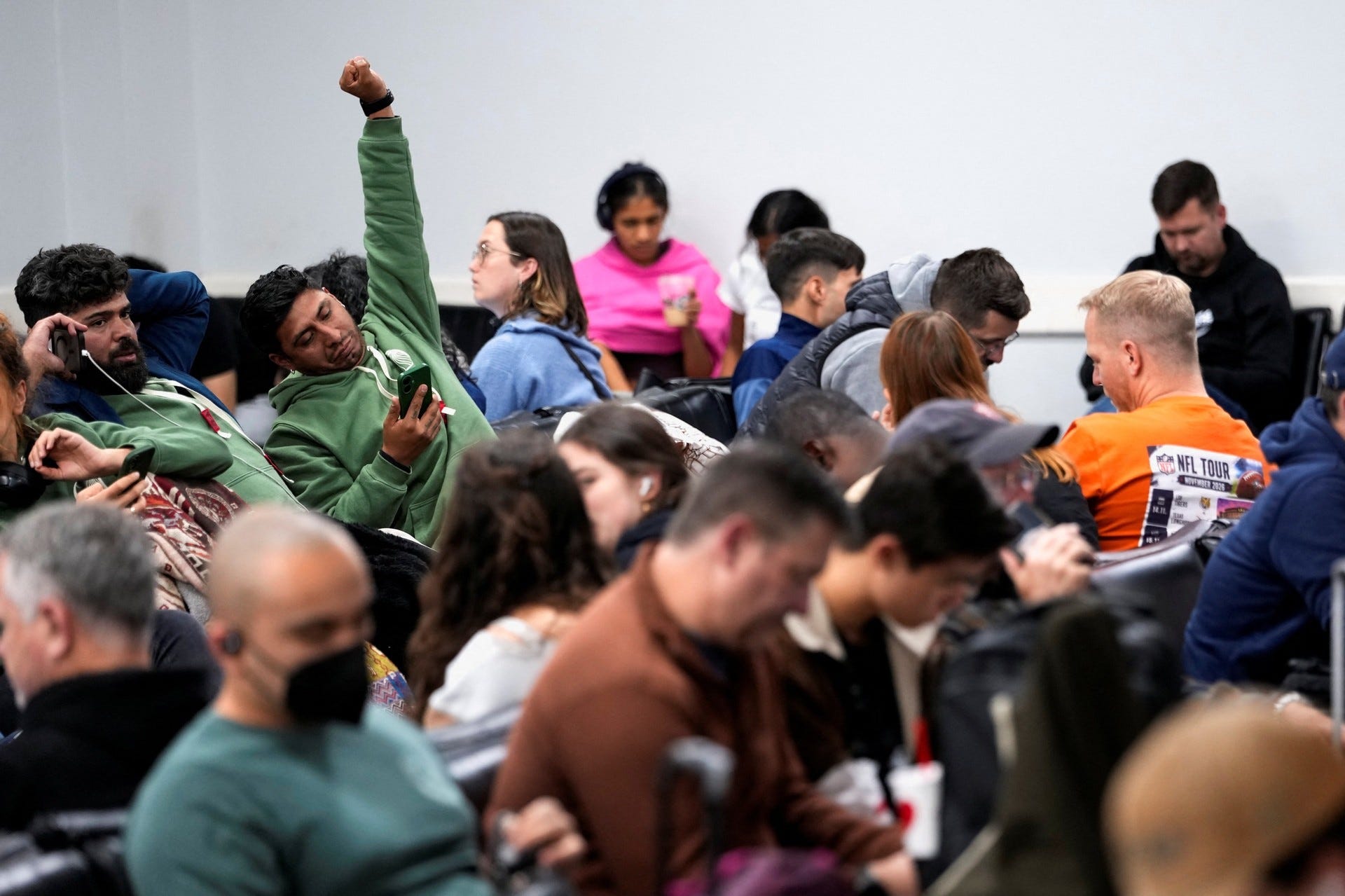
Before the midterm landslide, I wouldn’t have given this photo a second look, and maybe editors wouldn’t have either. A man stretches, nothing more. But after an election that delivered a thunderous rebuke to governmental incompetence, that arm shooting out of the crowd of waiting travelers, fist clenched, starts to look like something else.
Damage Control
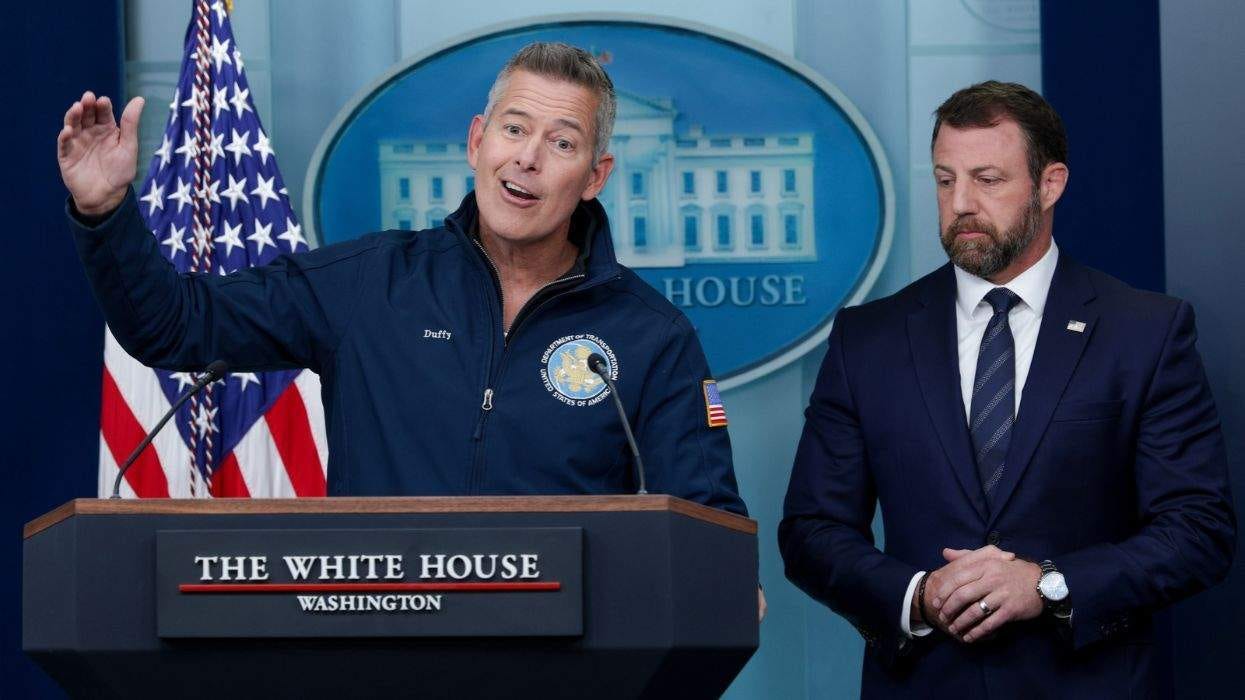
If these photos are challenging (here, Alex Wong catches Duffy's hand banking like an airplane, a flourish that plays off Mullin's hyper-solemnity), they can't compare to the memes flooding the internet dunking on the Duffy/Mullin press conference. The two secretaries called it a national emergency, then offered more praise for Trump and blame on Congress than any apology or guidance for travelers. Trump, of course, pinned it on Biden.
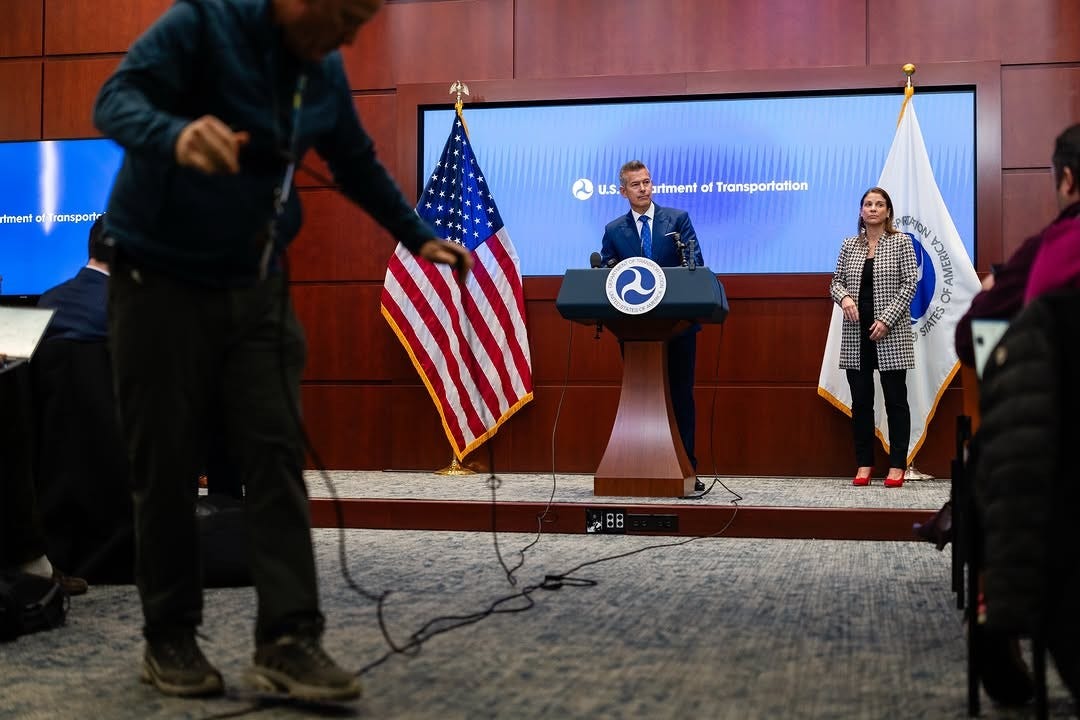
Eric Lee serves up well-deserved sarcasm, pivoting off Duffy's explanation that a federal contractor replacing a section of old copper wire with new fiber had overloaded the system. (Duffy didn't mention that the FAA skipped its usual risk review by its own technicians, according to their union.) The tech wrestling a snarl of wire at the Transportation Department, with Duffy frozen in the distance, might be the snafu’s snafu of the year: the follow-up briefing on the breakdown broke down, too.
In chaos, often of his own making, Trump thrives on confusing the issue with blame and distraction. But after the blue wave, the shutdown just reads as neglect. Follow the cable, and it snakes through gutted federal agencies straight to the West Wing.
Thank you for visiting Reading the Pictures. In an intensely visual and polarized political culture, we remain a singular source for closely reading news photography and media images. The way we see shapes what we believe, and close attention is a democratic act. This post is public, so please share it.
To receive new posts and support our work, consider becoming a free or paid subscriber. As a non-profit organization, your subscription is tax-deductible.