


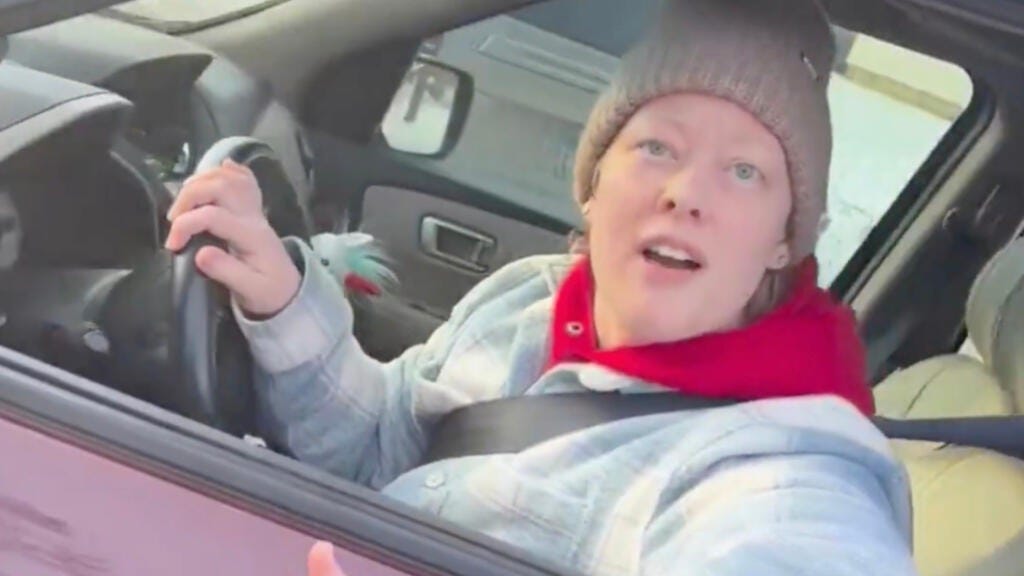
On January 7, 2026, ICE agent Jonathan Ross shot and killed Renee Good in Minneapolis. Within hours, Trump and Homeland Security Secretary Kristi Noem constructed their lie. Trump claimed Good had “run over” or “tried to run over” the agent—framing the shooting as self-defense. Noem went further, branding Good a “domestic terrorist” who “weaponized her car” and “attempted to run [agents] over and ram them.”
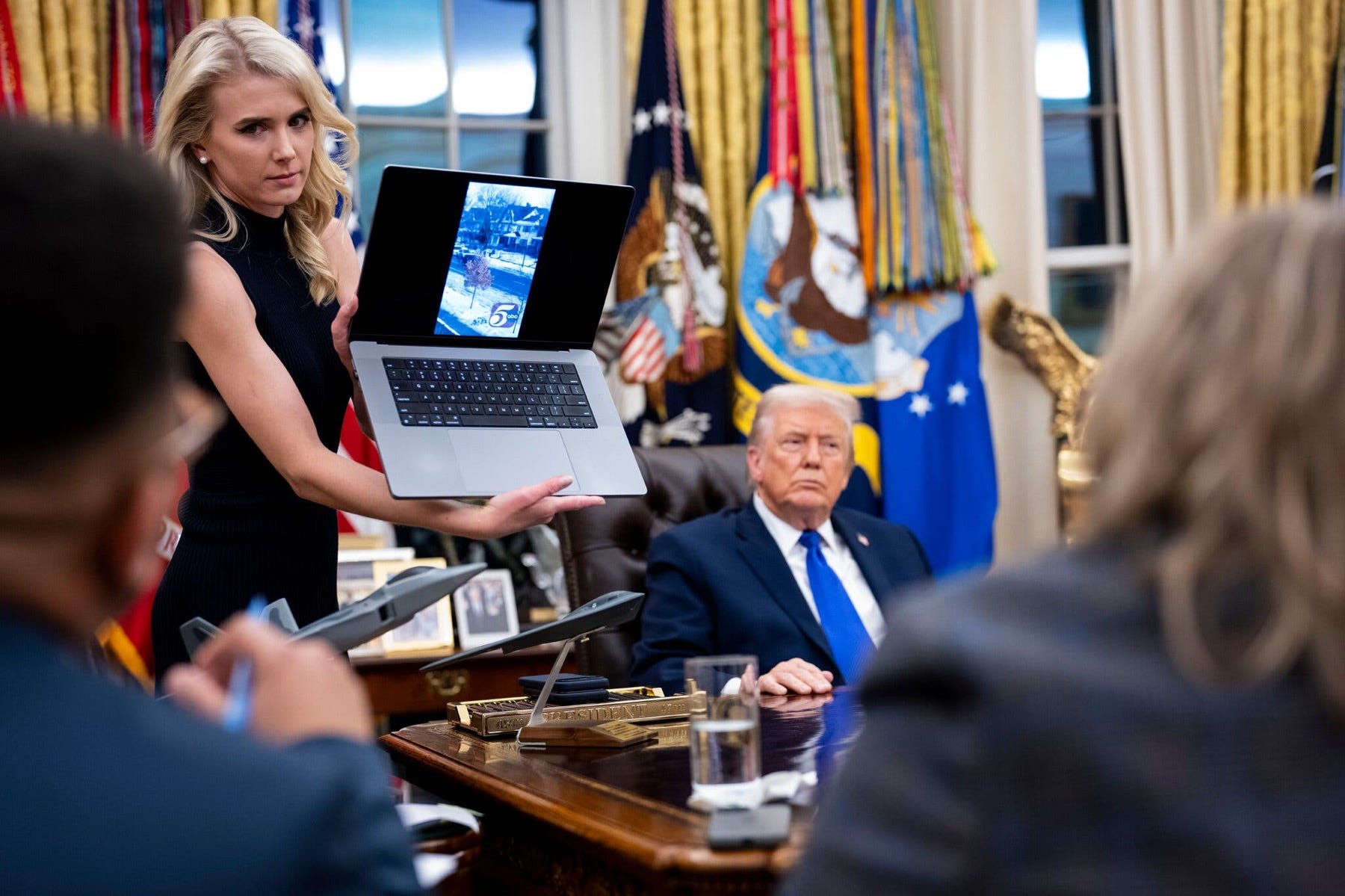
Here’s Trump the next day, seated with New York Times reporters in a pre-scheduled interview, watching an aide hold up a laptop displaying the shooting footage. “Well,” he says, “I — the way I look at it…”
The performance is pure Trump: insisting, as the adage goes, that we believe him over our own eyes.
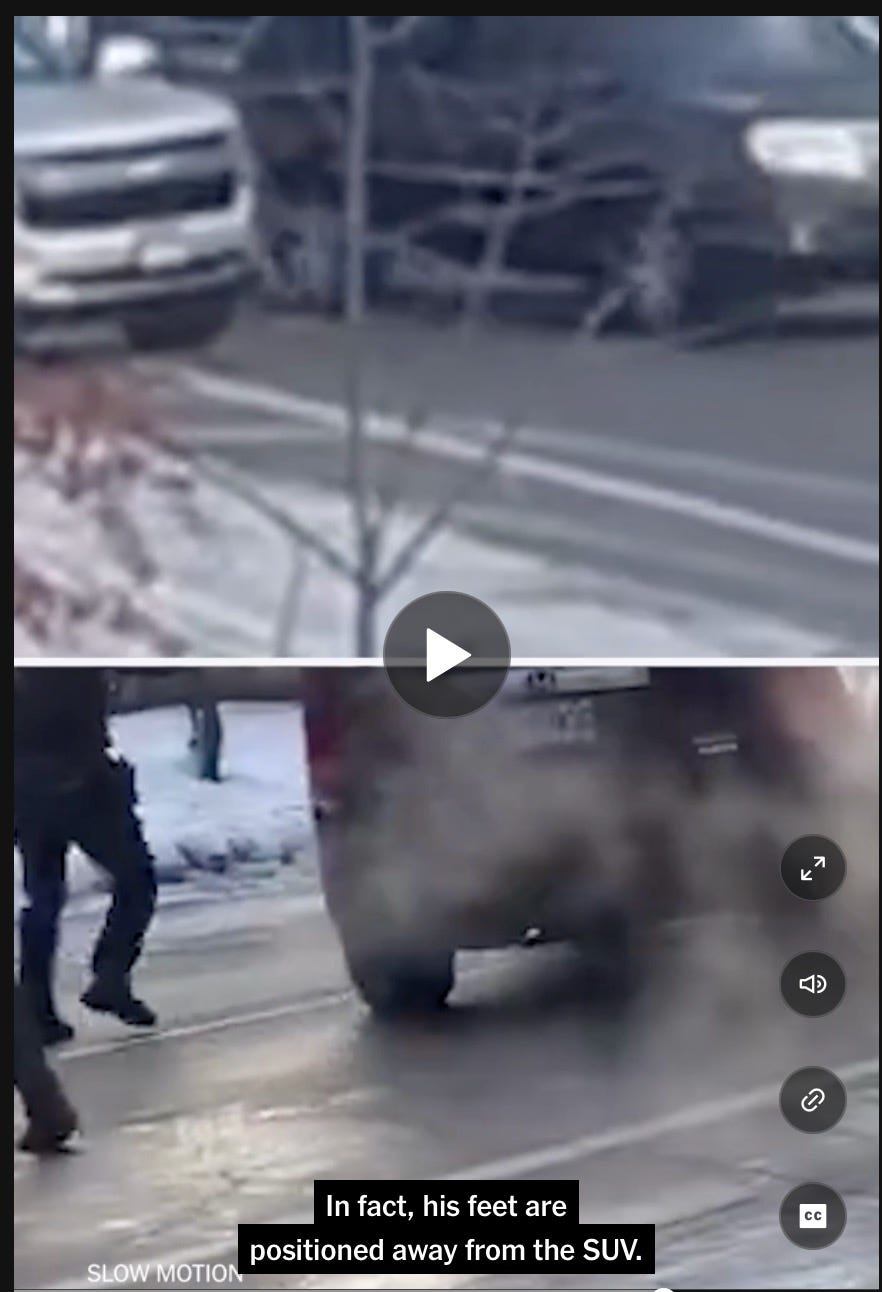
But the reporters had done their homework. The Times’s acclaimed Visual Investigations Team had analyzed the footage and determined the claims were spun out of thin air. (See the investigation here.)
The lie wasn’t just wrong—it was erasure. While accusing Good of weaponizing her SUV, Trump and Noem weaponized the narrative itself—turning her car from the vehicle of her death into evidence of her guilt.
The killing sparked immediate protest in Minneapolis. Demonstrators flooded the streets where ICE agents had killed Good, reclaiming the contested roadway. That’s where photojournalists went to work—not just documenting the clash, but revealing deeper patterns about vehicles, enforcement, and who operates with impunity on American streets.
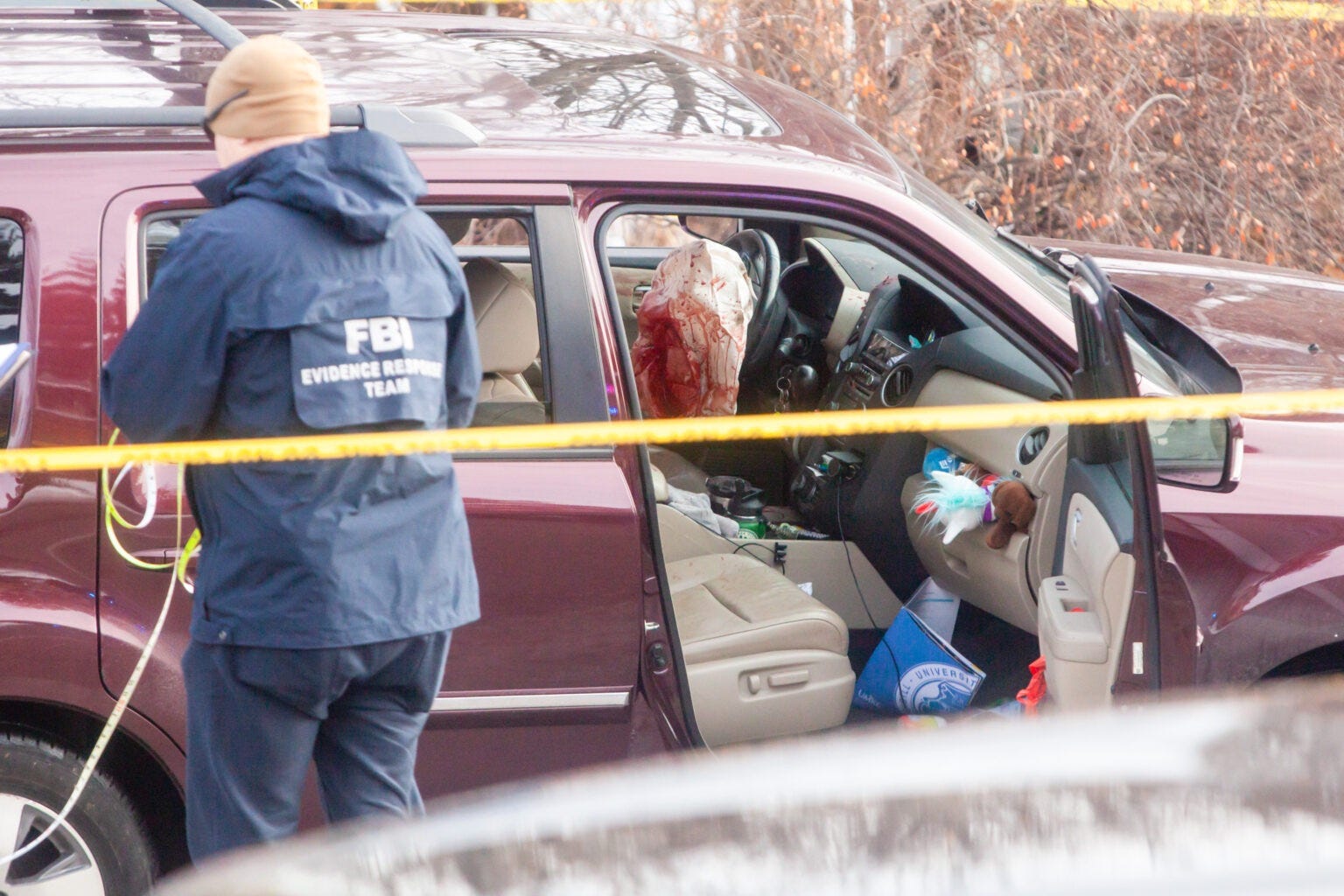
Is there any chance that Trump saw the more graphic photograph of the Good’s car from the passenger side with the bloody airbag and the heart-wrenching view of the teddy bear peering out of the glove compartment?
Cars aren’t incidental to these killings—they’re central. They’re where civilians get trapped, where agents claim a threat, where rules of engagement collapse, where the kill shot happens. Photographers aren’t just recording what happened in Minneapolis. They’re interpreting a pattern: the vehicle as weapon, as trap, as contested space.
Reading the Swarm
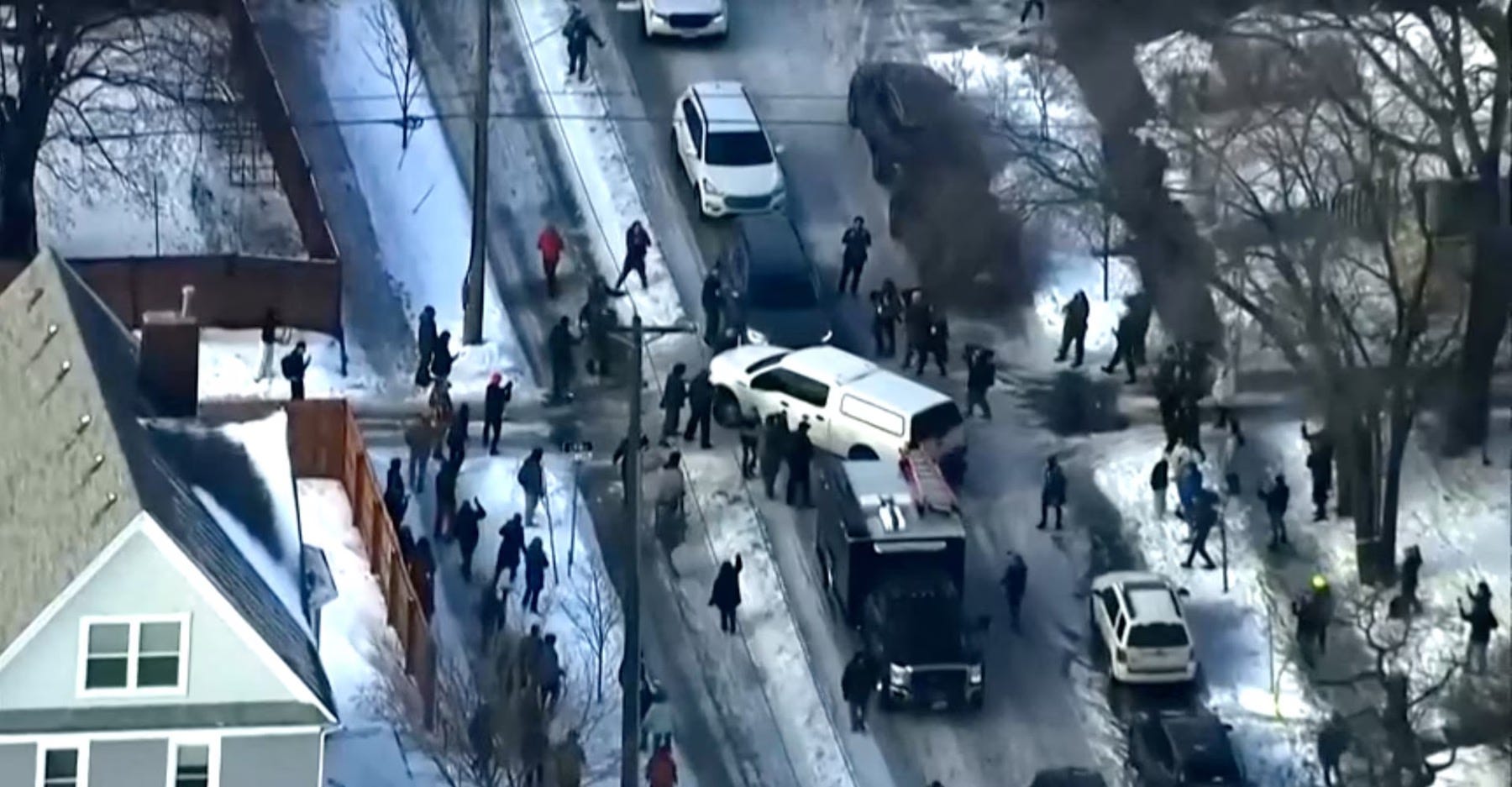
At least a few dozen people have died in ICE custody or during ICE operations since Trump’s return, while an alarming subset of those fatalities involved vehicles. When ICE turns traffic stops and parking-lot encounters into battlefield raids, every car becomes a potential crime scene, exposing drivers and passengers to sudden lethal force and legal jeopardy.
The aerial view captures what Good experienced on the ground: a sudden swarm of ICE vehicles, no clear guidance, rules of engagement collapsing in real time. The following close-ups read the details of that swarm—the vehicles, the bodies, the small gestures that reveal who holds power and who faces the threat.
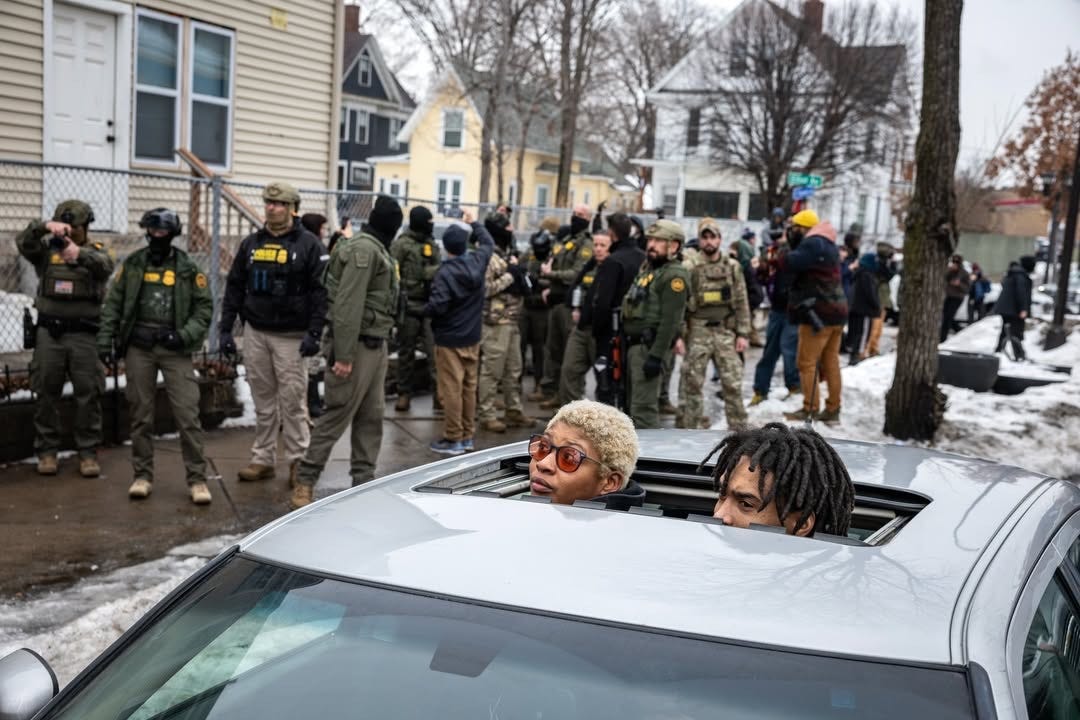
Look at what David Guttenfelder captures the day after Good’s killing: two youths, heads out the sunroof, juxtaposed with a platoon of agents. The car creates a barrier between them and the swarm—they’re elevated, protected, watching the enforcement machinery unfold. In this frozen moment, they could be riding in a tank, heads safely out the top, observing from a position of relative security.
And yet, Renee Good was in a vehicle the day before, and she’s dead. These two Black Americans—occupying a momentarily “privileged” observer position in a scene defined by racist enforcement—are one agent’s reaction away from the same fate.
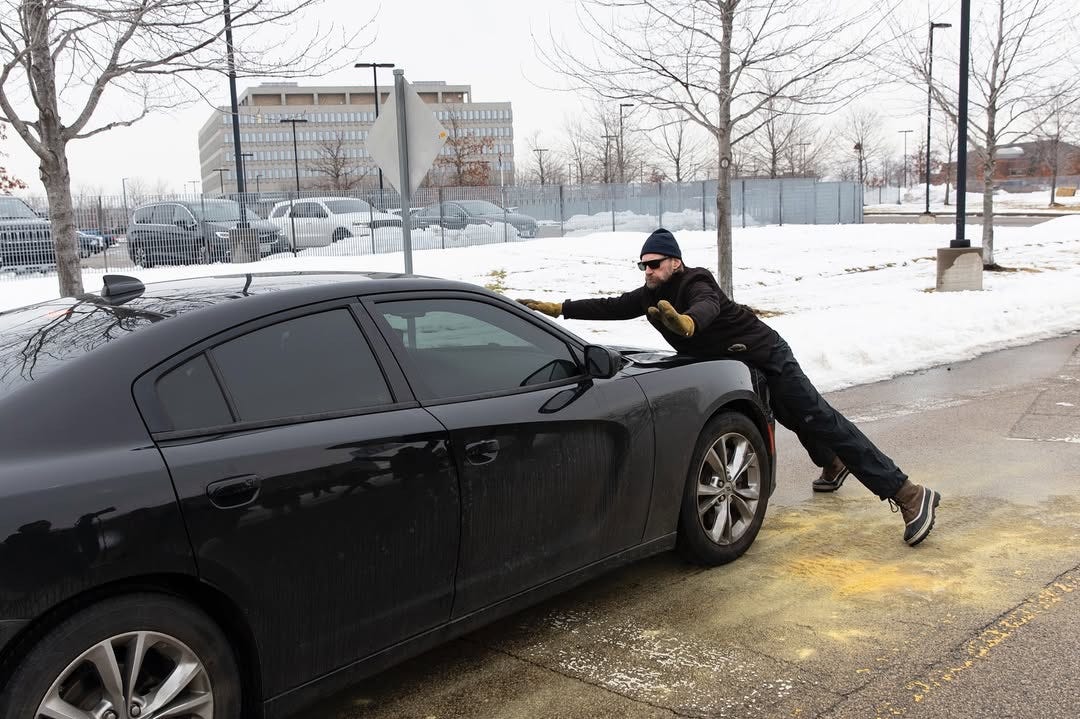
Mostafa Bassim captures a man leaning against an unmarked CBP vehicle, arms outstretched, in a gesture that physically reclaims the enforcement apparatus. He’s making deliberate contact with the vehicle—the catalyst of state violence—reversing the power dynamic. The lean echoes Trump’s propaganda lie that Good rammed an ICE officer, but here, the behavior is controlled, visible, and intentional. His outstretched arms emphasize caution and communication.
There’s something almost superhero-like in the posture—a figure about to take flight—conveying the dignity, agency, and respect that should be automatic for all citizens in normal times. In the hangover from the slaughter, Bassim shows protesters turning what was a kill zone into a site of visible resistance.
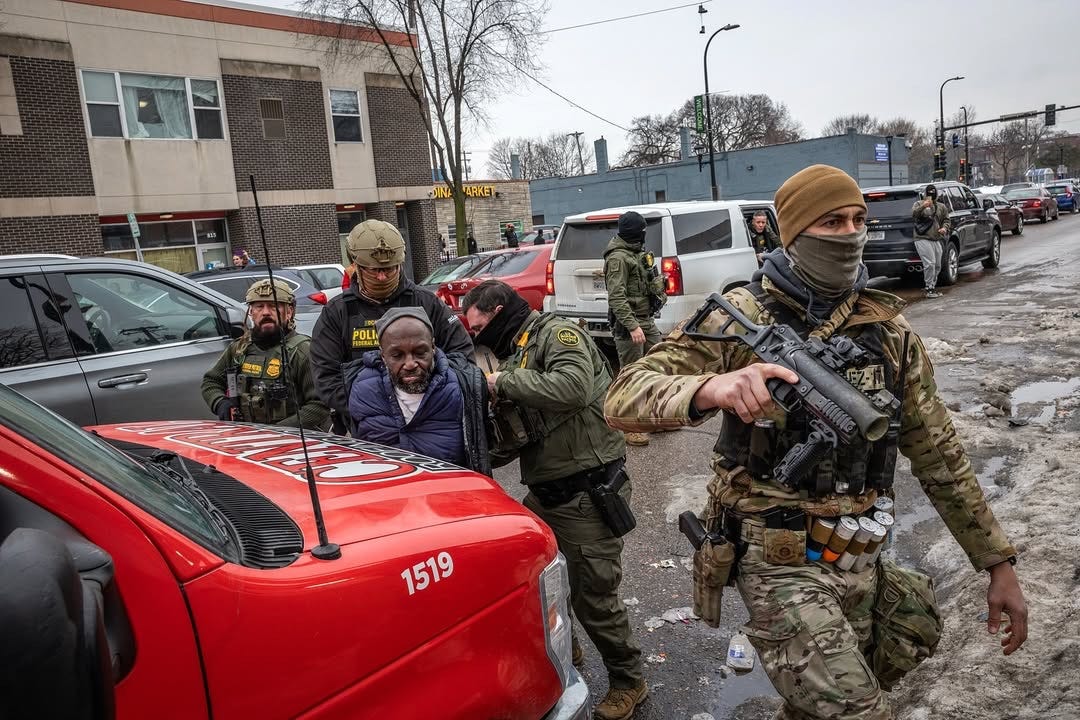
Another Guttenfelder image puts the shoe on the other foot. A bright red service truck—vivid against the grey Minneapolis winter—sits center frame, its driver pressed against the hood by two agents who manhandle him despite full cooperation. In the foreground, a masked agent in combat gear looms with his weapon—the militarized presence that now defines American streets.
These photos put the Trump/Noem narrative to shame. The agents operate with roadway impunity. The double standard is stark: who gets designated a threat behind the wheel, who operates with street-level dominance, and who pays with their life.
Thank you for visiting Reading the Pictures. Despite our visually saturated culture, we remain one of the few sources for analyzing news photography and media images. This post is public, so feel free to share it.
To receive new posts and support our work, consider becoming a free or paid subscriber. As a non-profit organization, your subscription is tax-deductible.
You're evil and baised if you truly believe this... the article is clearly using false parallels (not even the longest normal version of that term) and constantly uses slight of hands with its own facts, jumping from points, leaving no room for interpretation and simply paints a picture that is easy to believe and villianize fellow citizens... be honest you dont want america to be america. You want america to be a conservative bastion with no dissent or even moderation... and its sad because you and "Terrance most likely arent even aware of how many of your own youd regret selling out to compete in your fantasy land if it was reality...