


For anyone attuned to the language of photography—from photographers and scholars to visual editors and those who look closely—these are notable feats of composition.
The Order of Disorder
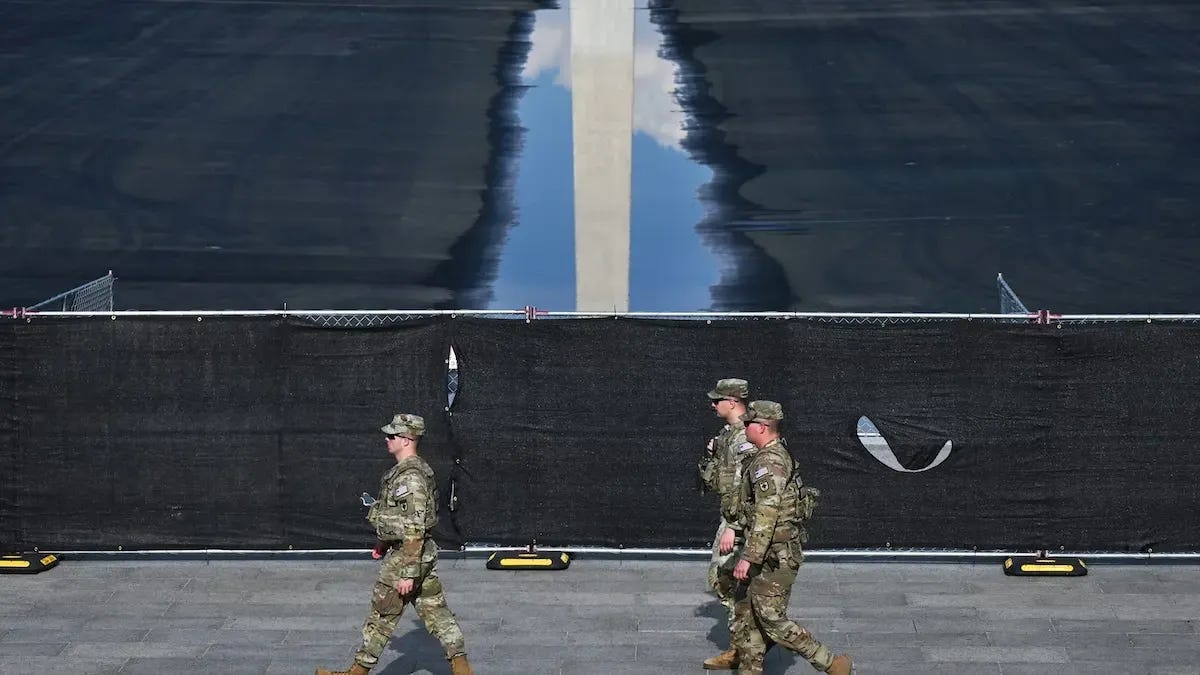
The geometry of Matt McClain’s photo for The Atlantic is so precise, so elaborate, that its damage is easy to miss.
One plane captures a span of the Reflecting Pool: the remnant of water, treetops fading into blacktop, and the Washington Monument’s fractured reflection compressed into a single field. A second plane runs perpendicular below—a long horizontal barrier, crossed by National Guard soldiers, bisected by the Monument’s pale, unbounded vertical.
It is not simply a split-screen effect or a study in contrast. McClain finds a structure in which vertical meets horizontal, depth meets surface, reflection meets obstruction, and the national monument rises only by appearing upside down. The achievement is to bring two Trump-era fiascos into one exacting visual system: troops deployed to Washington as an increasingly routine show of force, and the self-inflicted defacement of its most poetic, serene, connective body of water.
That is what makes the image so lethal. Its found order—a military presence made routine, a civic landscape remade out of vanity, and a national symbol distorted—exposes the historic disorder. No single element editorializes on its own. But in McClain’s found geometry, their coexistence is made to testify.
Travel with Natalie
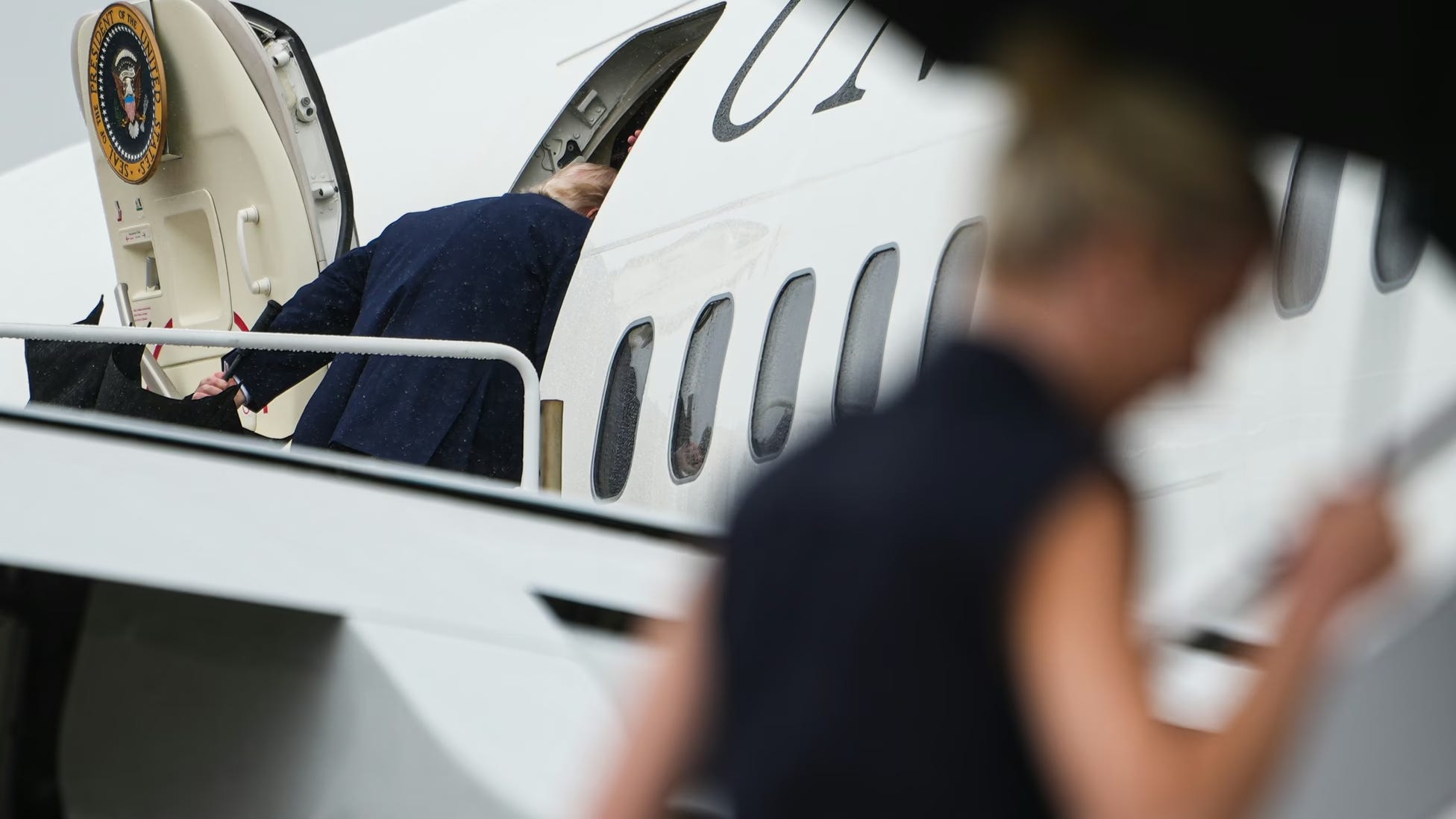
How do you photograph a blind spot?
This photo by Julia Nikhinson was cleverly chosen to open an Atlantic article after Senator Ossoff threw shade on Trump’s symbiotic relationship with his young staffer, Natalie Harp. The image draws its power from the visual trope of covert couples entering and leaving through separate doors—heightened by the revelation that the two were secretly whisked away from Air Force One in July in a catering truck.
Clinical psychology teaches us about “special relationships”: not all are physical, but intimacy often goes hand in hand. This one brings together Harp’s devotion to the man she called her “Guardian and Protector” after her father’s death—and Trump’s well-known appetite for mirroring by young, beautiful women.

What a perfect snapshot, balancing their no-longer-under-the-radar inseparability against the gaping power differential: two blond, dark-clad figures, Trump famously “on top,” Harp blurred beneath him.
Thank you for visiting Reading the Pictures. In an intensely visual and politically polarized culture, we remain a singular source for closely reading news photography and media images—because visual language is language, and the way we see shapes what we believe. Close attention is a democratic act. This post is public, so please share it.
To receive new posts and support our work, consider becoming a free or paid subscriber. As a non-profit organization, your subscription is tax-deductible.
Stunning images.
Works of art, both of them.