


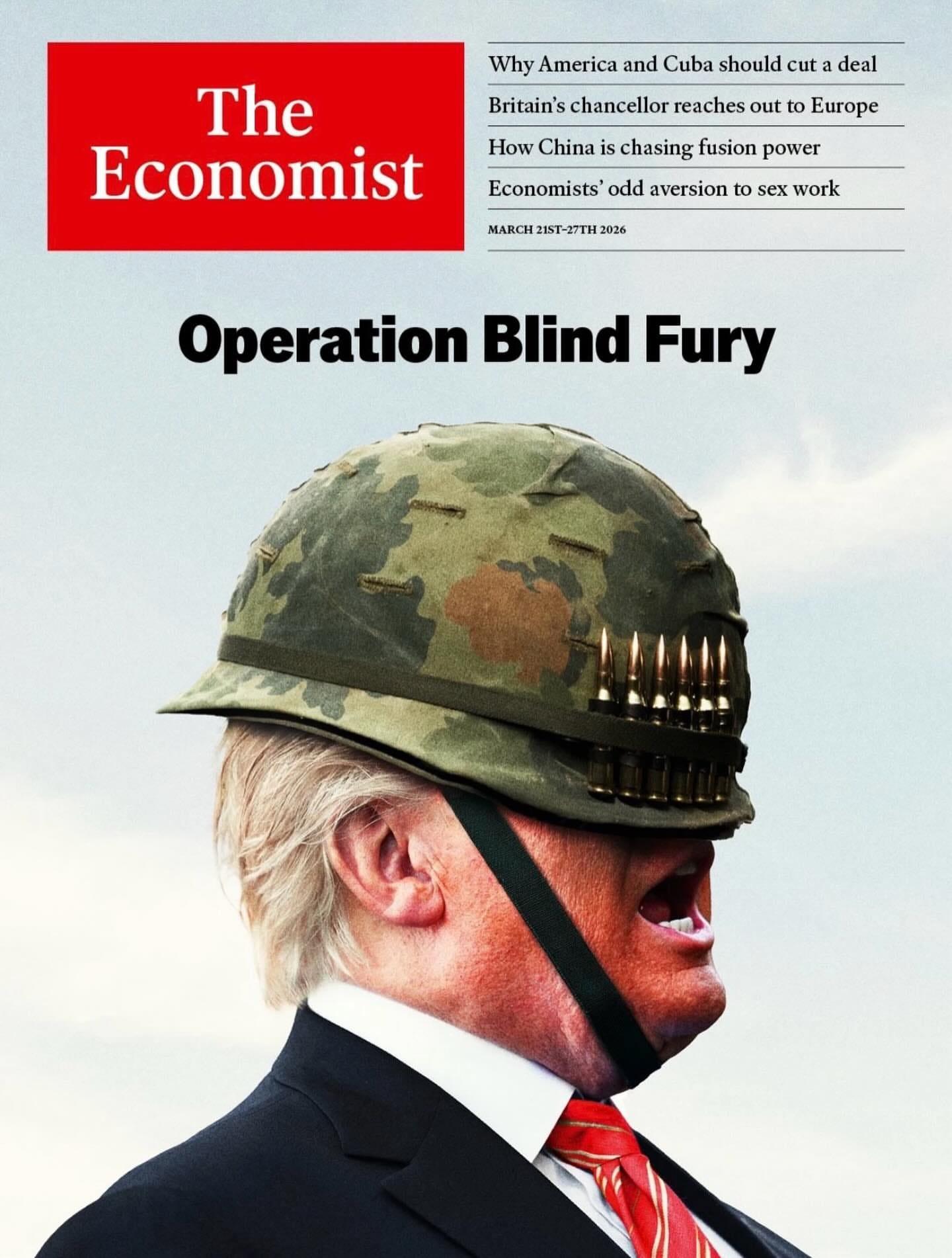
Right after the Iran War began, I posted New York Times Opinion covers as a reflection of how Trump was perceived for dragging us into this conflict. The issues have only become more evident since — especially with Iran’s seizure of the Strait of Hormuz catching Trump and his depleted Defense Department completely off guard. How did a promised 2–3 week “incursion” turn into an open-ended war? How did we go from maximum leverage to the short end of an asymmetrical standoff? These visuals highlighted the self-inflicted disaster from the beginning.
Flying Blind
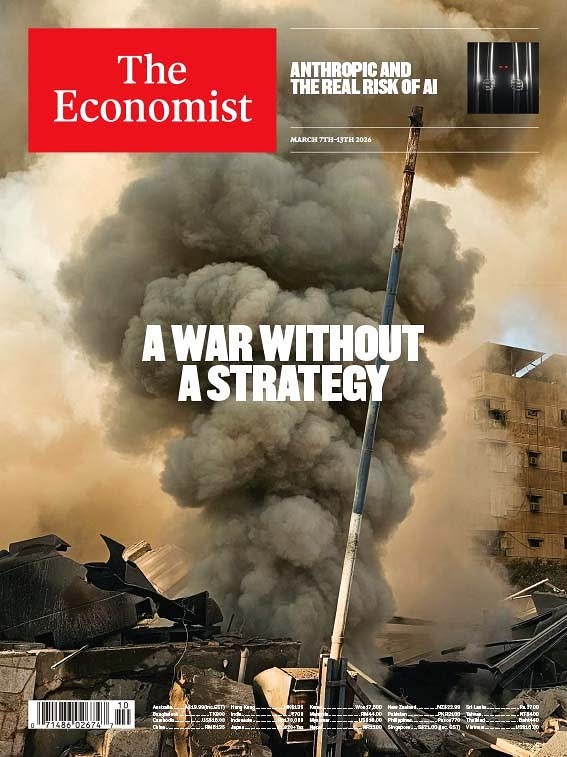
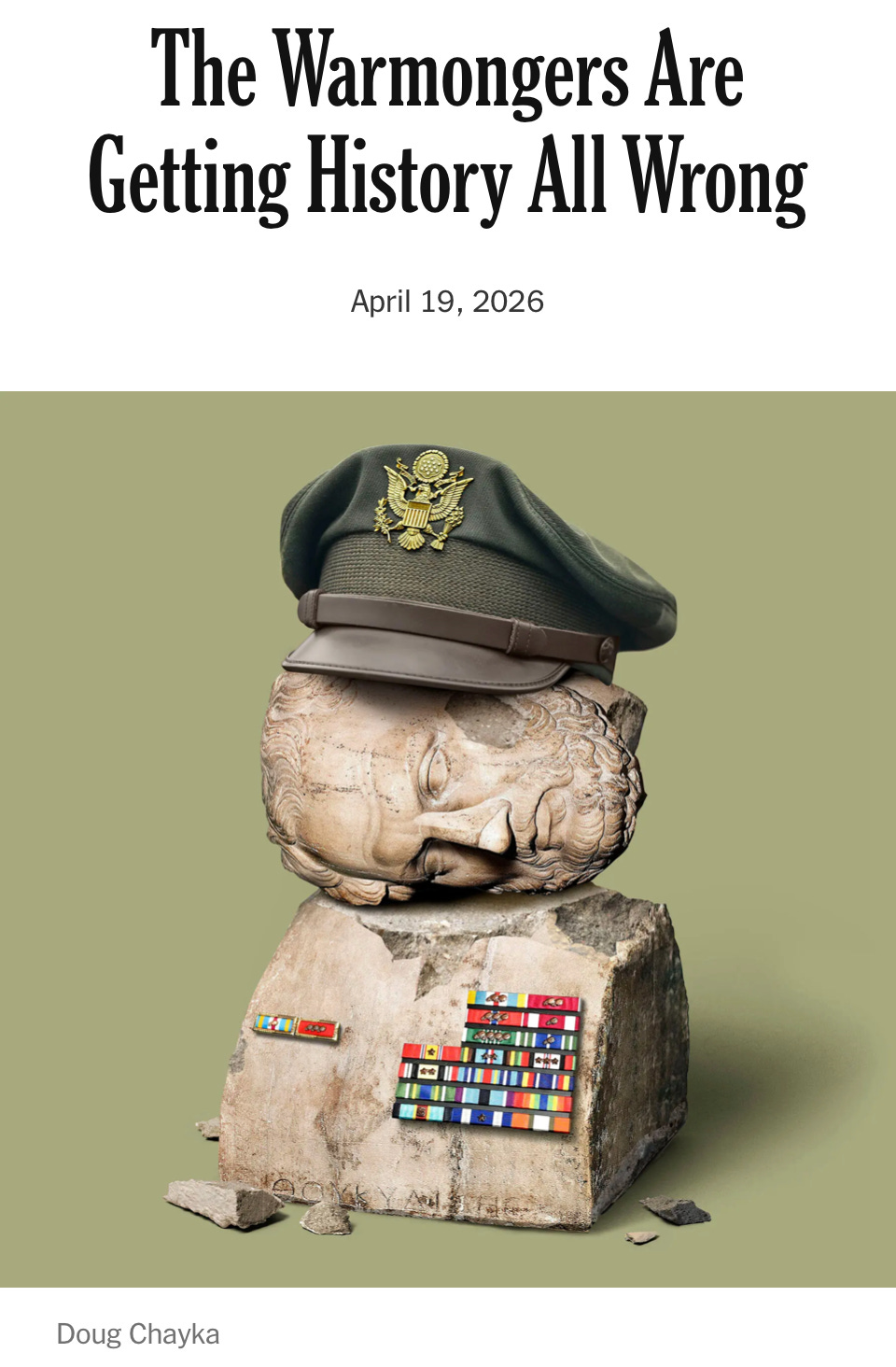
Trump came into this war selling dominance and simplicity: a quick strike, an easy win over a “weaker” adversary. These covers don’t just critique his judgment — they depict a leader who doesn’t know what he doesn’t know, gambling with people and places he barely understands.
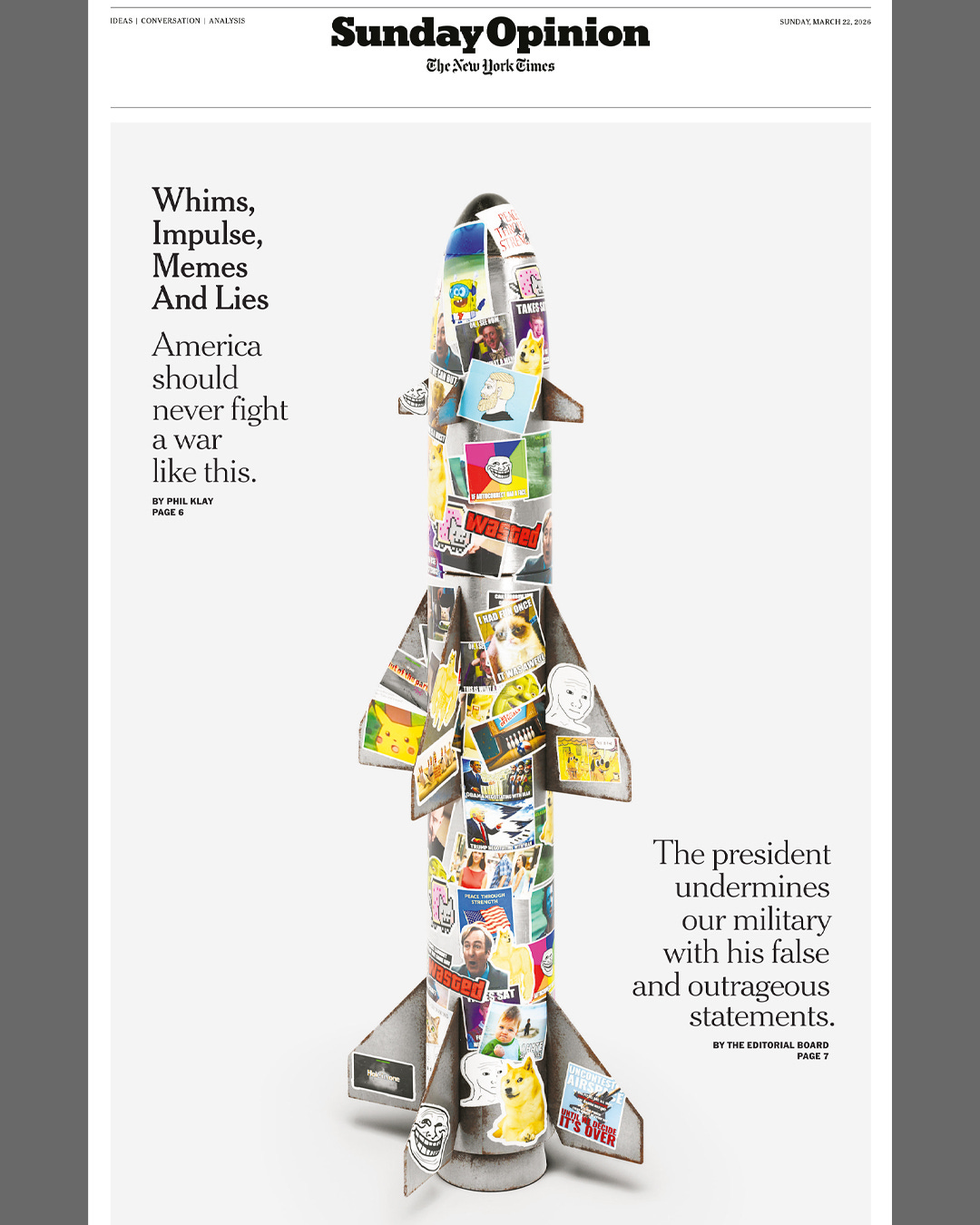
What is often completely overlooked — what Margaret Sullivan calls “priced in” — is Trump’s mental health issues. He’s impulsive, deeply narcissistic, and invents facts as he goes. He just hadn’t yet encountered an adversary who knew him so well.
Outgunned and Outsmarted
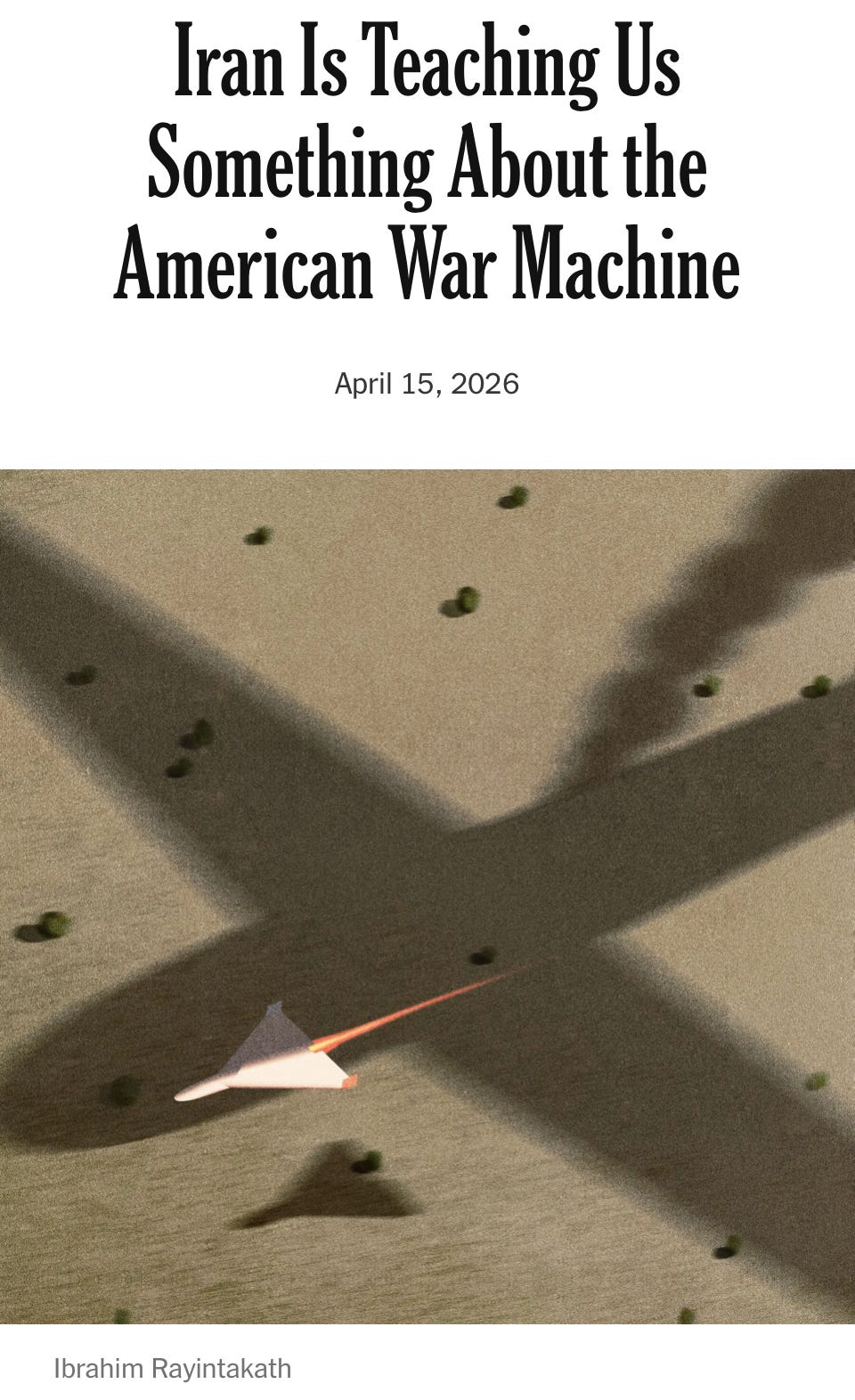
The New York Times has used this illustration because Trump and Hegseth still haven’t understood what it costs to fight a cheap, agile enemy with a costly, slow-moving one. Ukraine’s improvised drones dragging Russia into a stalemate are employing the same strategy Iran has been using for years.
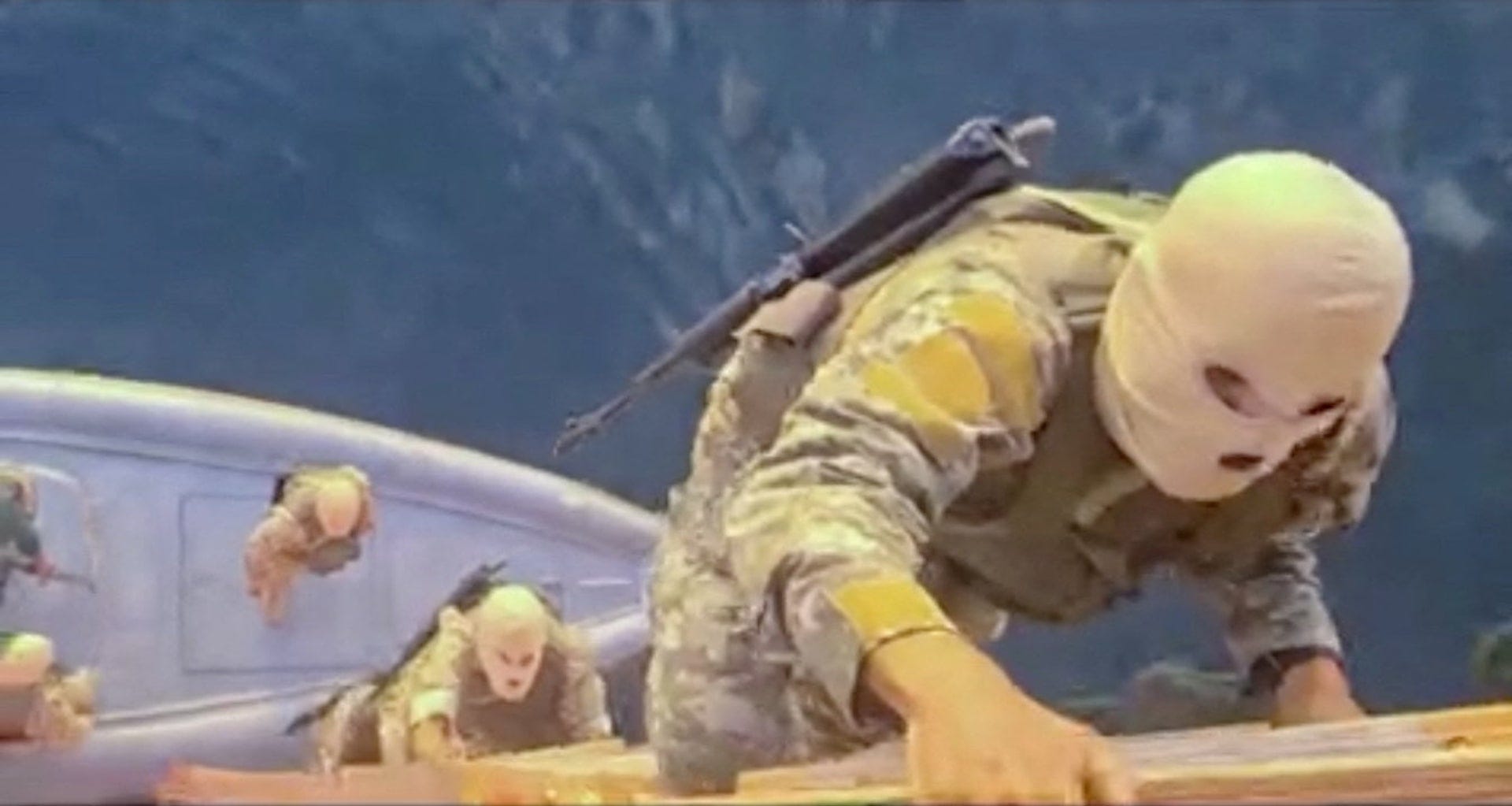
Just like how Israel sanitizes devastating images of the ethnic cleansing happening in Gaza and the West Bank, this is an example of images we simply don’t see in the US. In this case, Iran, with its drones, mines, and mosquito boats, is controlling the Strait.
Hormuz: Iran’s Trump Card
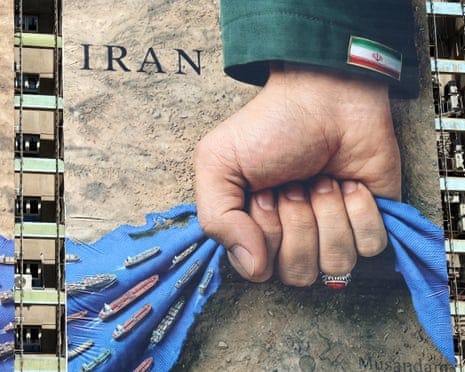
No one in the Administration — at least since the specialists had been fired — realized that the Strait was an opportunity for Iran. Iran understood perfectly and acted first. Since the war’s beginning, it has been fought on their terms.
The Tehran billboard doesn’t just convey their grip — it boasts how Iran has turned the waterway into a dense blanket of control, ships and pipelines woven into a single fabric where Iran manages the weave.
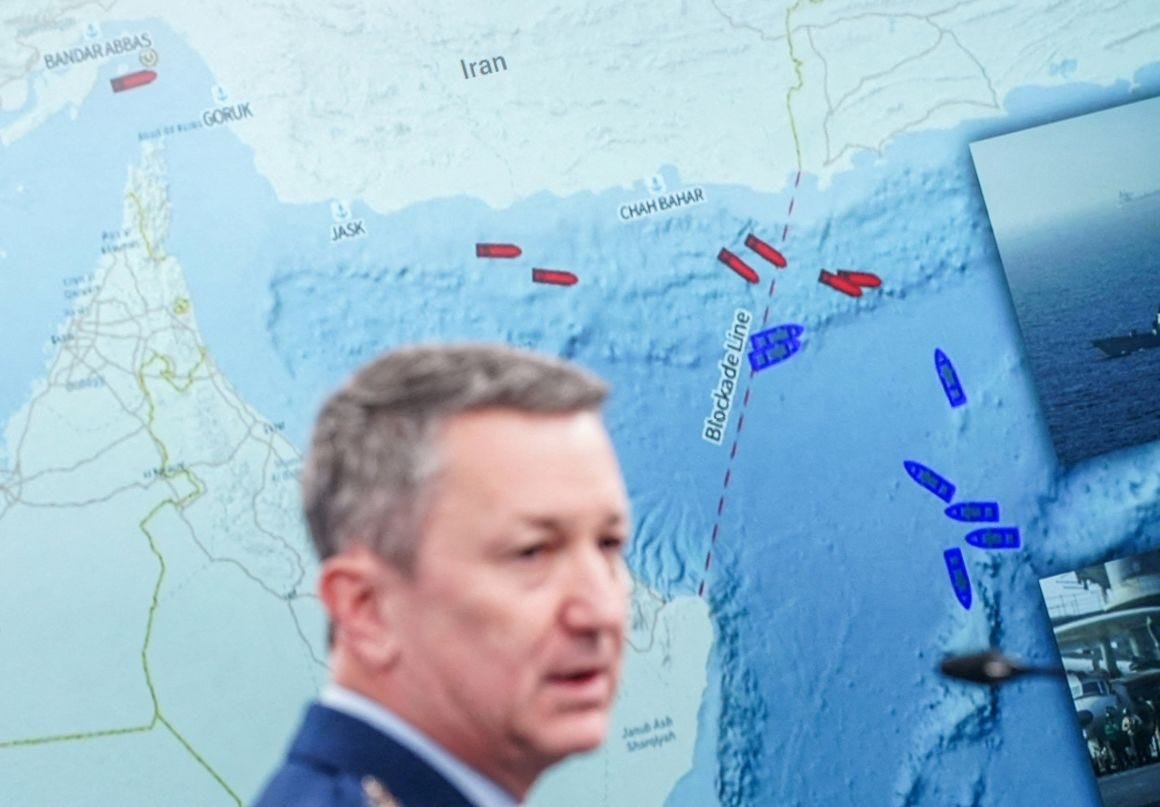
If the billboard signals confidence and inevitability, the Pentagon backdrop feels defensive by comparison — reduced to blockading a blockade. The choke point choked us.
Collateral Damage, Everywhere
Trump’s recklessness has caused significant and enduring harm to our geopolitical position, our costly alliances, and the physical security of the Gulf states, as well as the security and prestige of U.S. military bases in the region, all while markedly strengthening the Iranian regime.
The War Trump Couldn’t Spin
Despite investigative work by CNN and the New York Times, among others, few Americans seem aware, and the media has given little attention to the shocking military losses the U.S. has endured at its bases and outposts across the Middle East and the Persian Gulf.
Trump and Hegseth boasted about the successful rescue of a downed American pilot after his F-15 was shot down by the Iranians. But that propaganda generated maximum noise over the danger we narrowly escaped, coming very close to another mini-hostage situation like the one that eventually toppled the Carter administration.
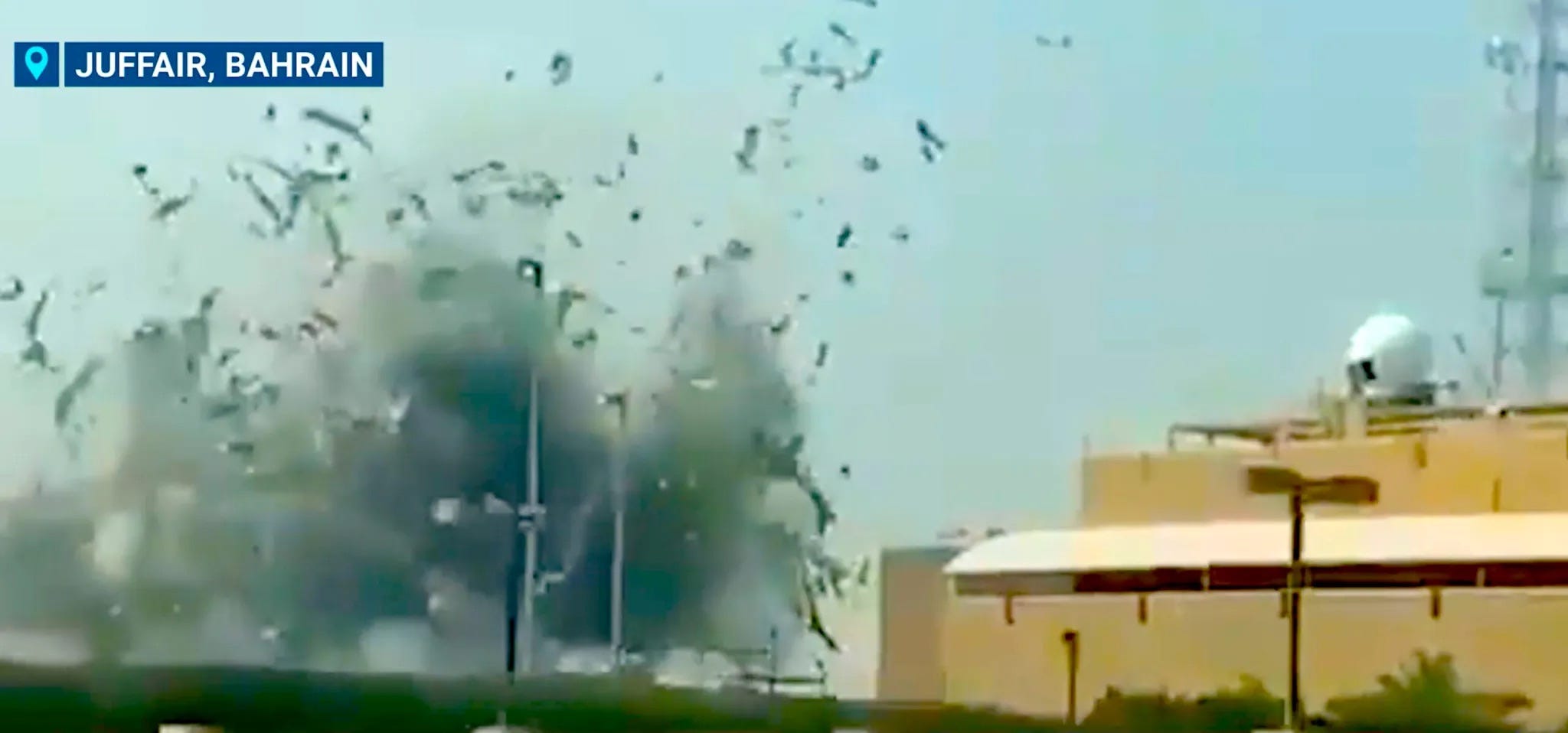
This screenshot of a drone attacking the Fifth Fleet’s headquarters, circulated on the first day of the war, was picked up and verified by NBC News, Fox News, Al Jazeera, and others. It’s the kind of footage the Pentagon couldn’t suppress because it was already widespread.
Iran’s strikes targeted 18 U.S. military sites across seven countries, damaging or destroying 228 structures and systems. Equally significant is what was destroyed and what caused its destruction. A $300 million E-3 Sentry AWACS was taken out on the tarmac at Prince Sultan Air Base — irreplaceable at over a billion dollars in current replacement costs. Satellite communications terminals at the Fifth Fleet headquarters in Bahrain were destroyed. Patriot and THAAD radar systems were knocked out across the region. The weapon responsible for much of this: Iranian Shahed drones costing $20,000 each, shot down with U.S. interceptor missiles costing $4 million a shot.
The images we don’t have of American losses are as revealing as the ones we do.
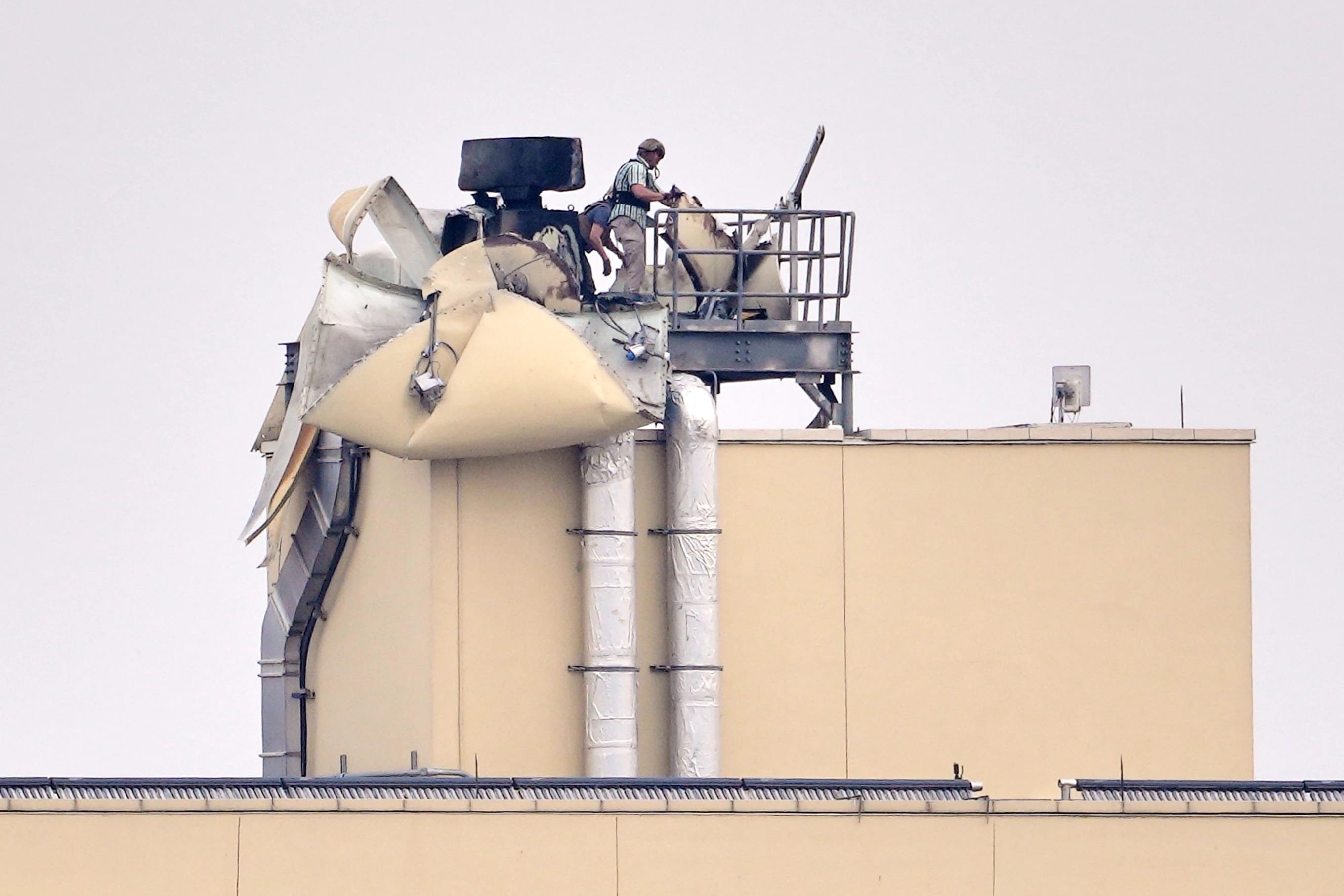
If hitting the Fifth Fleet's own headquarters wasn't enough, consider what Iran also attacked: the U.S. Embassy in Baghdad — the largest American diplomatic compound on earth, a $750 million, 104-acre fortress built after years of Iraq War bombardment specifically to be indestructible. It was struck by an Iranian missile and evacuated. After everything that went into making that building a symbol of permanent U.S. presence and power in the region, its damage and abandonment reveal just how badly this war has turned out.
Friendly Fire: The Gulf
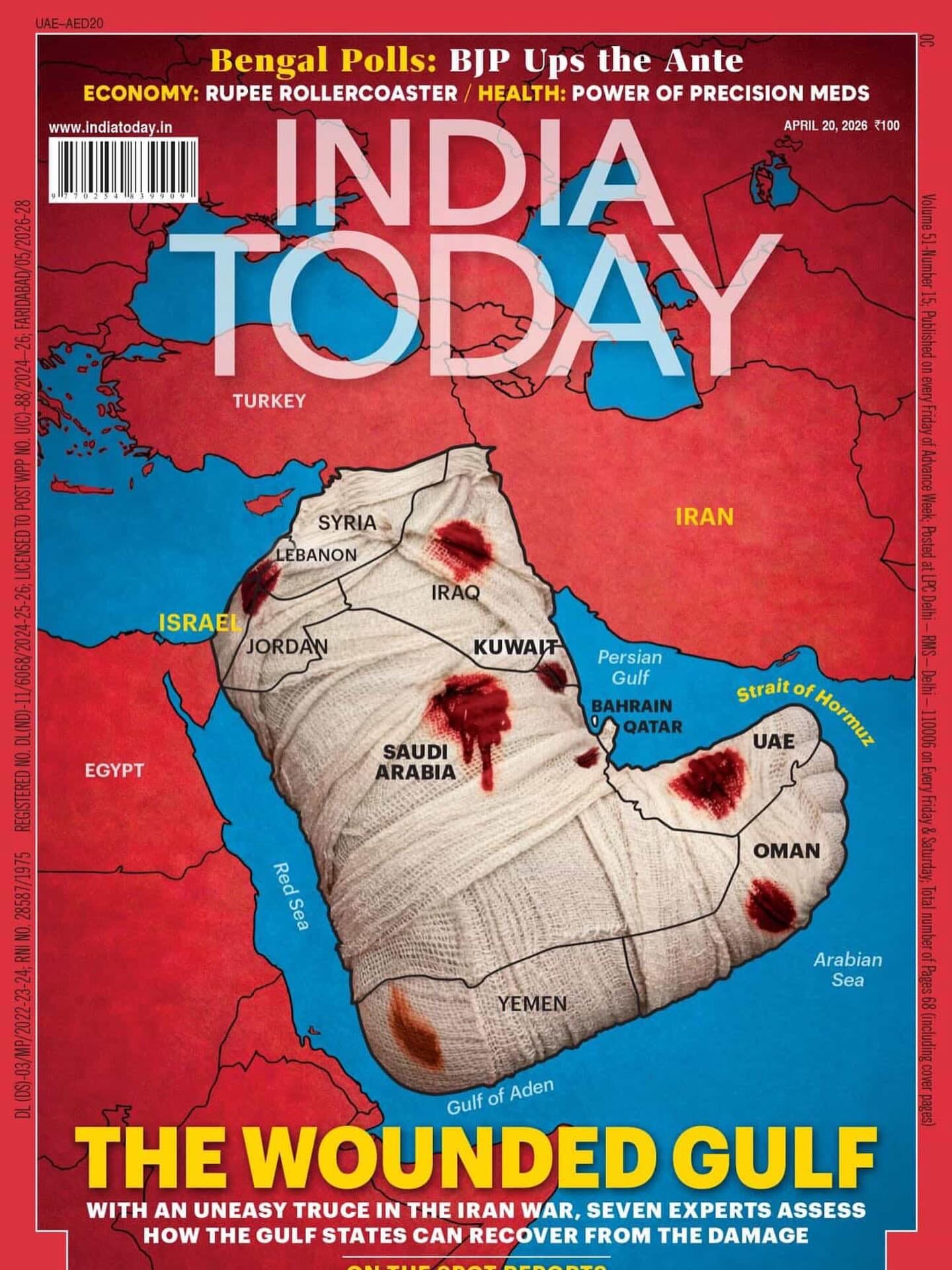
The entire Arabian Peninsula is covered in bloody bandages — oil infrastructure hit, OPEC fractured, airports closed, tourism devastated, $40 billion in projected losses across the Gulf in the first month alone. Trump showed no concern for what a regional war could do to the governments hosting U.S. bases and bankrolling his family's golf resorts, luxury towers, crypto deals, and the Boeing 747 he received from Qatar. These bandages won’t be coming off anytime soon.
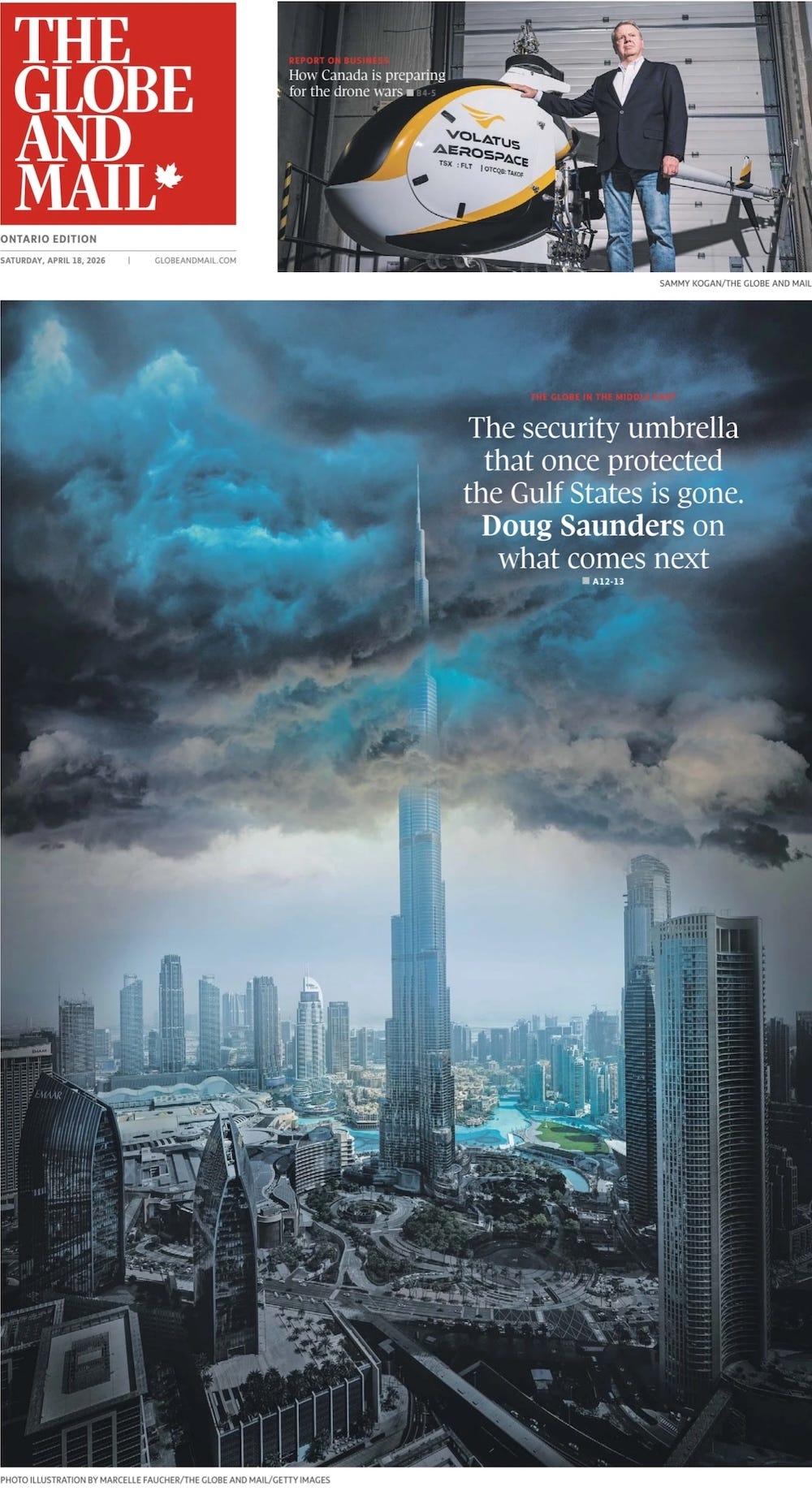
The Burj Khalifa — the tallest building on Earth and a symbol of Gulf wealth and ambition — is captured in a dark illustration. The building itself was evacuated but not hit; nearby luxury hotels were struck, and Dubai absorbed nearly 2,000 drones and missiles during the war. If you're considering the scale of the fallout and Iran’s significant political and military gains from the conflict, this image has a strong 9/11 vibe.
How the Strongman Lost
No matter how much Trump tries to detach himself from this albatross, America has lost. Whatever limited agreement may eventually be reached — if there is one — call it what it is: a surrender.
Direct Hit to America’s Pocketbook
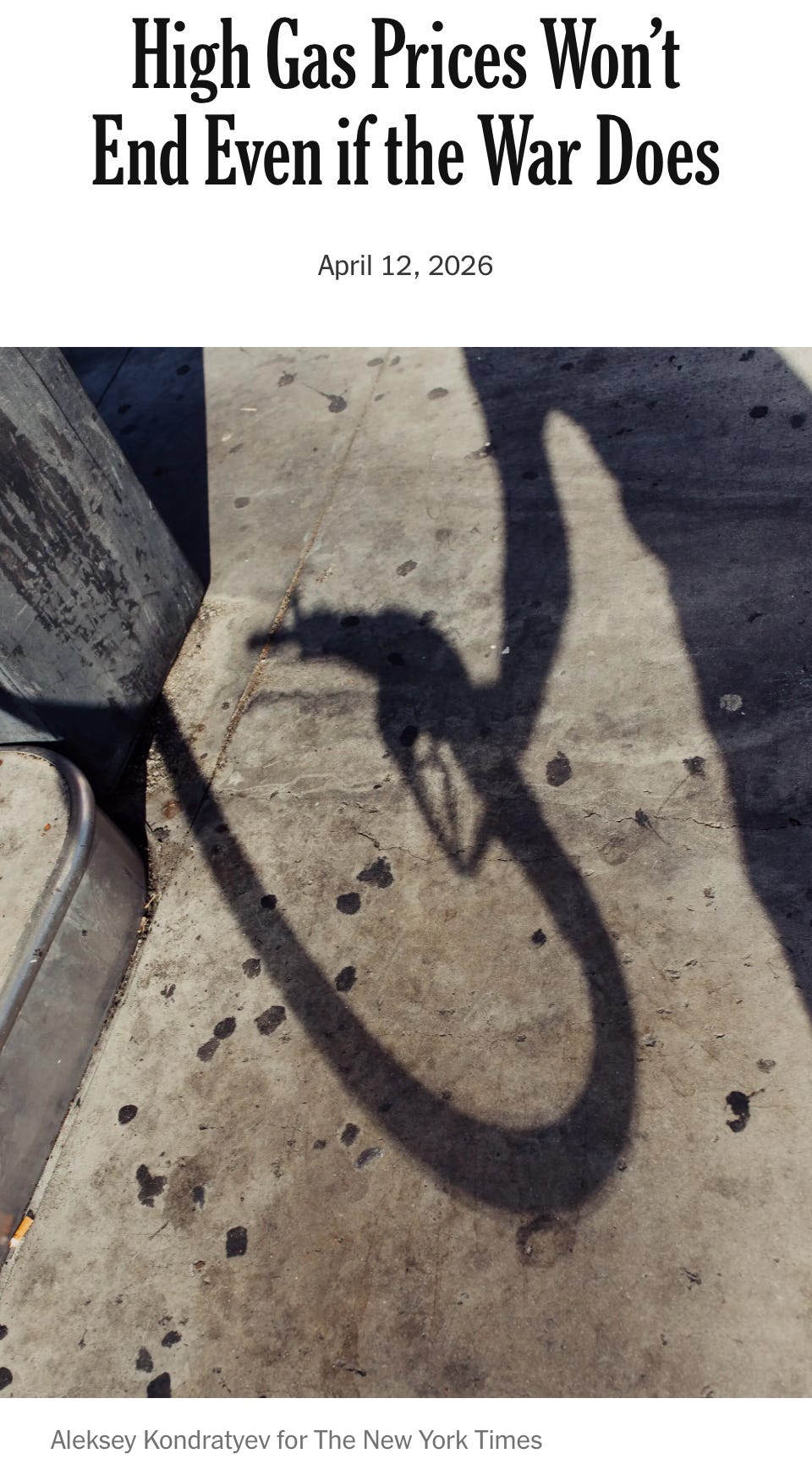
A gas pump nozzle casts its shadow like a gun. What Trump presented as a show of strength now threatens his own economy. Every increase at the pump and every story about shipping delays are part of the same trigger pull. The image combines climate issues, security concerns, and consumer pain into a single shot aimed directly at those he promised to protect.
Trump’s Weak Hand
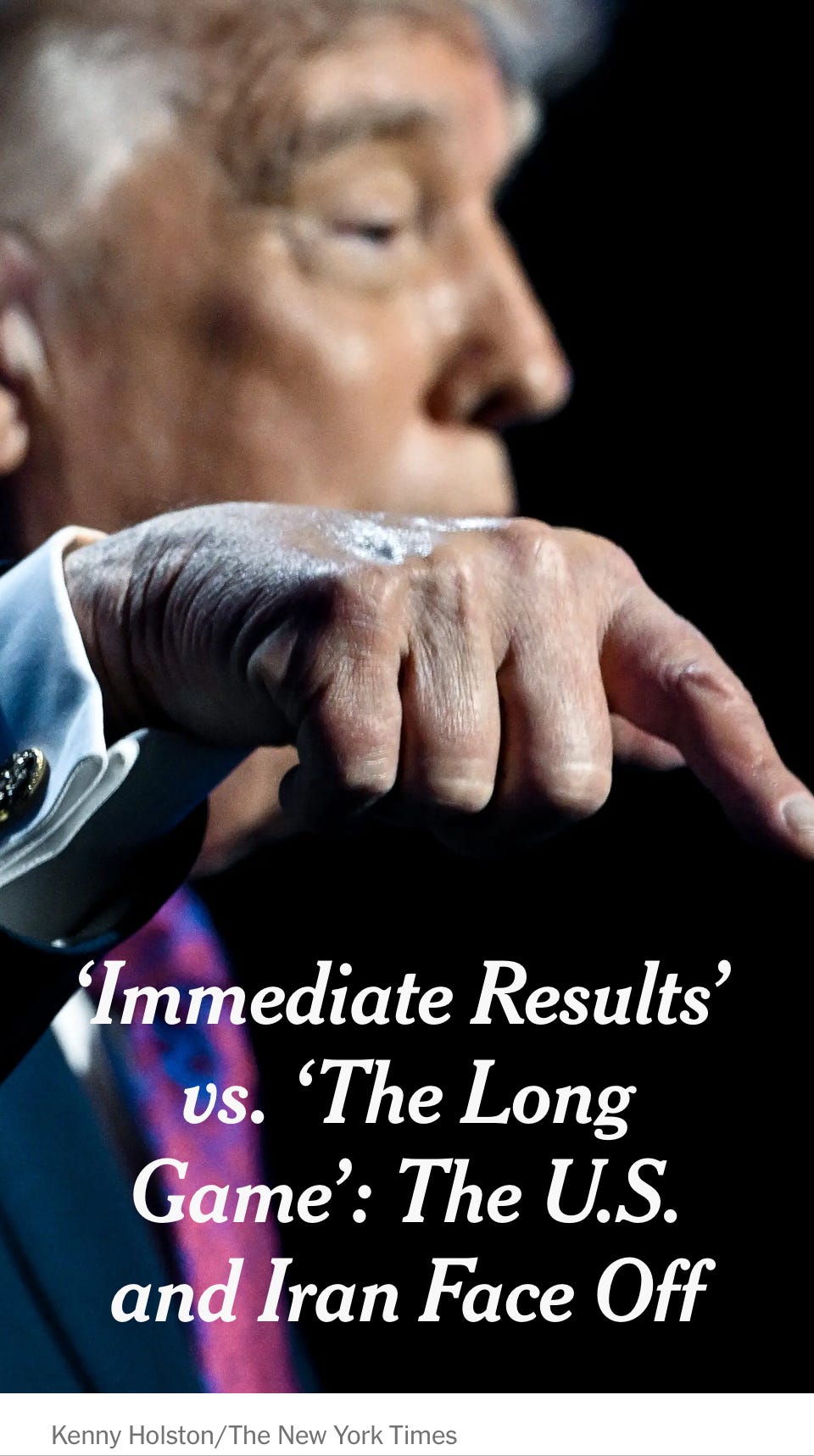
The Iran war is the exception to the rule that Trump can smooth over anything. He can usually finesse, distract, or rewrite the story — but not this. The Times emphasizes it by using a simple photo to show his lack of power.
The picture highlights Trump’s discolored hand — a common focus for news photographers, and something Trump covers with makeup before every appearance. No matter how much gloss you add to this war, it's still a pig.
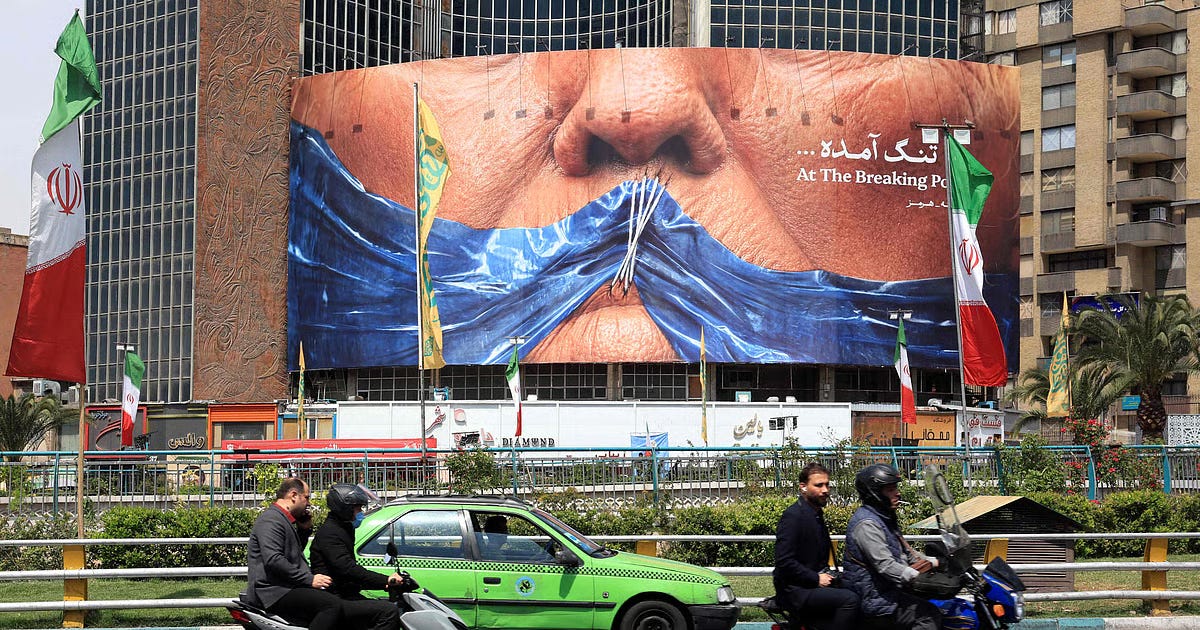
Trump’s back-and-forth between empty threats and unproductive negotiations has given Iran all the motivation it needs — and Tehran knows exactly how to send that message back. This billboard at Valiasr Square, one of Tehran’s busiest intersections, is the result: a statement that Iran has effectively silenced Trump’s signature tactic — the voice that led us into this war now has nothing left to say.
Thank you for visiting Reading the Pictures. Despite our visually saturated culture, we remain one of the few sources for analyzing news photography and media images. This post is public, so feel free to share it.
To receive new posts and support our work, consider becoming a free or paid subscriber. As a non-profit organization, your subscription is tax-deductible.