


Midterm Elections
Cascade of Troubles
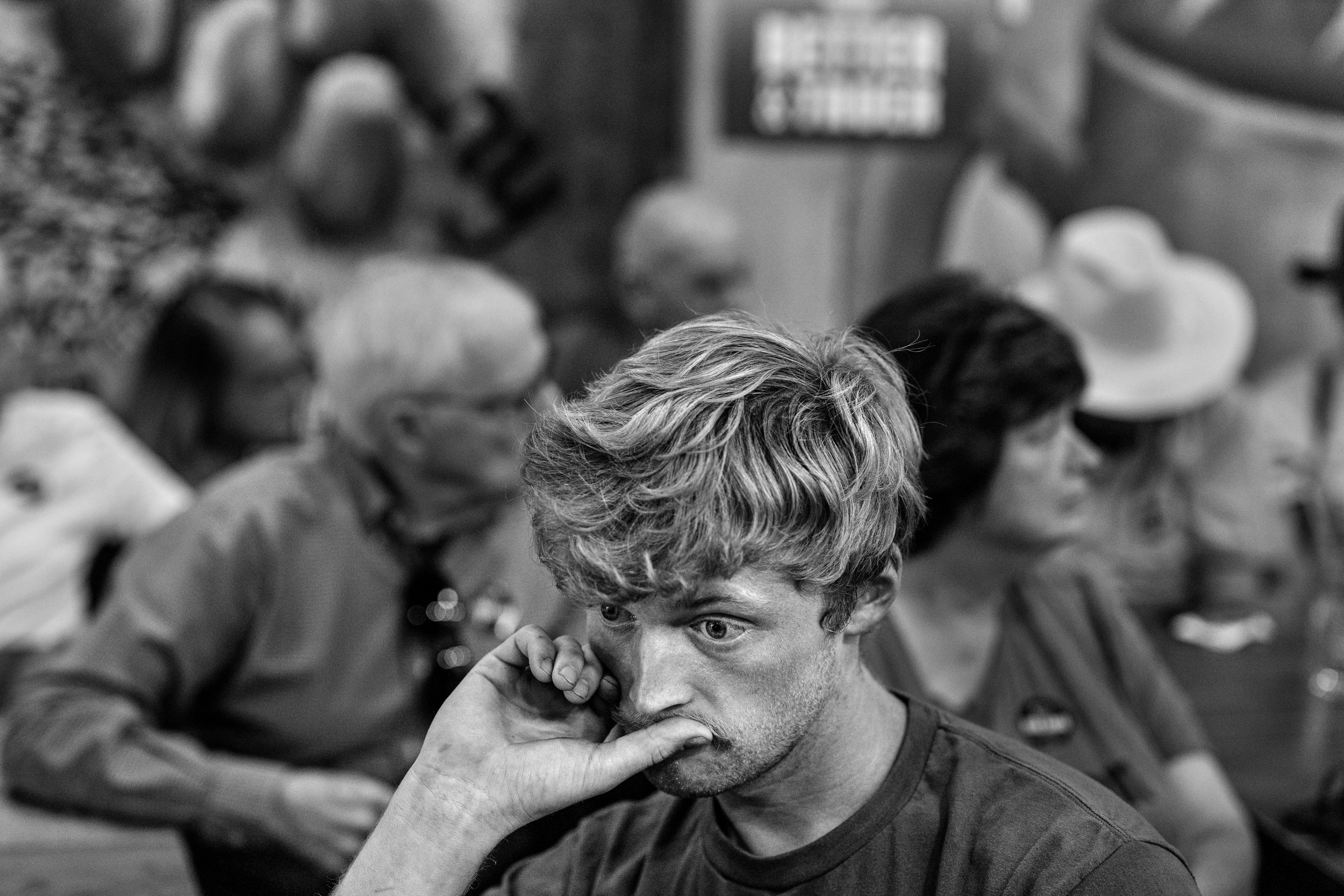
Danny Wilcox Frazier is well known for documenting life in Iowa, especially its elections. He’s been following Rob Sand, the independent-minded Democrat running for governor. Amid all the bluster and propaganda this campaign season, the gaze of this young man at one of Sand’s talks manifests the public’s sense of isolation and disaffection as a cascade of troubles, from the cost of living to strains on agriculture and threats to public health, weighs heavily on young and old.
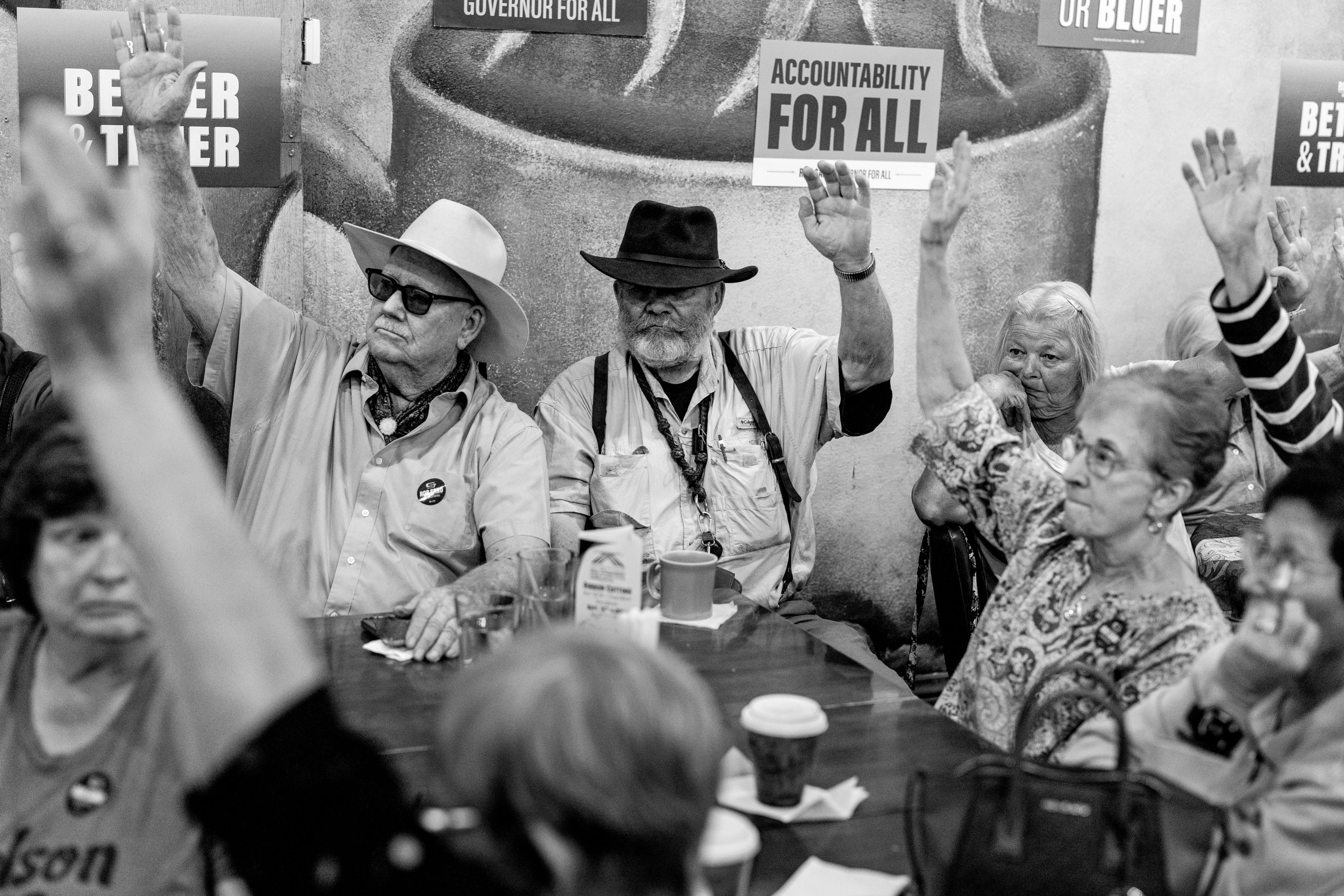
Sand asked who had been touched by cancer, the state suffering from the second-highest and fastest-growing rate in the country. Beyond the startling response, the central figure in the striking black hat, his hand overlapping a sign demanding accountability, is as powerful a statement of need as one will ever see. You can find Danny’s full edit here.
Trump
The Distortion Field
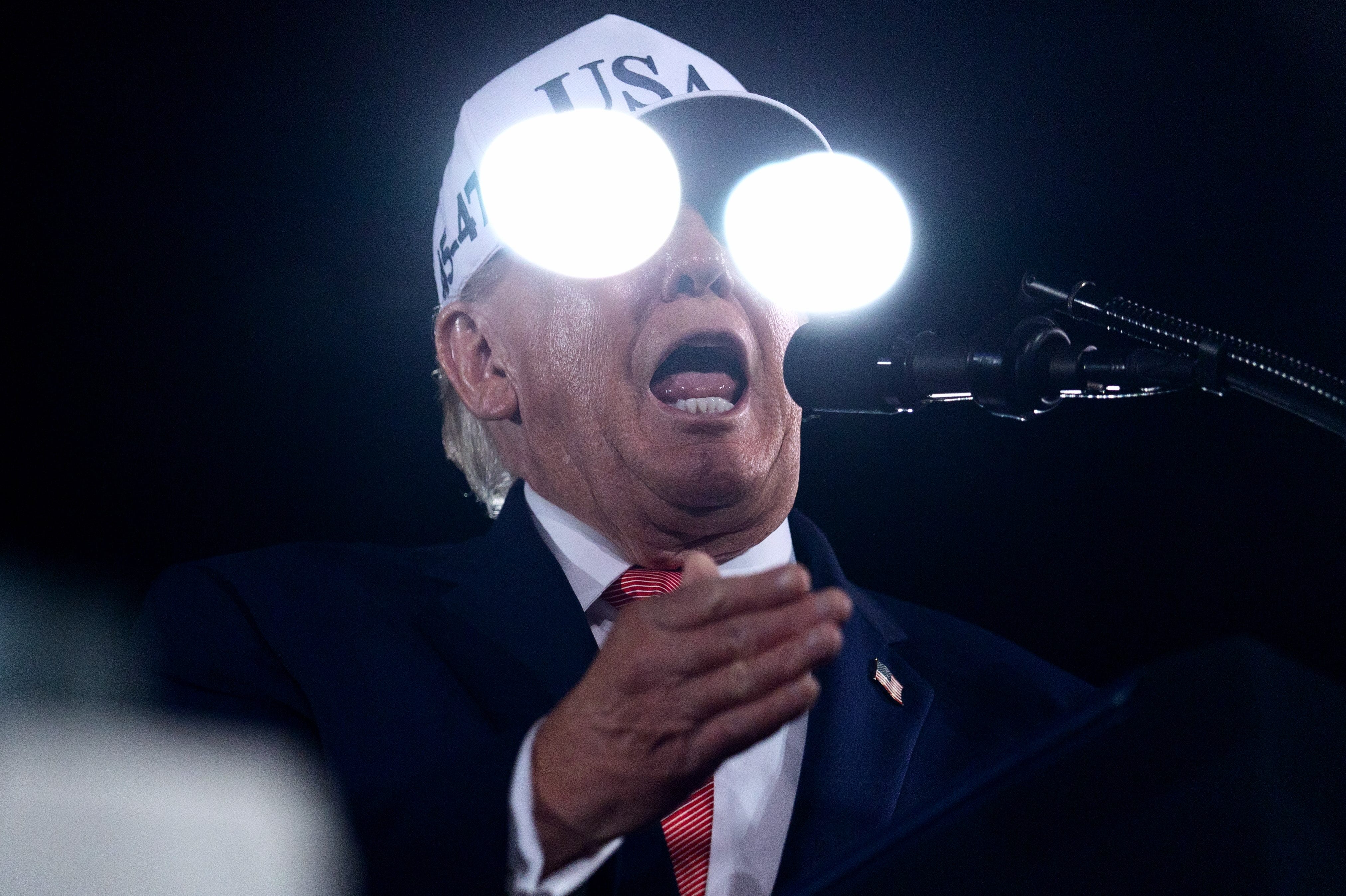
In the span of a week, while a barely coherent Trump was racing from one struggling GOP campaign to another, Reuters’ Evan Vucci gave us two striking takes on Trump’s madness. The first is completely gonzo. The blown-out circles over Trump’s eyes speak as much to his fried logic and his short fuse as to an overloaded nervous system pumping out way more voltage than the wiring can bear.
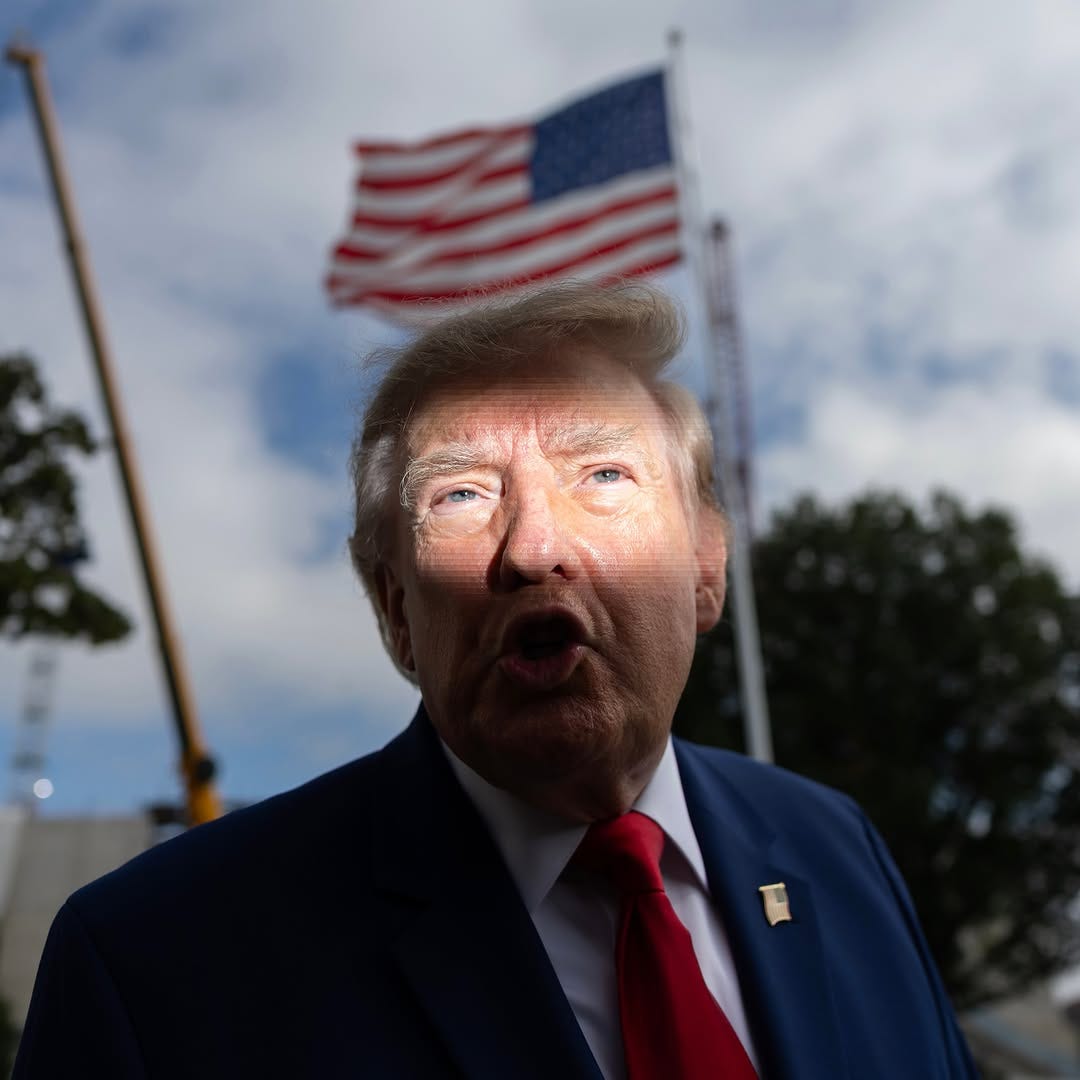
In this shot, Trump’s head is wedged between a pole supporting the American flag and the now-ubiquitous White House construction crane. A band of sunlight illuminates his eyes while his mouth and lower face remain in shadow. It’s a brilliant device for Vucci to frame Trump’s bubble, as well as his sense of omnipotence and “singular genius,” in perceptual form.
The So-Called Justice Department
Vendetta Update
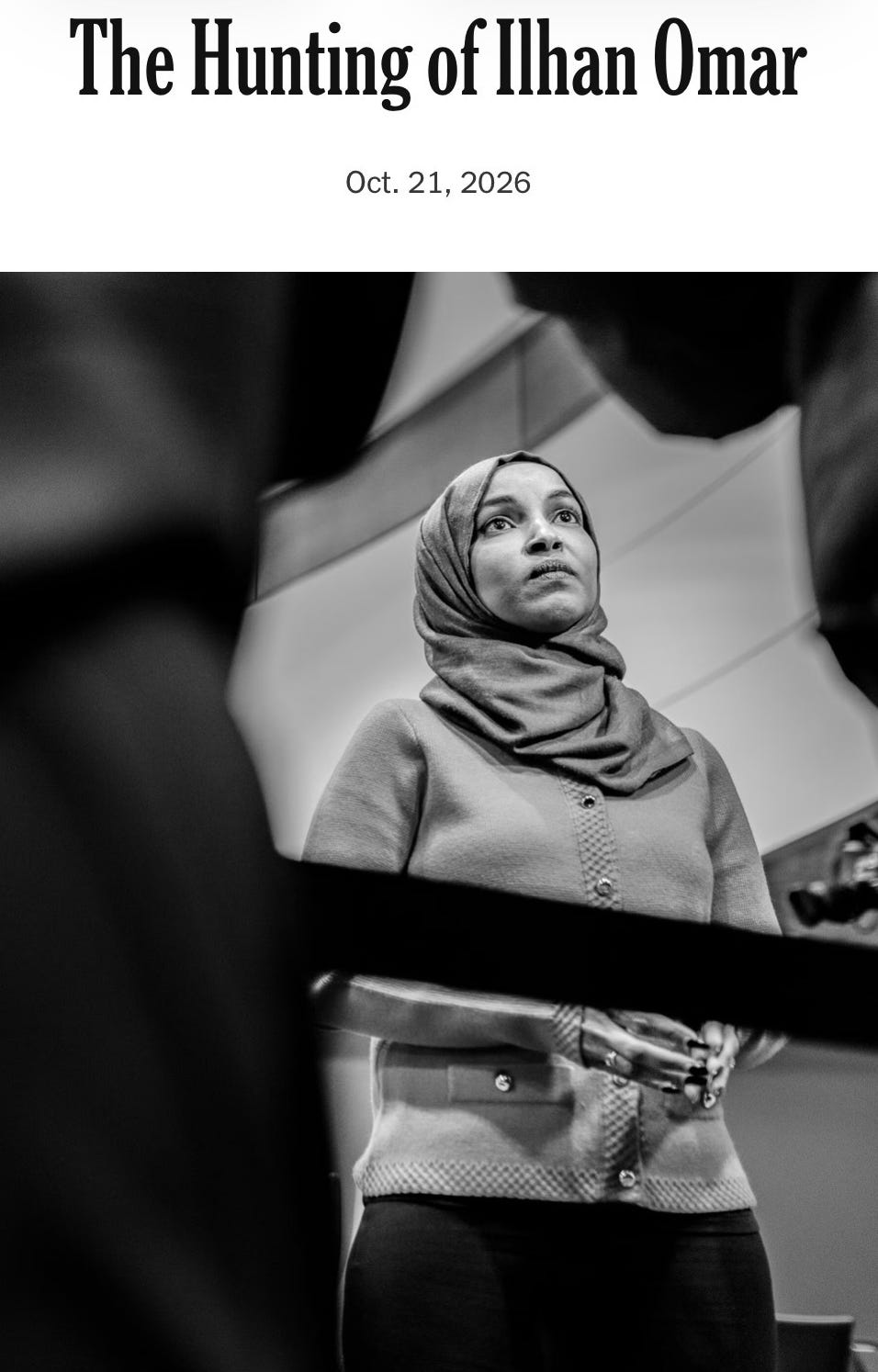
Buried in the political chaos, these pictures capture the government’s harassment of Ilhan Omar. The NYT Opinion headline calls it what it is. Jim Vondruska’s shot places a bar between Omar and the viewer, framing her as the “other.”
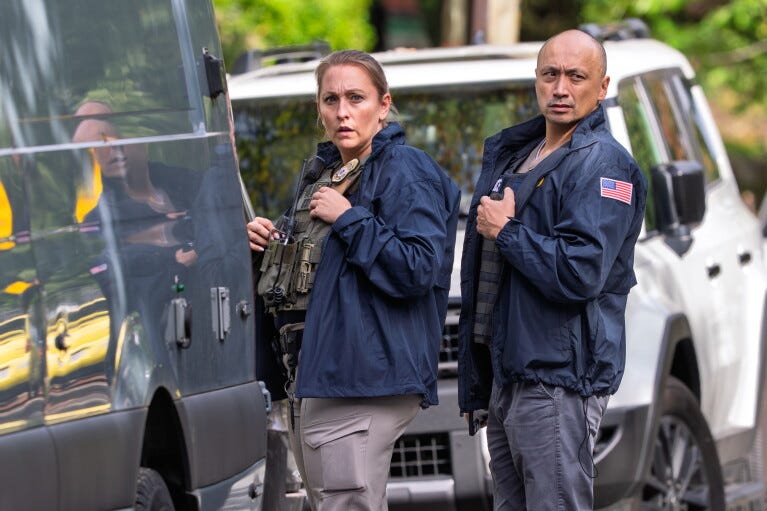
Beyond the banal shots of agents carrying boxes from Omar’s home, J. Scott Applewhite captured something more revealing: Homeland Security officers beside unmarked vehicles during the October 12 search of her Washington residence, looking less like they’re investigating than caught in the act.
Media
Beyond Slide Show Filler
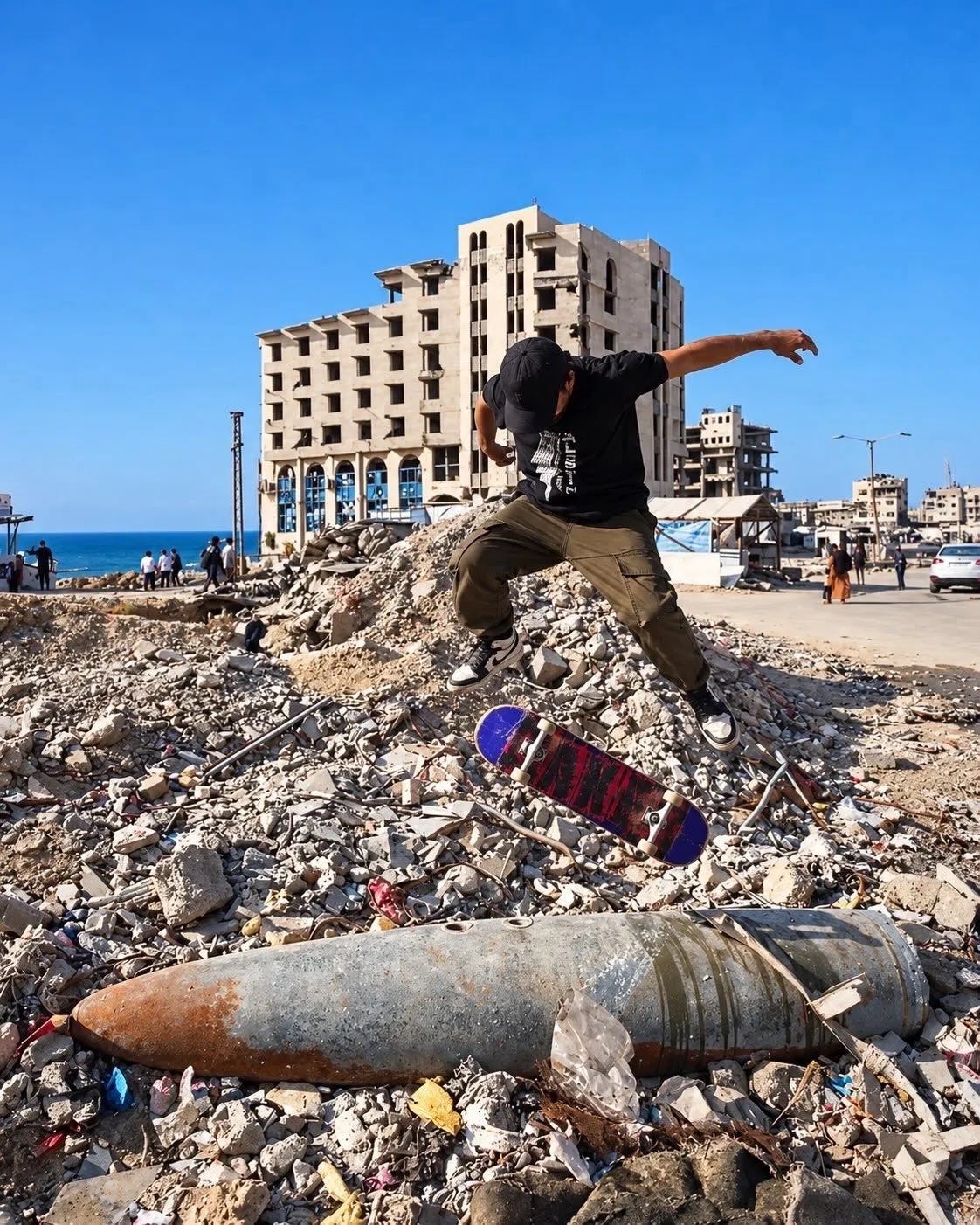
To keep the plight of Gaza on the radar, domestic media organizations often feature scenes from rubble world in their “photos of the week.” Besides scenes of citizens making do, images of Palestinian children at play are standard fare. But this scene, posted to Instagram by the Gaza Skate Team, would never make the cut.
Here, a Palestinian skateboarder in Gaza performs a kickflip over a 2,000-lb-class aerial bomb, matching the U.S.-designed Mk 84 in size and shape. U.S. military assistance to Israel has included tens of thousands of bombs in the 1,000- and 2,000-pound classes.
Ukraine
Tying the Knot
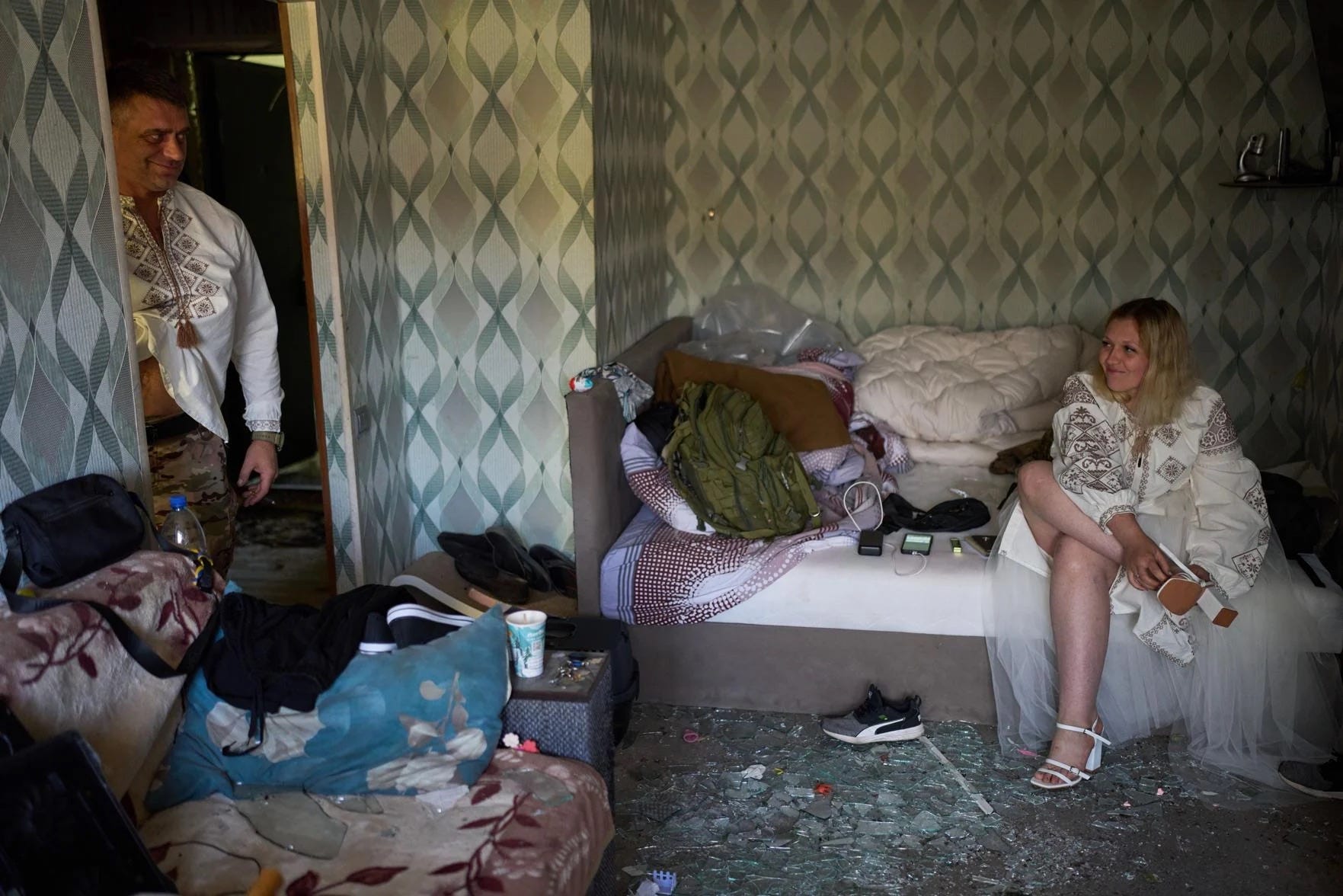
No, it’s not a scene from Quentin Tarantino, but the photo does have a macabre, noirish vibe: the dim light, the loopy wallpaper, the fiancé with his hand up his shirt, and the shared prenuptial gaze that transcends everything, including the disarray and the carpet of shattered glass from a Russian bomb attack. All the more disheartening against the backdrop of Trump’s full re-engagement with Putin.
AI
The Pictures Catch Up
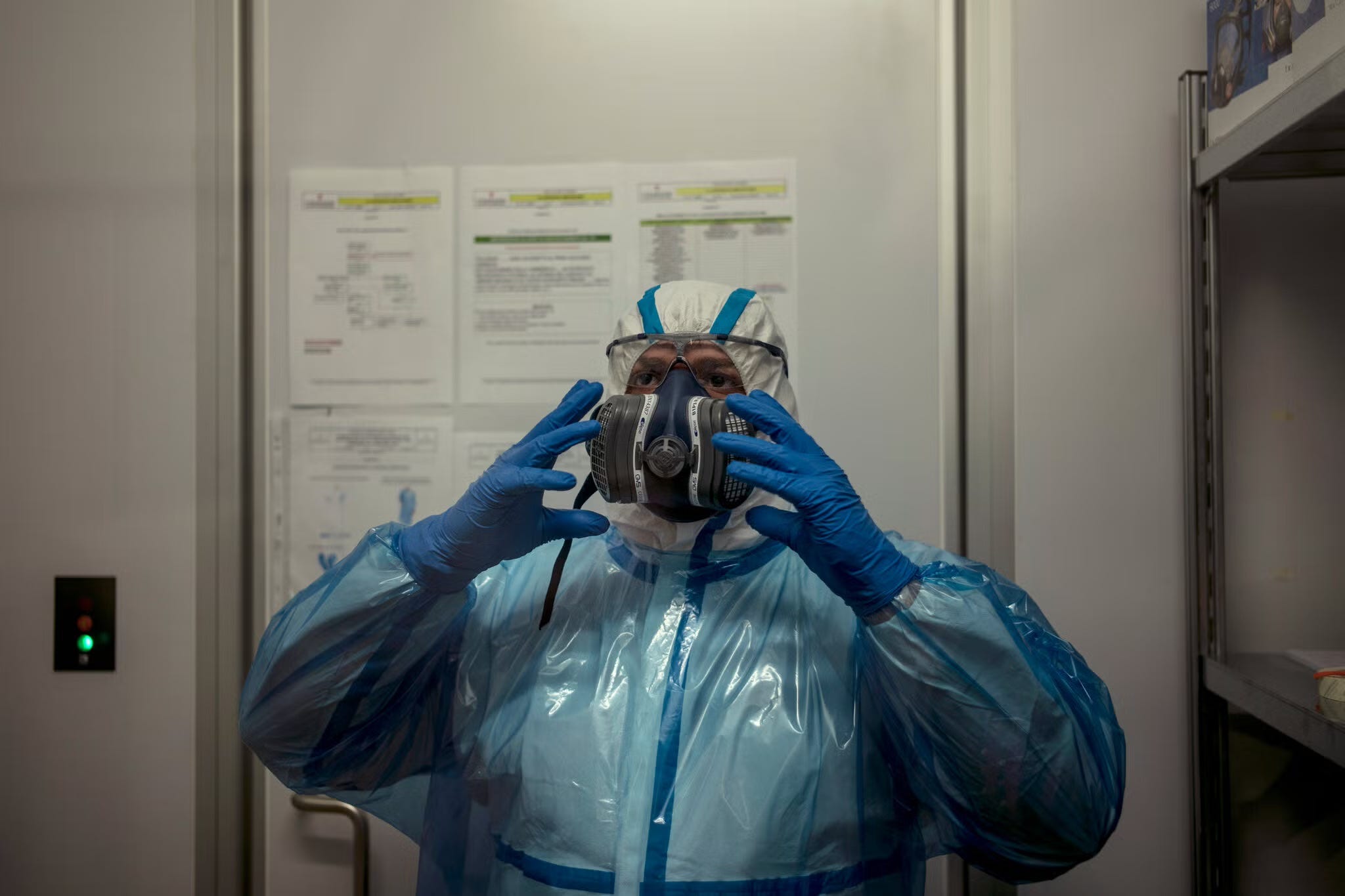
We’re witnessing the end of benign AI news photos.
As I wrote in “The Cracks in the Cult of the AI Supermen,” portraits of AI’s leaders are setting off alarm bells as their notoriety rises. This photo accompanies a New York Times article about fears that advanced AI models trained in biology could fuel a bioweapons arms race. The scientist’s suit, his ambiguous upward gaze, and his hands reaching for the respirator are more than enough to freak me out.
Climate Crisis
A Shade Apart
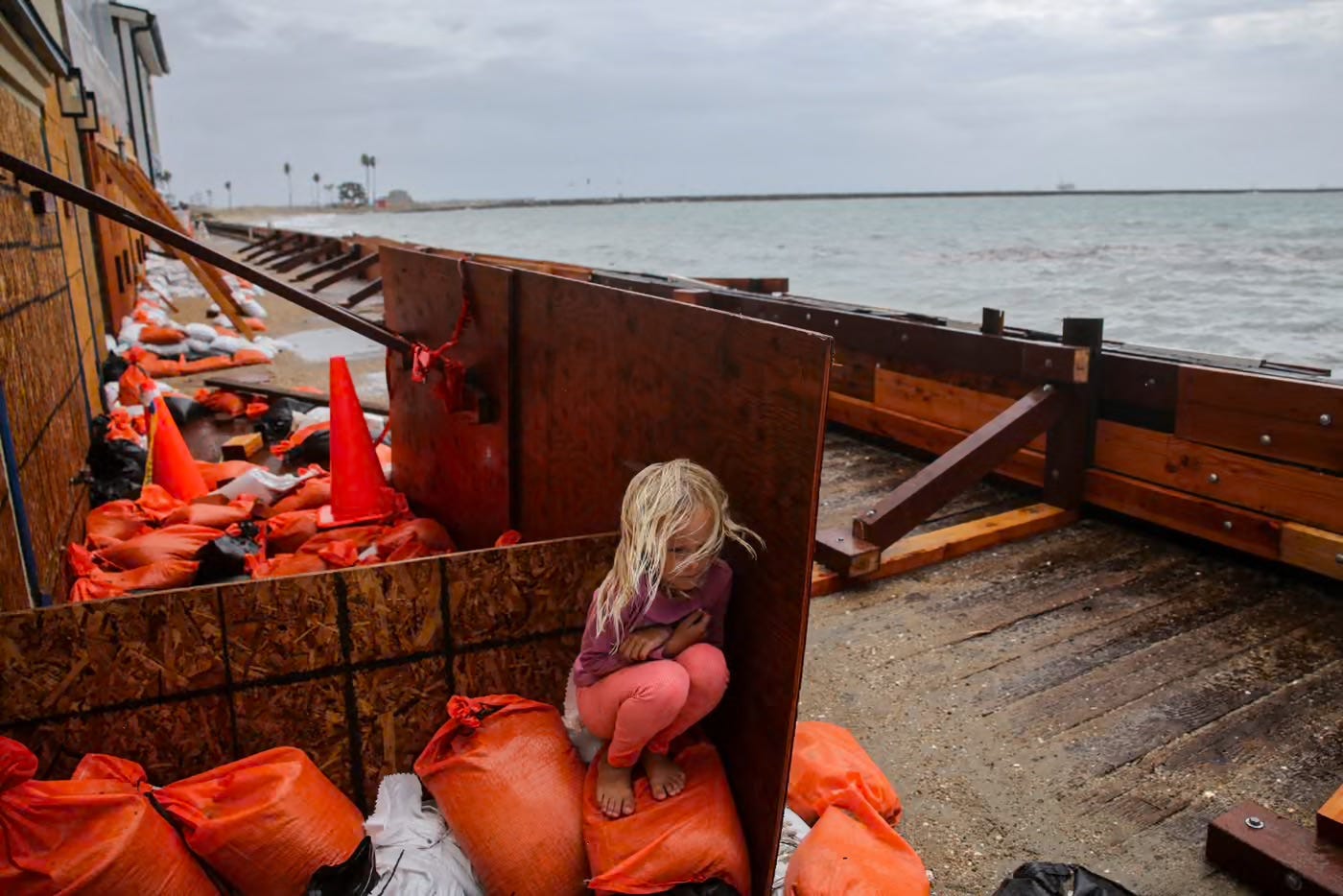
The makeshift defenses are brilliant orange; the stakes are in pink. What the climate crisis looks like at a child’s scale—a world bright with stopgaps but short on protection.
The violence of the Super El Niño
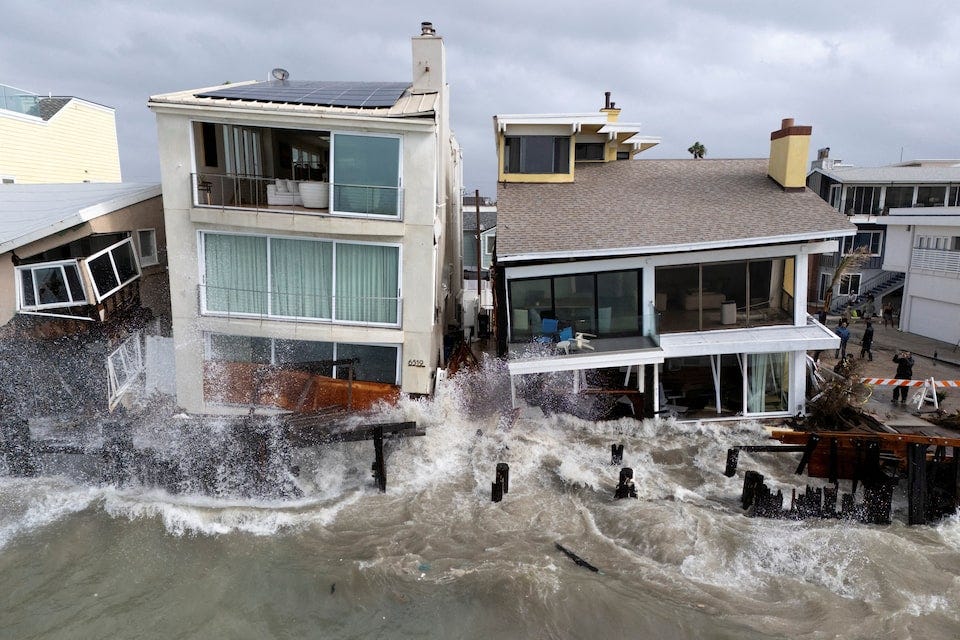
And then the climate crisis came for geometry.
Thank you for visiting Reading the Pictures. In an intensely visual and polarized political culture, we remain a singular source for closely reading news photography and media images. The way we see shapes what we believe, and close attention is a democratic act. This post is public, so please share it.
To receive new posts and support our work, consider becoming a free or paid subscriber. As a non-profit organization, your subscription is tax-deductible.